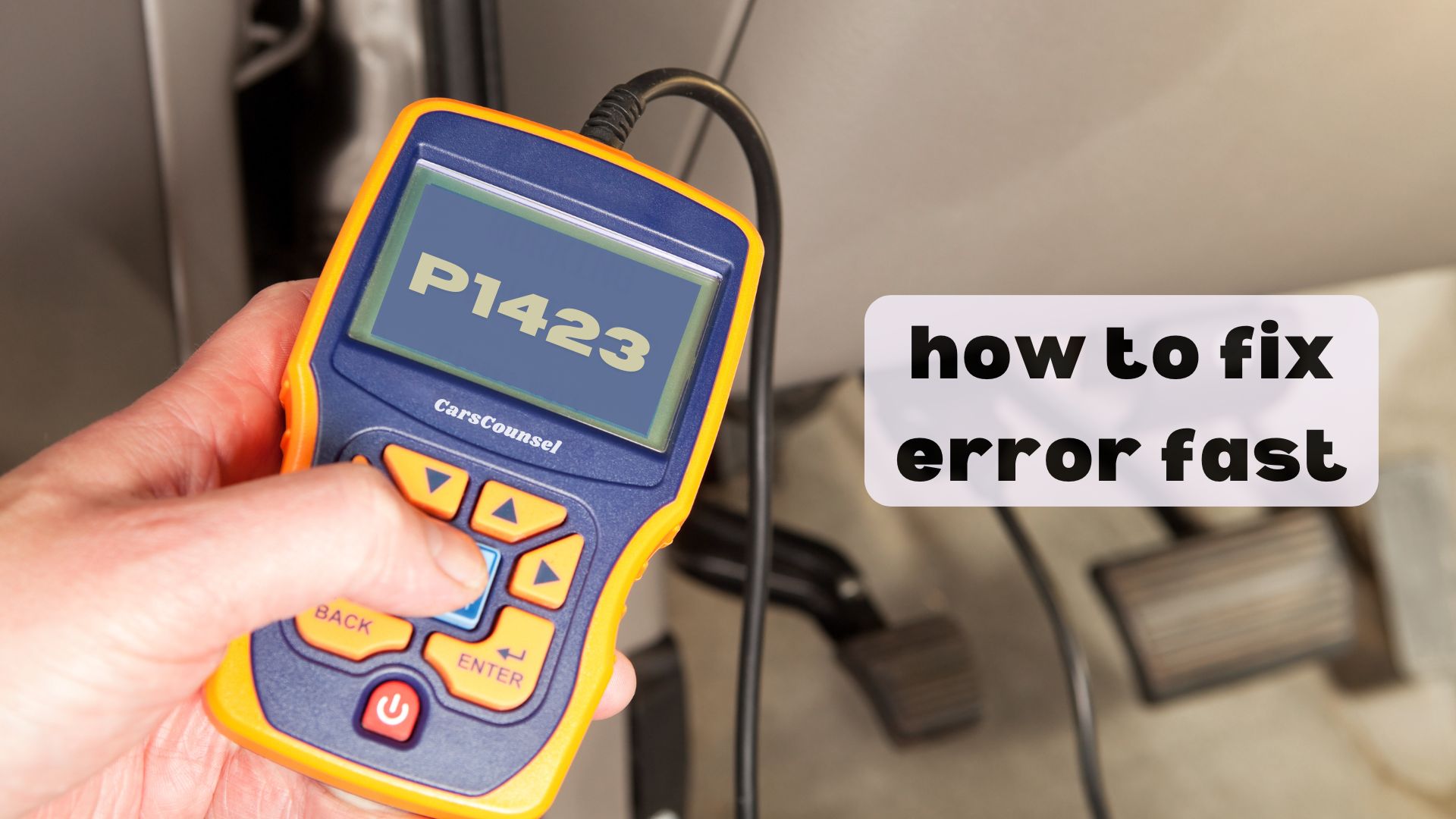
The P1423 trouble code is a manufacturer-specific powertrain code. Its exact definition depends entirely on the vehicle application, primarily indicating a secondary air injection low flow fault or an EVAP system large leak.
Because it is manufacturer-specific, the exact application must be verified. The code identifies a detected condition, and testing is required to identify the root cause before replacing any components.
Quick Navigation
Key Takeaways
- P1423 is a manufacturer-specific code with definitions varying significantly between automakers.
- On BMW, Audi, and Volkswagen applications, it typically indicates insufficient flow in the secondary air injection system.
- On Toyota and Lexus applications, including many hybrids, it points to an evaporative emission control (EVAP) system large leak.
- Proper diagnosis requires verifying the exact factory definition and testing the relevant emissions or EVAP system components.
- Repairs range from replacing a faulty air pump or check valve to tightening a loose fuel cap or repairing EVAP hoses.
P1423 Code Description and Implications
The P1423 code is a manufacturer-specific powertrain definition. Because it is not a generic SAE code, its exact meaning depends entirely on the vehicle application.
BMW, Audi, and Volkswagen applications: P1423 indicates a secondary air injection system low flow condition. The engine control module detects that the expected volume of fresh air is not being pumped into the exhaust stream during a cold start.
Toyota and Lexus applications: On these vehicles, particularly hybrid models, P1423 indicates a large leak in the evaporative emission control (EVAP) system. The control module detects a gross leak in the fuel vapor recovery system.
Common Causes of the P1423 Code
Electrical faults, mechanical blockages, and physical leaks are the primary triggers, though the specific causes vary by manufacturer.
For secondary air injection applications: The issue stems from a failed secondary air pump, a stuck or clogged check valve, cracked vacuum hoses, or a clogged air filter restricting flow to the pump.
For Toyota and Lexus EVAP applications: The fault is caused by a loose, missing, or faulty fuel cap, a cracked EVAP hose, a leaking charcoal canister, or a failed purge or vent valve.
Symptoms Associated With P1423
When the control module detects a fault in these specific systems, it illuminates the Check Engine Light.
Secondary air injection applications: You may experience a rough idle immediately after a cold start. The secondary air system only operates for the first minute or two of engine operation to warm the catalytic converter.
EVAP system applications: The primary symptom is an illuminated Check Engine Light. You may also notice a faint smell of raw fuel near the vehicle if a physical vapor leak is present.
Diagnosing the P1423 Trouble Code
Accurate diagnosis begins by confirming the exact factory definition for your specific vehicle make and model.
Secondary air diagnosis: Listen for the secondary air pump running during a cold start. Inspect the check valve for carbon buildup or blockage, and verify that vacuum lines actuating the combination valves are intact.
EVAP system diagnosis: Start by inspecting the fuel cap for proper sealing and tightness. If the cap is secure, a smoke test of the EVAP system is required to visually locate the source of the gross vapor leak.
Repairing the P1423 Issue
Repairs must address the specific root cause identified during testing.
Air pump and valve repair: If the secondary air pump fails to run, replace the pump and the check valve. Clearing carbon deposits from the exhaust passages may also be necessary if the check valve was stuck open.
EVAP leak repair: If the fuel cap is the issue, replace it with a component meeting the correct vehicle specification. If a hose or canister is leaking, replace the damaged EVAP component and retest the system.
Cost Considerations for P1423 Repairs
Cost depends on diagnostic time, component accessibility, required parts, programming requirements, and labor.
Replacing a secondary air pump or check valve is generally a straightforward repair with moderate parts and labor costs. Repairing an EVAP leak may require extensive smoke testing and tracing hidden hoses beneath the vehicle.
Prevention Strategies for Future Occurrences
Replacing the secondary air check valve when replacing a failed air pump can prevent exhaust moisture from entering and destroying the new pump.
Ensuring the fuel cap is tightened securely after every refueling helps prevent false EVAP leak codes from triggering on Toyota and Lexus applications.
Troubleshooting Tips and Best Practices
Do not replace the engine control module just because a P1423 code is present. A simple loose fuel cap or a cracked vacuum hose will produce the exact same fault reading.
Always verify the manufacturer-specific definition first. A code that means secondary air flow on an Audi means something entirely different on a Toyota Prius.
Check for Technical Service Bulletins for your specific vehicle. Manufacturers occasionally release updated check valve designs or revised EVAP canister part numbers to address chronic faults.
More OBD-II Codes
| P1421 | P1420 | P1418 | P1416 |
| P1415 | P1410 | P1431 | P1432 |
| P1433 | P1441 | P1444 | P1445 |
| P0411 | P0440 | P0442 | P0455 |
| P0456 | P0446 | P0420 | P0430 |
| P0171 | P0174 | P0300 | P0172 |
Frequently Asked Questions
Is P1423 a generic or manufacturer-specific code?
No. P1423 is a manufacturer-specific powertrain code. It indicates a secondary air injection fault on European applications, but an EVAP system leak on Toyota and Lexus vehicles.
Can I drive my car with a P1423 code?
Driving is generally possible, as neither condition typically causes severe drivability issues. However, the vehicle will fail an emissions test and may produce excess pollutants.
Will tightening the gas cap fix a P1423 code?
It may, if your vehicle is a Toyota or Lexus and the code indicates an EVAP gross leak. However, it will not fix a secondary air injection fault on a BMW or Audi.
Can a bad catalytic converter cause a P1423 code?
No. P1423 monitors the secondary air injection flow or the EVAP system vapor pressure. A catalytic converter efficiency issue triggers different codes, such as P0420 or P0430.
Does P1423 always mean the air pump or EVAP canister is bad?
No. The code identifies a detected flow or pressure condition. This is frequently caused by a cracked hose, a loose fuel cap, or a stuck check valve. Components should only be replaced after testing confirms failure.
What Should You Do About the P1423 Code?
Confirm the exact factory definition for your vehicle, then follow the applicable manufacturer diagnostic procedure. Because P1423 is manufacturer-specific, the diagnostic path for a secondary air injection fault differs entirely from an EVAP system leak.
Inspect the relevant system and components, including secondary air pumps, check valves, EVAP hoses, and fuel caps. Repair any confirmed leaks or blockages, or replace the relevant system components only after testing verifies the failure.

