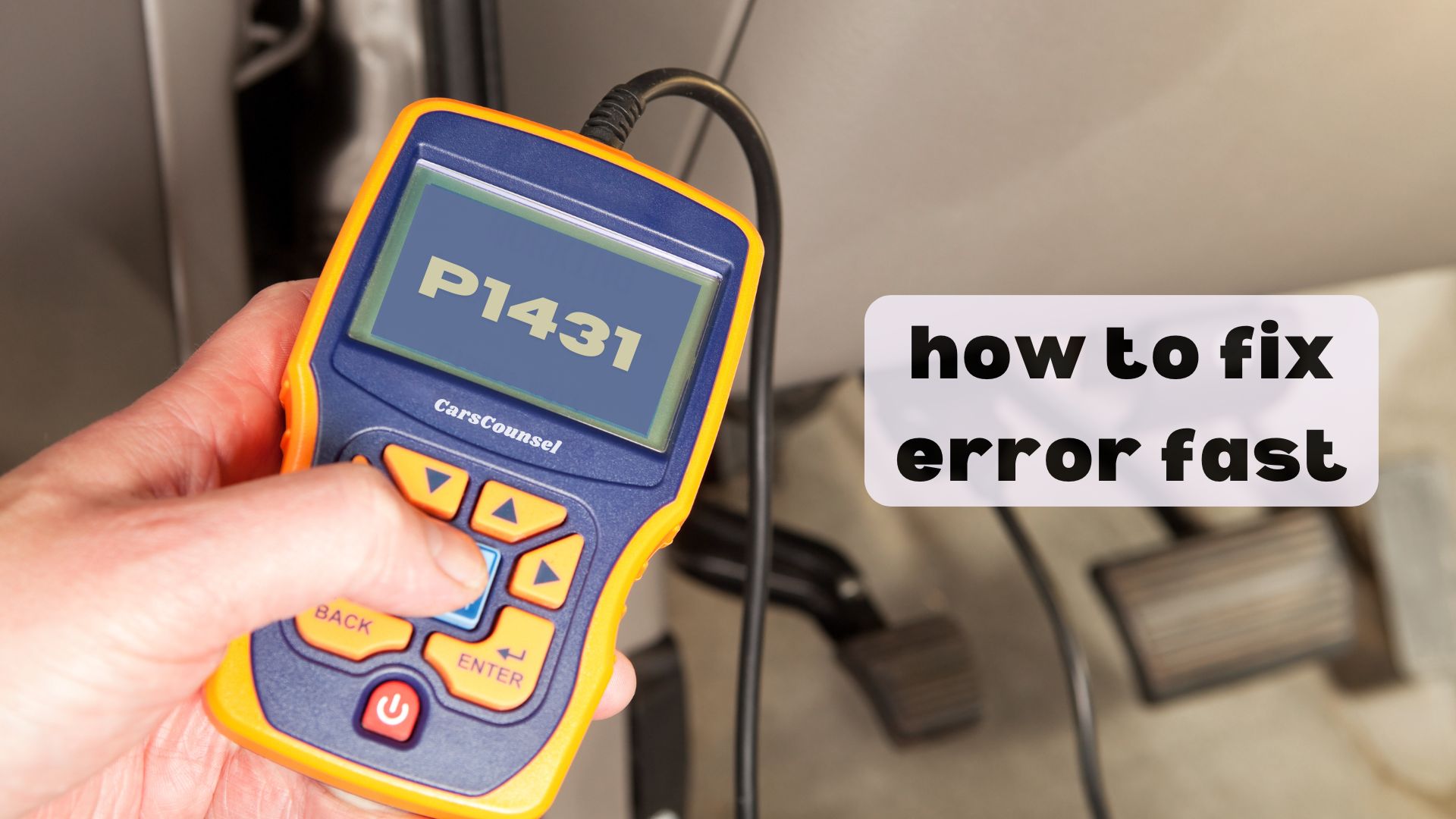
The P1431 diagnostic trouble code is a manufacturer-specific powertrain code. Its exact definition depends heavily on the vehicle make, pointing to a fuel level sensor performance issue, a disabled misfire monitor, a brake vacuum pump fault, or a hybrid battery module overheating condition.
Because this code targets entirely different systems across manufacturers, the exact vehicle application must be verified before diagnosis. The code alone does not prove a specific component has failed without proper testing.
Quick Navigation
Key Takeaways
- P1431 is a manufacturer-specific powertrain code with differing definitions depending on the vehicle make.
- On GM and Suzuki applications, it typically indicates a Fuel Level Sensor 2 circuit performance fault.
- On Ford and Toyota applications, it points to a disabled misfire monitor unable to learn the trigger wheel profile.
- On Volkswagen applications, it indicates a brake system vacuum pump activation open circuit or short to ground.
- Diagnosis requires verifying the exact factory definition and testing the relevant sensor, monitor profile, or vacuum pump circuit.
P1431 Code Description and Implications
The P1431 code indicates that a control module has detected a specific fault within a manufacturer-defined system. Because it is a manufacturer-specific code, the exact monitored component varies significantly by brand.
Some GM, Chevrolet, and Suzuki applications: P1431 indicates a Fuel Level Sensor 2 Circuit Performance fault. The PCM detects that the secondary fuel level sensor signal is erratic, stuck, or out of the expected range.
Certain Ford and Toyota applications: The code indicates that the Misfire Monitor is Disabled and Unable to Learn the Trigger Wheel Profile. The PCM cannot properly calibrate the crankshaft position sensor variations needed to detect engine misfires.
Specific Volkswagen applications: P1431 indicates a Brake System Vacuum Pump Activation Open Circuit or Short to Ground. The control module detects an electrical fault in the vacuum pump circuit used for brake boost assist.
Some Honda Hybrid applications: The code may indicate an IMA battery module overheating or temperature sensor fault.
Common Causes of the P1431 Code
Because P1431 applies to different systems across different brands, the root cause depends on the verified vehicle application.
- GM/Suzuki Causes: A failing fuel level sending unit inside the fuel tank, damaged wiring in the fuel sender circuit, or poor electrical connections at the PCM or fuel pump module.
- Ford/Toyota Causes: A faulty crankshaft position sensor, damaged reluctor wheel, wiring issues in the CKP circuit, or a PCM software/calibration issue preventing the misfire monitor profile learn.
- Volkswagen Causes: A failed brake system vacuum pump, damaged wiring harness, blown fuse, or poor electrical connections at the pump or control module.
- Honda Hybrid Causes: A failed battery cooling fan, blocked cooling ducts, or a faulty battery module temperature sensor.
Symptoms Associated With P1431
When the control module detects a critical system fault, it alters operation or disables the affected feature.
- Fuel Sender Symptoms (GM/Suzuki): The dashboard fuel gauge may drop to empty, read erratically, or trigger a warning light, though drivability remains unaffected.
- Misfire Monitor Symptoms (Ford/Toyota): The Check Engine Light will illuminate. The vehicle may fail an emissions test because the misfire monitor remains incomplete, but engine performance is typically unaffected.
- Vacuum Pump Symptoms (Volkswagen): A hard brake pedal, reduced braking assist, and an illuminated brake warning light or Check Engine Light.
- Hybrid Battery Symptoms (Honda): The IMA system may derate power, the battery cooling fan may run loudly or fail, and the Check Engine or IMA warning light will illuminate.
Diagnosing the P1431 Trouble Code
Accurate diagnosis begins by verifying the exact vehicle application and reviewing manufacturer-specific service information.
- For GM and Suzuki applications: Inspect the fuel sender wiring harness for opens or shorts. Measure the resistance of the secondary fuel level sender and compare it to the manufacturer’s specifications.
- For Ford and Toyota applications: Verify the crankshaft position sensor signal using an oscilloscope or advanced scan tool. Perform the manufacturer-specific misfire monitor profile learn procedure using a bidirectional scan tool.
- For Volkswagen applications: Test the brake vacuum pump circuit for power and ground. Measure the pump motor resistance and inspect the wiring harness for opens or shorts to ground.
- For Honda Hybrid applications: Inspect the IMA battery cooling ducts for blockages, test the cooling fan operation, and verify the battery module temperature sensor readings.
Repairing the P1431 Issue
Repairs must follow the confirmed root cause identified during diagnosis.
- Fuel Sender Repairs: If the wiring is intact but the sender fails resistance testing, replace the fuel level sending unit or the complete fuel pump module assembly.
- Misfire Monitor Repairs: If the CKP sensor and reluctor wheel are undamaged, perform the trigger wheel profile learn procedure. If the PCM fails to learn the profile, follow the manufacturer’s diagnostic procedure.
- Vacuum Pump Repairs: Repair any damaged wiring in the vacuum pump circuit. If the pump motor fails resistance testing, replace the brake system vacuum pump.
- Hybrid Battery Repairs: Clear any blocked cooling ducts, replace a failed cooling fan, or replace the faulty temperature sensor to restore proper battery thermal management.
Cost Considerations for P1431 Repairs
Cost depends on diagnostic time, component accessibility, required parts, programming requirements, and labor.
Replacing an external vacuum pump or clearing a blocked cooling duct involves minimal to moderate labor. However, replacing a fuel sender inside the fuel tank requires dropping the tank, increasing the total repair cost.
Prevention Strategies for Future Occurrences
For hybrid applications, keeping the rear cabin or battery cooling vents clear of debris and cargo helps ensure adequate airflow to the battery modules, preventing overheating faults.
For vehicles with external vacuum pumps, inspecting the wiring harness for signs of chafing or heat damage during routine service can help identify developing electrical issues before they cause an open circuit.
Troubleshooting Tips and Best Practices
Follow these practices to avoid misdiagnosis and ensure accurate repairs.
- Do not assume the fuel pump is dead on GM applications: A chafed wire in the harness running to the fuel tank or a corroded connector at the PCM can cause the secondary fuel level sensor signal to drop out.
- Check for related codes: Look for accompanying crankshaft position codes on Ford/Toyota applications, or primary fuel level codes on GM applications, which might indicate a broader wiring harness issue.
- Verify your definition: Always confirm whether your specific vehicle uses the fuel level, misfire monitor, vacuum pump, or hybrid battery definition before ordering parts.
More OBD-II Codes
| P1420 | P1421 | P1423 | P1415 |
| P1416 | P1418 | P1433 | P1441 |
| P1444 | P1445 | P1446 | P1447 |
| P1432 | P0462 | P0463 | P1448 |
| P1449 | P0455 | P0456 | P0440 |
| P0420 | P0300 | P0171 | P0174 |
Frequently Asked Questions
Is P1431 a generic or manufacturer-specific code?
No. P1431 is a manufacturer-specific powertrain code. Its definition varies significantly by brand, indicating a fuel level sensor fault, misfire monitor issue, or vacuum pump circuit fault.
Can I drive my vehicle with a P1431 code?
If the code relates to the fuel level sensor or misfire monitor, the vehicle remains drivable. If it is a Volkswagen brake vacuum pump fault, braking assist may be severely reduced, making driving unsafe.
Will disconnecting the battery clear the P1431 code?
Disconnecting the battery might temporarily clear the code. However, it does not repair the underlying failed sensor, disabled monitor profile, or open circuit, and the code will return.
Can a bad crankshaft position sensor cause a P1431 code?
Yes. On Ford and Toyota applications where P1431 indicates a disabled misfire monitor, a faulty crankshaft position sensor or damaged reluctor wheel can prevent the PCM from learning the trigger wheel profile.
Does P1431 affect the transmission?
No. The P1431 code relates strictly to body systems, emissions monitors, or hybrid thermal management. It does not directly affect the operation of the automatic or manual transmission.
What Should You Do About the P1431 Code?
When a P1431 code appears, confirm the exact factory definition for your specific vehicle make and model. Because this code targets entirely different systems depending on the manufacturer, applying the wrong diagnostic path will lead to misdiagnosis.
Follow the applicable manufacturer diagnostic procedure to test the relevant system and components. Once the root cause is confirmed, complete the necessary electrical repairs, sensor replacements, or software procedures before returning the vehicle to normal service.

