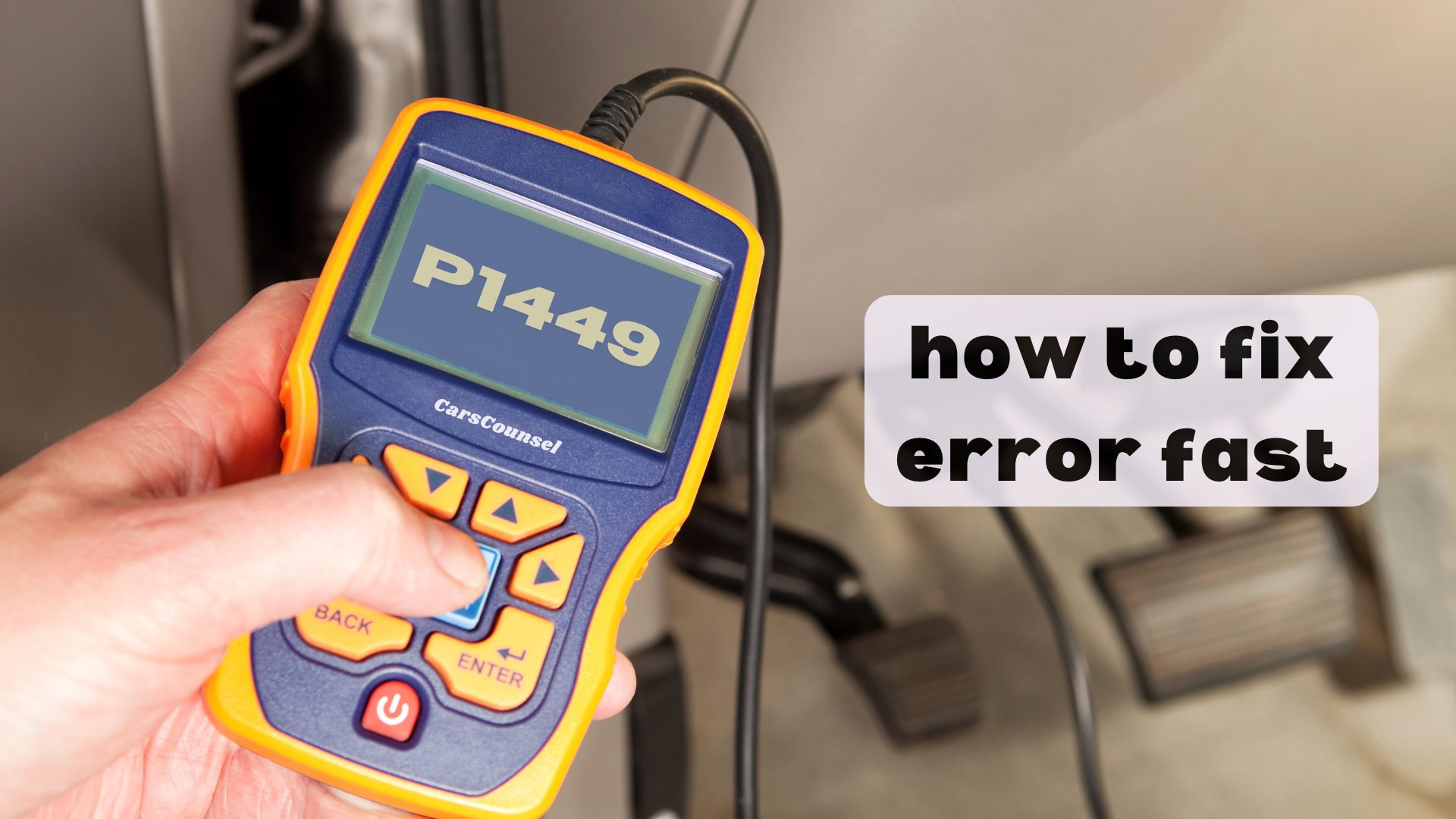
The P1449 code is a manufacturer-specific OBD-II diagnostic trouble code. Its exact definition depends on the vehicle application, but it generally relates to a fault in the evaporative emission (EVAP) system leak detection pump or vent control circuit.
Because definitions vary by manufacturer, the exact diagnostic path requires verifying your specific vehicle’s factory service information. The code identifies a detected condition, not necessarily a failed part.
Quick Navigation
Key Takeaways
- P1449 is a manufacturer-specific code indicating a fault in an EVAP system component, such as a leak detection pump or vent valve.
- Possible causes include damaged wiring, blocked EVAP vent filters, or internal component failures.
- Symptoms are usually limited to an illuminated check engine light, as EVAP faults rarely affect engine drivability.
- Diagnosis requires verifying the exact factory definition and testing the relevant EVAP circuits and hoses.
P1449 Code Description and Implications
P1449 is a manufacturer-specific code, meaning its exact definition varies by automaker. The powertrain control module uses this code to flag an anomaly within the evaporative emission control system.
Some BMW applications: P1449 typically indicates a fault with the Diagnostic Module Tank Leakage (DMTL) pump, such as an overcurrent condition or the pump working too hard to pressurize the system.
Certain Honda and Nissan applications: This code may indicate a circuit malfunction or performance issue with the EVAP bypass solenoid valve, vent control valve, or pressure sensor.
Because the code is manufacturer-specific, you must verify the exact factory definition for your vehicle before beginning diagnosis. The specific trouble code meaning dictates the test.
Common Causes of the P1449 Code
Blocked EVAP vent paths: A clogged charcoal canister vent filter or a pinched vent hose can restrict airflow. This forces a leak detection pump to work harder, triggering a high-pressure or overcurrent fault.
Wiring and connector damage: The EVAP system components are located under the vehicle and exposed to the elements. Corroded pins or chafed wires can interrupt the control signals.
Component failure: The internal motor of a leak detection pump or the coil of a vent solenoid may develop an electrical fault, preventing it from operating correctly.
Symptoms Associated With P1449
Because the EVAP system manages fuel vapors rather than active engine combustion, a P1449 fault rarely causes noticeable drivability concerns.
The primary symptom is an illuminated check engine light. The vehicle will likely fail an emissions inspection until the system is repaired and the monitors complete.
If a physical leak or disconnected hose is also present, you might notice a faint fuel odor near the rear of the vehicle, but the code itself does not cause rough idling or stalling.
Diagnosing the P1449 Trouble Code
Diagnosis must begin by confirming the exact factory definition and wiring diagram for your specific make, model, and year. Retrieve freeze frame data to understand the conditions when the code set.
Inspect the EVAP hoses, vent lines, and charcoal canister area for physical damage, kinks, or debris blocking the vent filter. Clear any restrictions before testing electrical components.
Use a multimeter to test the resistance and voltage of the specific pump or valve identified by the factory service information. Compare your readings against the manufacturer’s specifications.
Repairing the P1449 Issue
Repairs must follow confirmed diagnostic testing. Do not replace the leak detection pump or vent valve without verifying the EVAP vent paths and wiring first.
If a vent filter is clogged or a hose is pinched, clear the restriction or replace the damaged line. This often resolves high-current or high-pressure pump faults.
If wiring damage is found, repair the harness. If the component fails electrical testing, replace it with a part meeting the exact vehicle specification, then clear the codes.
Cost Considerations for P1449 Repairs
Repair costs depend on the confirmed root cause, component accessibility, and local labor rates. Replacing an externally mounted vent filter or clearing a blocked hose is generally inexpensive.
If the leak detection pump or charcoal canister assembly requires replacement, parts and labor costs will increase. Always factor in the cost of proper diagnostic time and smoke testing.
Prevention Strategies for Future Occurrences
Inspecting the EVAP vent hoses and canister vent filter during routine maintenance can help identify debris intrusion or physical damage before it causes a pump or circuit fault.
Avoiding high-pressure car washes directly on exposed undercarriage EVAP components may reduce the risk of forcing water into electrical connectors or vent filters.
Troubleshooting Tips and Best Practices
Always verify the exact definition of P1449 for your specific vehicle. Assuming it is always a failed pump can lead to misdiagnosis when a simple blocked vent filter is the actual cause.
Do not ignore the charcoal canister location. On many vehicles, it is mounted low under the rear bumper, making the vent filter highly susceptible to dirt, mud, and spider webs.
Check for related EVAP codes that might point to a systemic issue, such as a severely leaking fuel tank or a stuck purge valve.
More OBD-II Codes
| P1448 | P1447 | P1446 | P1445 |
| P1444 | P1441 | P1450 | P1456 |
| P1457 | P1475 | P1476 | P1477 |
| P0440 | P0441 | P0442 | P0446 |
| P0455 | P0456 | P0449 | P0450 |
| P0451 | P0452 | P0453 | P1404 |
Frequently Asked Questions
Is P1449 a generic or manufacturer-specific code?
P1449 is a manufacturer-specific code. Its exact definition and diagnostic procedure vary depending on the vehicle make, model, and year. Always consult the factory service information for your specific application.
Can a loose gas cap cause a P1449 code?
A loose gas cap typically triggers generic EVAP leak codes like P0440 or P0457. P1449 usually indicates a specific electrical or performance fault with a leak detection pump or vent valve, rather than a simple cap leak.
Is it safe to drive with a P1449 code?
The vehicle is generally safe to drive, as EVAP system faults do not affect engine combustion or drivability. However, the vehicle will emit excess hydrocarbons and will fail an emissions inspection until repaired.
Will replacing the EVAP pump always fix P1449?
Not always. A blocked charcoal canister vent filter or a pinched hose can cause the pump to work too hard, triggering a high-current or high-pressure fault. The vent paths must be inspected first.
Can a bad EVAP vent valve cause other problems?
A stuck vent valve can prevent the EVAP system from purging fuel vapors properly. While it rarely causes severe drivability issues, it can lead to failed emissions tests and difficulty refueling the tank.
What Should You Do About the P1449 Code?
Confirm the exact factory definition and wiring diagram for your specific vehicle application. Inspect the relevant EVAP hoses, vent filters, and connectors for physical damage or restrictions.
Perform targeted electrical testing on the relevant system and components to isolate the fault. Repair the confirmed root cause, then verify the repair by clearing the codes and running the EVAP monitor.

