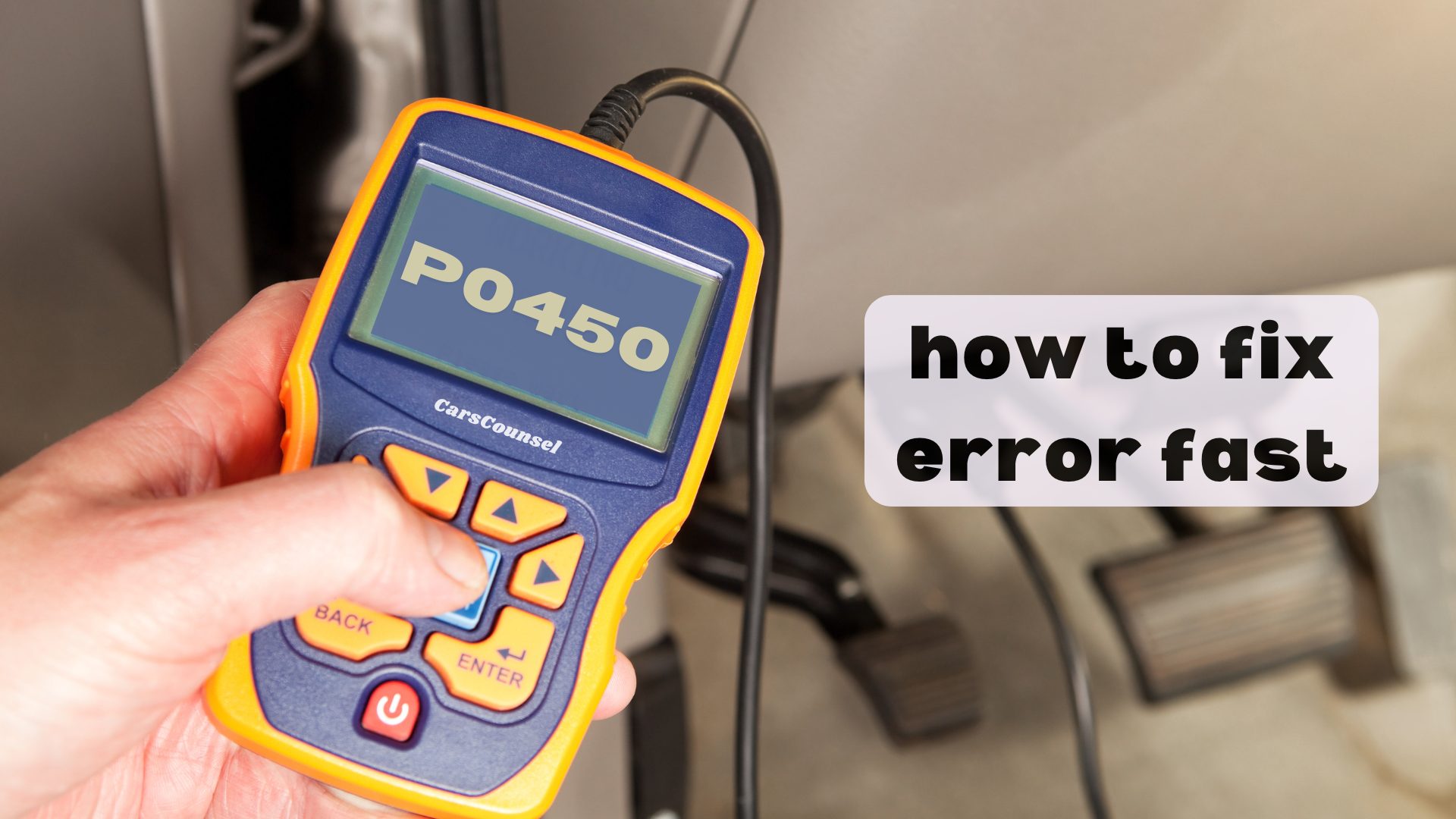
P0450 is a generic OBD-II diagnostic trouble code indicating that the powertrain control module has detected a malfunction in the evaporative emission system pressure sensor circuit. This system monitors fuel tank pressure to prevent vapor leaks.
Because this code identifies a circuit malfunction rather than a specific failed component, proper diagnosis requires testing the sensor wiring, reference voltages, and grounds before replacing any parts.
Quick Navigation
Key Takeaways
- P0450 indicates a malfunction in the evaporative emission system pressure sensor circuit.
- Common causes include a failed fuel tank pressure sensor, damaged wiring, or corroded connectors.
- Symptoms typically include an illuminated Check Engine Light and a failed emissions inspection.
- Diagnosis involves verifying the 5-volt reference, sensor ground, and signal circuit integrity.
P0450 Code Description and Implications
P0450 is a generic error code that applies to all OBD-II equipped vehicles. The evaporative emission control system captures fuel vapors from the fuel tank and routes them to the engine to be burned.
The system uses a fuel tank pressure sensor to monitor pressure and vacuum levels. When the powertrain control module detects an invalid or erratic signal from this sensor, it stores P0450.
Common Causes of the P0450 Code
Diagnostic trouble codes for circuit malfunctions stem from electrical faults within the sensor wiring or the sensor itself.
Possible causes include a failed fuel tank pressure sensor with an internal electrical fault.
A short or open circuit in the sensor signal wire can also prevent the module from reading pressure data.
An open circuit in the 5-volt reference wire or the sensor ground wire will cause the sensor to malfunction.
Corroded, damaged, or disconnected electrical connectors at the sensor or powertrain control module can also trigger the code.
Symptoms Associated With P0450
Symptoms associated with an EVAP pressure sensor circuit fault are generally limited to emissions and warning indicators.
The primary symptom is an illuminated Check Engine Light on the dashboard.
The vehicle will likely fail an emissions inspection because the EVAP monitor cannot complete its self-test.
Drivability and engine performance issues do not occur with a P0450 code, as the sensor only monitors vapor pressure.
Diagnosing the P0450 Trouble Code
Diagnosis must begin by verifying the electrical condition of the fuel tank pressure sensor circuit.
Use a scan tool to monitor the live data for the fuel tank pressure sensor voltage or pressure reading.
Verify that the sensor is receiving a stable 5-volt reference and has a clean ground connection.
Inspect the signal wire for continuity and check for shorts or opens using a multimeter.
If the wiring and reference voltages are correct but the signal remains erratic, the sensor itself may be faulty.
Repairing the P0450 Issue
Repairs must follow confirmed diagnostic testing to address the root cause of the electrical fault.
If a short or open is found in the wiring harness, repair or replace the affected section.
If the 5-volt reference or ground circuit is open, trace the wiring and repair the break.
If the sensor fails electrical testing, replace it with a component meeting the correct vehicle specification.
After repairs, clear the codes and perform an EVAP monitor drive cycle to verify the system passes.
Cost Considerations for P0450 Repairs
Cost depends on diagnostic time, component accessibility, required parts, and labor.
Replacing a fuel tank pressure sensor is straightforward if it is mounted externally on the fuel tank or EVAP canister.
However, if the sensor is integrated into the fuel pump module inside the tank, labor costs will be higher.
Prevention Strategies for Future Occurrences
Inspecting exposed wiring harnesses under the vehicle and ensuring electrical connectors remain clean can help prevent circuit faults.
Protecting the EVAP system components from road debris and corrosion helps maintain the integrity of the sensor circuits.
Troubleshooting Tips and Best Practices
Do not confuse P0450 with EVAP leak codes like P0442, P0455, or P0456. P0450 is strictly an electrical circuit code.
Performing a smoke test will not diagnose a P0450 code, as the issue is electrical, not a physical vapor leak.
Check for related codes like P0451, P0452, or P0453, which may provide additional context about the sensor circuit.
More OBD-II Codes
| P0444 | P0445 | P0446 | P0447 |
| P0448 | P0449 | P0451 | P0452 |
| P0453 | P0455 | P0456 | P0462 |
| P0440 | P0441 | P0442 | P1450 |
| P0411 | P0480 | P0481 | P1441 |
| P0420 | P0430 | P0463 | P1404 |
Frequently Asked Questions
Is P0450 a generic OBD-II code?
Yes. P0450 is a generic code applicable to all OBD-II compliant vehicles, indicating a malfunction in the evaporative emission system pressure sensor circuit.
Can I drive with a P0450 code?
Yes, a sensor circuit malfunction does not affect engine drivability or safety. However, the vehicle will likely fail an emissions inspection until the issue is resolved.
Does P0450 mean I have a fuel leak?
No. P0450 is an electrical circuit code indicating a sensor malfunction. It does not indicate a physical fuel vapor leak, which would trigger different codes.
Will a new gas cap fix a P0450 code?
No. A loose or faulty gas cap causes physical vapor leaks, not electrical circuit malfunctions. Replacing the cap will not resolve a P0450 code.
Can I clear the P0450 code by disconnecting the battery?
Disconnecting the battery may temporarily clear the code, but it does not repair the electrical fault. It also resets readiness monitors, causing an emissions test failure.
What Should You Do About the P0450 Code?
Confirm the exact condition of the fuel tank pressure sensor circuit by testing the 5-volt reference, ground, and signal wires.
Repair or replace the confirmed failed components, then retest the system and complete the necessary drive cycles to verify the repair.

