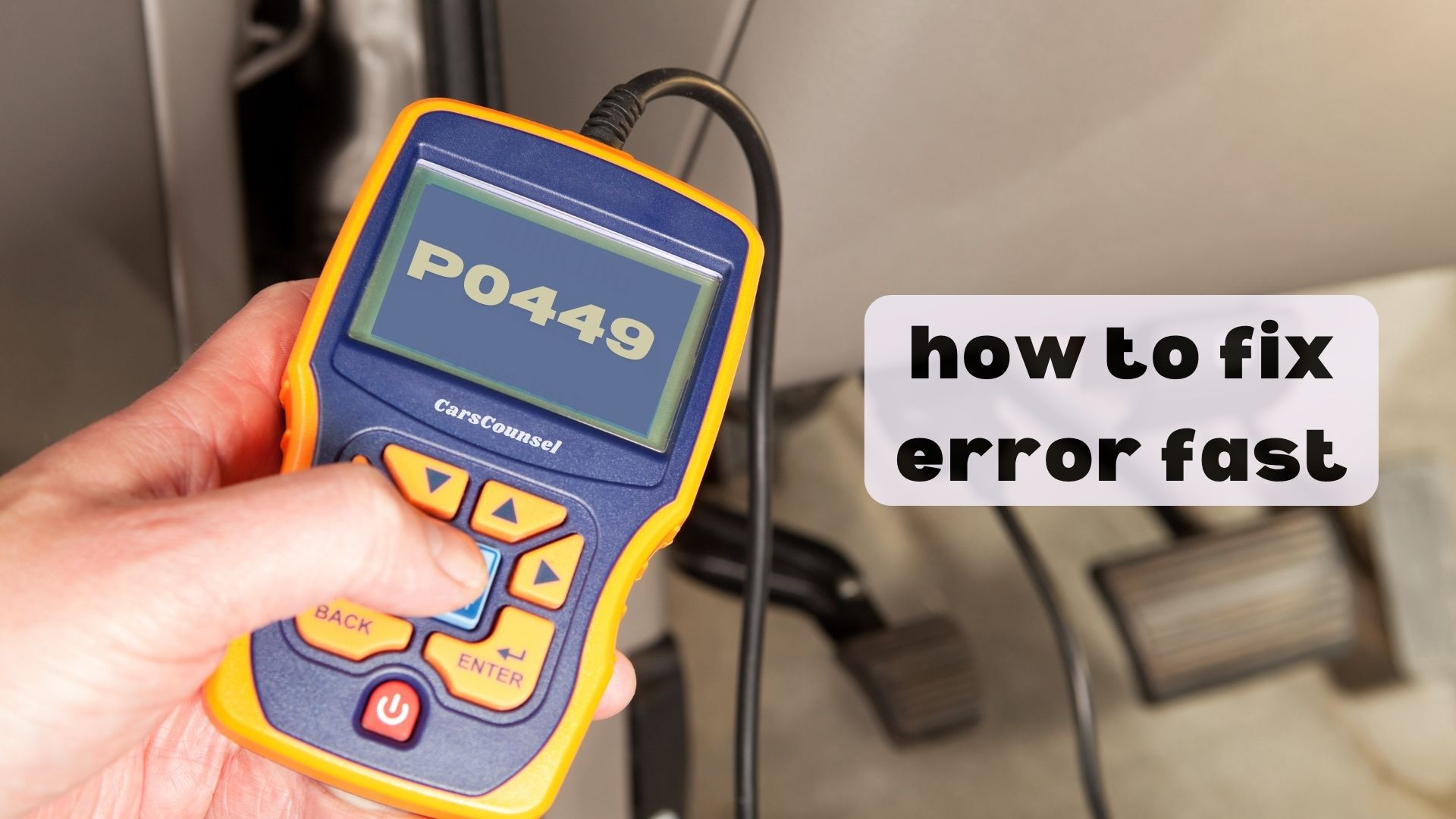
The P0449 code indicates a malfunction in the Evaporative Emission (EVAP) system vent valve or solenoid control circuit. As a generic OBD-II code, its core definition applies universally across equipped vehicles.
This code identifies a detected electrical circuit condition, not necessarily a failed component. Proper diagnosis requires verifying the exact vehicle application and testing the relevant circuit and solenoid.
Quick Navigation
Key Takeaways
- The P0449 code indicates an electrical malfunction in the EVAP vent valve or solenoid control circuit.
- Possible causes include a failed vent solenoid, damaged wiring, corroded connectors, or a poor electrical connection.
- Control module failure is rare; most issues stem from the solenoid itself or the associated wiring harness.
- Diagnosis requires inspecting the EVAP canister area and testing the circuit with a multimeter or scan tool.
- While usually not causing drivability issues, this code will illuminate the Check Engine Light and cause emissions test failure.
P0449 Code Description and Implications
The P0449 code stands for Evaporative Emission System Vent Valve/Solenoid Circuit Malfunction. The EVAP system prevents fuel vapors from escaping into the atmosphere.
The vent valve, located near the EVAP charcoal canister, controls the flow of fresh air into the system. The powertrain control module (PCM) monitors the electrical circuit controlling this valve.
When the PCM detects an unexpected voltage, resistance, or circuit state, it sets the P0449 code. This indicates a circuit problem, which could involve the solenoid, the wiring, or the connectors.
Common Causes of the P0449 Code
Several conditions can trigger this circuit malfunction code. Identifying the exact cause requires electrical testing.
- Failed or internally shorted/open EVAP vent solenoid or valve.
- Damaged, broken, or chafed wiring in the vent valve harness.
- Corroded, loose, or water-damaged electrical connectors at the solenoid.
- Blown fuse or faulty relay supplying power to the EVAP vent circuit.
- Poor ground connection for the vent valve or the PCM.
- Faulty PCM or ECM (rare, usually only after all other circuit components are verified).
Symptoms Associated With P0449
Because the EVAP system operates primarily to control emissions, a vent circuit malfunction does not normally affect engine drivability.
- Illuminated Check Engine Light or Service Engine Soon light.
- Possible faint smell of fuel vapors near the vehicle if the system cannot seal properly.
- Failure during state or local emissions inspections.
You will not notice changes in engine performance, fuel economy, or shifting behavior.
Diagnosing the P0449 Trouble Code
Diagnosis must begin by confirming the exact factory definition and locating the EVAP vent valve for your specific vehicle.
- Visually inspect the wiring harness and connectors leading to the EVAP vent solenoid, looking for chafing, burns, or corrosion.
- Check the relevant fuses and relays that supply power to the EVAP system.
- Use a digital multimeter to measure the resistance across the vent solenoid terminals and compare it to manufacturer specifications.
- Verify that the solenoid is receiving proper battery voltage and has a clean ground when commanded.
- If equipped, use a bidirectional scan tool to command the vent valve open and closed while listening for an audible click.
Only replace the solenoid or PCM after confirming the specific circuit fault through testing.
Repairing the P0449 Issue
Repairs depend entirely on the confirmed root cause of the circuit malfunction.
- If the solenoid fails resistance or functional testing, replace the EVAP vent valve/solenoid assembly.
- If wiring damage is found, repair or replace the affected harness sections and seal the connections.
- Clean or replace corroded connectors to restore proper electrical contact.
- Replace any blown fuses and investigate the cause of the overload.
- If testing confirms the PCM driver is faulty and all external circuits are intact, follow the manufacturer procedure for module replacement and programming.
Clear the codes and perform an EVAP monitor drive cycle to verify the repair.
Cost Considerations for P0449 Repairs
Repair costs vary based on the underlying fault, vehicle accessibility, and local labor rates.
- Diagnostic time is required to pinpoint the exact circuit failure.
- Wiring repairs may be less expensive if the damage is easily accessible.
- Vent solenoid replacement costs depend on the part price and whether the entire EVAP canister assembly must be removed to access it.
- PCM replacement involves higher part costs and requires specialized programming.
Cost depends on diagnostic time, component accessibility, required parts, programming requirements, and labor.
Prevention Strategies for Future Occurrences
While electrical failures are not always preventable, some practices can reduce the risk of EVAP circuit issues.
- Inspecting exposed wiring near the fuel tank and EVAP canister can help identify developing damage from road debris.
- Keeping connector seals intact may reduce moisture intrusion and corrosion in harsh climates.
- Avoiding high-pressure water spray directly on electrical connectors during undercarriage washing helps prevent water intrusion.
Troubleshooting Tips and Best Practices
Always consult the exact manufacturer service information for your vehicle’s wiring diagram and pinout values.
- Do not assume the vent solenoid is faulty simply because the code points to its circuit; wiring issues are frequently the actual cause.
- Check for related EVAP codes, such as leak or purge flow codes, which may indicate a broader system issue.
- Ensure the gas cap is properly tightened, as a loose cap can sometimes complicate EVAP system diagnostics.
- Verify technical service bulletins (TSBs) for your specific make and model, as some manufacturers issue software updates or revised parts for recurring EVAP circuit faults.
More OBD-II Codes
| P0448 | P0447 | P0446 | P0445 |
| P0444 | P0442 | P0450 | P0451 |
| P0452 | P0453 | P0455 | P0456 |
| P0440 | P0441 | P0420 | P0430 |
| P0171 | P0174 | P0135 | P0141 |
| P0411 | P0130 | P0170 | P0173 |
Frequently Asked Questions
Is the P0449 code manufacturer-specific?
No. P0449 is a generic OBD-II code. Its core definition regarding the EVAP vent valve circuit applies universally across all compliant vehicles, though exact component locations and testing procedures vary by manufacturer.
Can I drive my car with a P0449 code?
Yes, you can drive with a P0449 code. It does not affect engine drivability or safety. However, the Check Engine Light will remain on, and the vehicle will fail an emissions inspection.
Will a loose gas cap cause a P0449 code?
No, a loose gas cap triggers a leak code like P0455 or P0442. P0449 specifically indicates an electrical circuit malfunction in the vent valve or solenoid, not a physical vapor leak.
Can I clear the P0449 code without fixing it?
Clearing the code without repairing the circuit is not recommended. The powertrain control module will continuously monitor the circuit, and the code will return once the monitor runs again, keeping the Check Engine Light illuminated.
Does a P0449 code mean the PCM is broken?
No, PCM failure is rare. P0449 points to a failed vent solenoid, damaged wiring, or a corroded connector. The PCM should only be considered after all external circuit components are thoroughly tested.
What Should You Do About the P0449 Code?
Confirm the exact factory definition and component location for your specific vehicle application. Follow the applicable manufacturer diagnostic procedure to test the EVAP vent circuit, solenoid, and wiring.
Repair or replace the confirmed failed component, then retest the system to ensure the EVAP monitor completes successfully.

