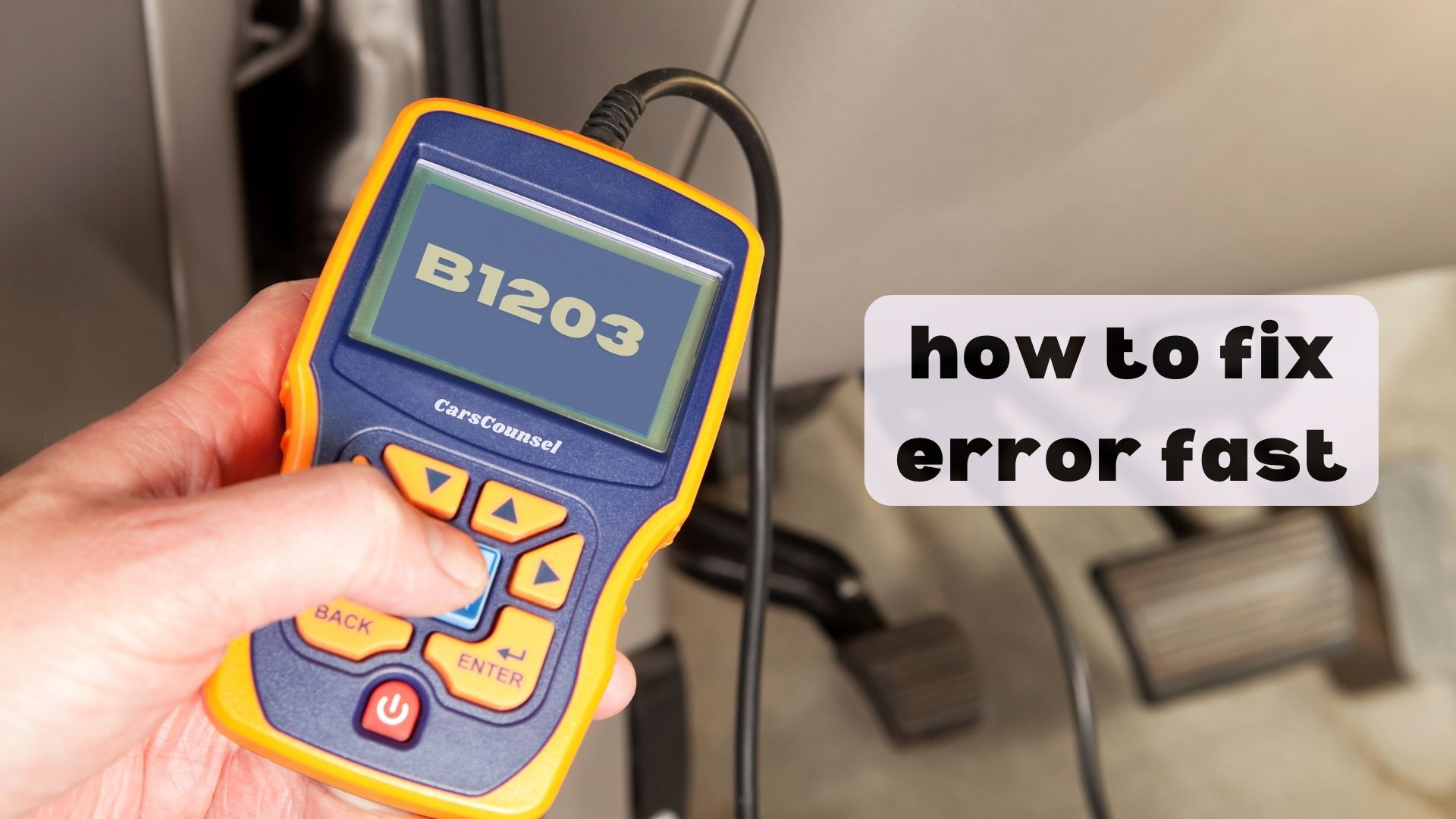
The B1203 diagnostic trouble code is a manufacturer-specific body code. Its exact definition depends heavily on the vehicle make, pointing to a fuel sender circuit fault on Ford models or an airbag control module issue on Nissan and Infiniti vehicles.
Because this code targets entirely different systems across manufacturers, the exact vehicle application must be verified before diagnosis. The code alone does not prove a specific sensor or module has failed without proper electrical and system testing.
Quick Navigation
Key Takeaways
- B1203 is a manufacturer-specific body code with differing definitions depending on the vehicle make.
- On Ford, Lincoln, and Mercury applications, it typically indicates a short to battery voltage in the fuel sender circuit.
- On Nissan and Infiniti applications, it points to an internal fault within the SRS Diagnosis Sensor Unit.
- Symptoms vary by application but can include an inaccurate fuel gauge or an illuminated airbag warning light.
- Diagnosis requires verifying the exact factory definition and testing the relevant fuel sender circuits or SRS modules.
B1203 Code Description and Implications
The B1203 code indicates that a control module has detected a specific fault within a body system. Because it is a manufacturer-specific code, the exact monitored component varies by brand.
Some Ford, Lincoln, and Mercury applications: B1203 indicates a fuel sender circuit short to battery voltage. The instrument cluster or powertrain control module detects that the signal wire from the fuel tank sender unit is reading system voltage when it should be reading a variable resistance value.
Certain Nissan and Infiniti applications: On these vehicles, B1203 indicates an internal fault or communication failure within the SRS Diagnosis Sensor Unit. This unit is the primary airbag control module responsible for monitoring the supplemental restraint system.
Common Causes of the B1203 Code
Because B1203 applies to different systems across different brands, the root cause depends on the verified vehicle application.
- Ford (Fuel Sender) Causes: A short to power in the fuel sender signal wire, a failed fuel level sender unit inside the fuel tank, or damaged wiring between the tank and the instrument cluster.
- Nissan / Infiniti (SRS) Causes: An internal failure of the Diagnosis Sensor Unit, poor electrical connections at the SRS module, or a loss of power or ground to the airbag control module.
- Shared Electrical Causes: Corroded connectors, chafed wiring harnesses, or aftermarket electrical accessories spliced into body circuits can cause false voltage readings or module communication dropouts.
Symptoms Associated With B1203
When the control module detects a critical body system fault, it alters system operation or disables the affected feature.
- Ford Symptoms: The fuel gauge may read completely full, completely empty, or fluctuate erratically. The low fuel warning light may also behave incorrectly.
- Nissan / Infiniti Symptoms: The airbag warning light will illuminate on the dashboard. The supplemental restraint system may be disabled, meaning the airbags will not deploy in a collision.
Diagnosing the B1203 Trouble Code
Accurate diagnosis begins by verifying the exact vehicle application and reviewing manufacturer-specific service information.
- For Ford applications: Use a scan tool to monitor the fuel level sensor data. Inspect the wiring harness running from the instrument cluster to the fuel tank for shorts to battery voltage or chafing.
- For Nissan / Infiniti applications: SRS systems require extreme caution. Disconnect the battery and wait the manufacturer-specified time before inspecting the Diagnosis Sensor Unit connectors for corrosion or loose pins.
- Module Testing: If the wiring and power/ground circuits to the SRS module test correctly but the code persists, the manufacturer procedure typically directs replacement of the Diagnosis Sensor Unit.
Repairing the B1203 Issue
Repairs must follow the confirmed root cause identified during diagnosis.
- Ford Repairs: Repair or replace any damaged wiring in the fuel sender circuit. If the wiring is intact but the signal remains shorted to voltage, replace the fuel level sender unit or fuel pump assembly.
- Nissan / Infiniti Repairs: Clean any corroded SRS connectors. If the Diagnosis Sensor Unit has an internal fault, replace the module and perform the required manufacturer configuration or calibration procedures.
Cost Considerations for B1203 Repairs
Cost depends on diagnostic time, component accessibility, required parts, programming requirements, and labor.
For a Ford fuel sender issue, dropping the fuel tank to access the sender unit involves significant labor time. For a Nissan or Infiniti SRS fault, replacing and programming the Diagnosis Sensor Unit requires specialized safety procedures and module configuration.
Prevention Strategies for Future Occurrences
While electronic module failures cannot always be predicted, you can reduce the risk of circuit and body system faults.
- Inspect exposed wiring harnesses under the vehicle and near the fuel tank for signs of road debris damage, chafing, or corrosion during routine service.
- Avoid splicing aftermarket accessories, such as alarms or remote starters, into factory body or SRS circuits, as improper wiring frequently causes false voltage or communication codes.
Troubleshooting Tips and Best Practices
Follow these practices to avoid misdiagnosis and ensure accurate repairs.
- Do not probe SRS circuits: On Nissan and Infiniti applications, never use a standard multimeter to probe airbag squib or sensor circuits, as the meter’s internal battery can accidentally deploy an airbag.
- Check for TSBs: Check for Technical Service Bulletins related to the instrument cluster or SRS module, as some model years have updated part numbers or require specific software flashes after module replacement.
- Verify your definition: When researching this trouble code, always verify whether your specific vehicle uses the Ford fuel sender definition or the Nissan SRS definition before ordering parts.
More OBD-II Codes
| B0285 | B0286 | B0525 | B0527 |
| B1202 | P0449 | B1208 | B1209 |
| B1233 | B1234 | B1318 | B1325 |
| B1342 | B1352 | B2947 | B2948 |
| P0462 | P0463 | U0151 | U0100 |
| P0107 | P0108 | P0112 | P0113 |
Frequently Asked Questions
Is B1203 a generic or manufacturer-specific code?
No. B1203 is a manufacturer-specific body code. Its definition varies significantly by brand, indicating a fuel sender circuit fault on Ford vehicles or an SRS module fault on Nissan and Infiniti models.
Can I drive my vehicle with a B1203 code?
It depends on the application. On Ford models, the vehicle is drivable but the fuel gauge will be inaccurate. On Nissan or Infiniti models, the airbag system may be disabled, presenting a severe safety risk.
Will disconnecting the battery clear the B1203 code?
Disconnecting the battery might temporarily clear the code. However, it does not repair the underlying wiring short or internal module fault, and the code will return once the modules run their self-tests.
Can an aftermarket alarm cause a B1203 code?
Yes. Improperly installed aftermarket accessories spliced into the instrument cluster or body wiring can introduce false voltage signals or disrupt module communication, triggering body codes like B1203.
Does B1203 affect the engine or transmission?
Generally, no. The B1203 code relates strictly to the fuel level sender circuit or the SRS airbag control module. It does not directly affect engine or transmission operation.
What Should You Do About the B1203 Code?
When a B1203 code appears, confirm the exact factory definition for your specific vehicle make and model. Because this code targets entirely different systems depending on the manufacturer, applying the wrong diagnostic path will lead to misdiagnosis.
Follow the applicable manufacturer diagnostic procedure to test the relevant system and components. Once the root cause is confirmed, complete the necessary electrical repairs or module replacements before returning the vehicle to normal service.

