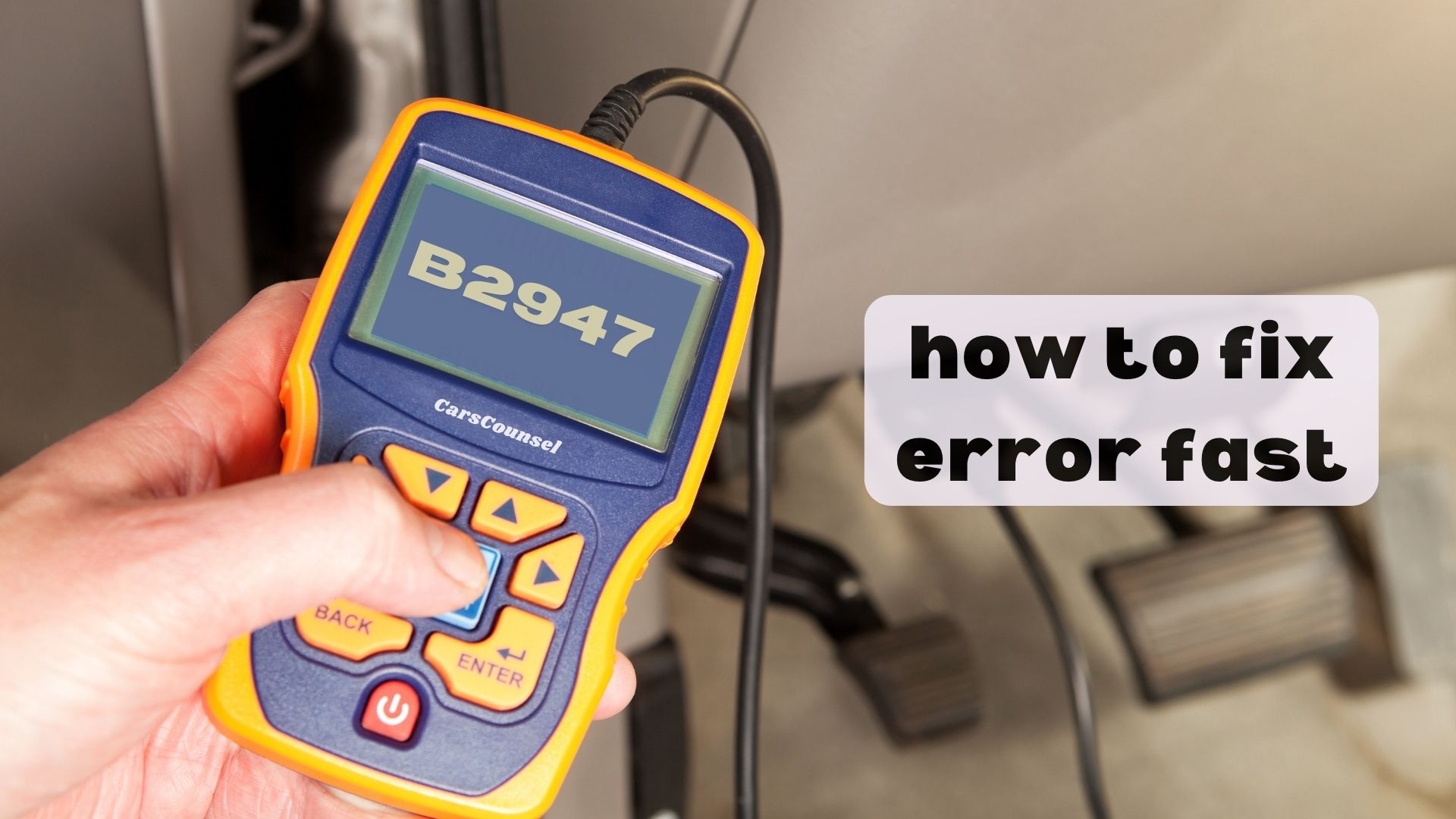
The B2947 trouble code is a manufacturer-specific diagnostic code, primarily found on GM vehicles, indicating that the Body Control Module (BCM) has detected a low voltage condition in the security system sensor power circuit.
This code identifies an electrical fault in the Passlock or immobilizer sensor circuit, not necessarily a failed sensor. Accurate diagnosis requires testing the specific reference voltage circuit before replacing the ignition lock cylinder or control module.
Quick Navigation
Key Takeaways
- B2947 indicates the control module detected a low voltage condition in the security system sensor power circuit, often related to the Passlock system.
- Possible causes include a short to ground in the wiring harness, a failed ignition lock cylinder sensor, or an internal BCM fault.
- Symptoms typically include a flashing or solid security light, an engine that starts and immediately stalls, or a no-start condition.
- Proper diagnosis requires measuring the 5-volt reference circuit and checking for continuity to ground before replacing the Passlock sensor.
- Repair costs vary based on whether the issue is a simple wiring repair or requires ignition lock cylinder replacement and security relearn procedures.
B2947 Code Description and Implications
The B2947 code is a manufacturer-specific definition, predominantly found on General Motors (GM) vehicles. It specifically indicates that the Body Control Module (BCM) or Instrument Panel Cluster (IPC) has detected a voltage below the expected threshold on the security system sensor power circuit.
GM’s Passlock anti-theft system uses a sensor inside the ignition lock cylinder to verify the correct key. The control module supplies a 5-volt reference to this sensor. If the circuit is shorted to ground, the voltage drops, triggering this error code and disabling the fuel injectors.
Because this is a manufacturer-specific code, its exact definition and diagnostic procedures are tied to GM’s specific security architecture. Other manufacturers use different coding systems for their immobilizer faults.
Common Causes of the B2947 Code
Electrical faults are the primary trigger for this circuit-low condition. The control module expects a steady 5-volt reference signal from the Passlock sensor.
Short to ground in wiring: The wiring harness passing from the steering column to the BCM can chafe against metal brackets or the column housing, creating a direct short to ground that pulls the reference voltage to zero.
Failed Passlock sensor: An internal failure within the ignition lock cylinder sensor can cause the resistive element to short out, dropping the signal voltage below the diagnostic threshold.
Control module issues: In rare cases, an internal fault within the BCM or IPC may prevent it from properly supplying or reading the 5-volt reference circuit, though wiring and sensor failures are more frequent.
Symptoms Associated With B2947
When the BCM detects a critical fault in the Passlock sensor circuit, it activates the vehicle’s anti-theft protocol. Depending on the exact GM application, specific symptoms will appear.
Security light illumination: The security indicator on the dashboard will typically flash or remain solidly illuminated, indicating the immobilizer system has detected a fault.
Engine stalling: The engine may start and run for a few seconds before the BCM cuts power to the fuel injectors, causing the engine to stall immediately.
Crank, no-start condition: In some applications, the BCM may disable the starter or fuel system entirely, preventing the engine from starting at all.
Diagnosing the B2947 Trouble Code
Accurate diagnosis begins by confirming the exact Passlock system configuration for your specific GM model and year. Consult the manufacturer’s wiring diagram to identify the 5-volt reference, signal, and ground circuits.
Visual inspection: Inspect the wiring harness near the steering column, ignition switch, and BCM connectors. Look for chafed insulation, pinched wires, or corrosion inside the connectors.
Voltage testing: Using a digital multimeter, back-probe the Passlock sensor connector at the ignition lock cylinder. Verify that the 5-volt reference wire is indeed reading near zero volts, confirming the circuit low condition.
Component isolation: Disconnect the sensor and check the wiring harness for a short to ground. If the short disappears when the sensor is unplugged, the ignition lock cylinder sensor is likely the fault.
Repairing the B2947 Issue
Repairs must address the specific root cause identified during testing. Simply clearing the code will not resolve an underlying electrical fault, and the vehicle will likely remain immobilized.
Wiring repair: If a short to ground is found in the steering column harness, repair or replace the affected wires. Use solder and heat-shrink tubing to ensure a reliable connection that can withstand column movement.
Sensor replacement: If the Passlock sensor fails testing, the ignition lock cylinder assembly typically requires replacement. This often involves a mandatory 10-minute or 30-minute security relearn procedure to synchronize the new sensor with the BCM.
Module diagnosis: If the wiring and sensor test correctly but the BCM is not supplying the 5-volt reference, follow the manufacturer’s diagnostic tree for module replacement and programming.
Cost Considerations for B2947 Repairs
Repair costs depend heavily on the underlying fault and the vehicle’s design. A simple wiring repair in the steering column may only require basic shop time and materials.
If the Passlock sensor is confirmed as the fault, the ignition lock cylinder must be replaced. This part is moderately priced, but labor involves removing steering column shrouds and performing a security relearn procedure.
If the BCM requires replacement and programming, the overall cost will increase significantly due to the price of the module and the need for dealer-level immobilizer programming equipment.
Prevention Strategies for Future Occurrences
While internal sensor failures cannot always be predicted, you can protect the external circuits from common damage.
Harness routing: Ensure the wiring harness near the steering column is properly secured in its factory clips. Repeated turning of the steering wheel and column adjustment can cause loose wires to chafe against metal edges over time.
Ignition switch care: Avoid attaching heavy keychains to your ignition key. Excessive weight can accelerate wear on the ignition lock cylinder internals and the integrated Passlock sensor connections.
Troubleshooting Tips and Best Practices
Do not assume the BCM is faulty just because a B2947 code is present. A shorted wire touching the steering column shaft will produce the exact same low-voltage reading as a failed internal sensor.
Always check the 5-volt reference circuit first. If the BCM detects a short, it may temporarily shut down the 5-volt reference supply to protect itself. You may need to clear the code and cycle the key to see if the voltage returns.
Be aware of the Passlock relearn procedure. Whenever the ignition lock cylinder, BCM, or PCM is replaced or disconnected, the vehicle will not start until the specific 10-minute or 30-minute security relearn sequence is completed.
More OBD-II Codes
| B0285 | B0286 | B0525 | B1202 |
| B1203 | B1208 | B1318 | B1325 |
| B1342 | B1352 | B2948 | B2957 |
| B2958 | B2960 | B3031 | B3033 |
| C1237 | C1259 | C1260 | C1282 |
| C1283 | C1503 | C1613 | C1616 |
Frequently Asked Questions
Is B2947 a generic or manufacturer-specific code?
B2947 is a manufacturer-specific body code. It is predominantly used by General Motors (GM) vehicles to identify a fault in the Passlock security system sensor circuit.
Can I bypass the Passlock system to clear a B2947 code?
Bypassing the Passlock system is not recommended and often requires specialized programming or aftermarket modules. The proper repair involves fixing the low-voltage circuit fault and performing a security relearn.
Will disconnecting the battery clear the B2947 code?
Disconnecting the battery may temporarily erase the code, but it will not repair the shorted circuit. Furthermore, disconnecting the battery often triggers a security lockout that requires a relearn procedure to restart the vehicle.
Is it safe to drive with a B2947 code?
Driving is usually not possible. The B2947 code indicates a critical security system fault, which typically causes the engine to stall immediately after starting or prevents the engine from cranking entirely.
Does B2947 always mean the ignition lock cylinder is bad?
No. The code indicates a low voltage condition in the circuit. This is frequently caused by a shorted wire in the steering column harness. The ignition lock cylinder should only be replaced after the wiring is verified.
What Should You Do About the B2947 Code?
Confirm the exact factory definition and security system configuration for your specific GM vehicle application. Because B2947 identifies a circuit-low condition in the Passlock sensor power supply, the root cause could be a shorted wire, a damaged connector, or a failed sensor.
Follow the applicable manufacturer diagnostic procedure to test the 5-volt reference, signal, and ground circuits. Repair any confirmed wiring faults, or replace the relevant system components only after electrical testing verifies the failure. Finally, perform the mandatory security relearn procedure to restore vehicle operation.

