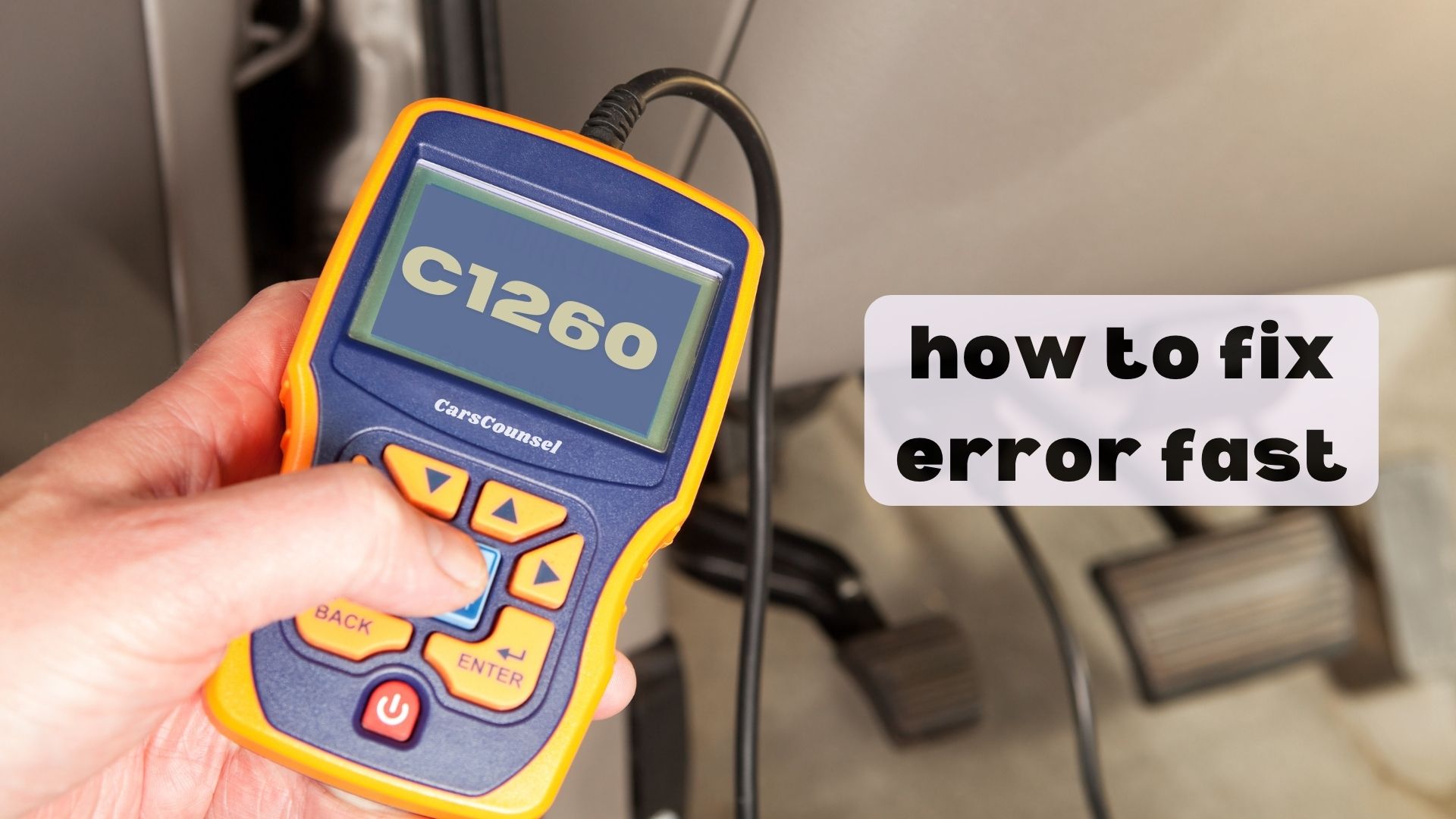
The C1260 trouble code is a manufacturer-specific chassis code. Its exact definition depends entirely on the vehicle application, primarily indicating a steering angle sensor circuit fault or a rear wheel speed sensor comparison failure.
Because it is manufacturer-specific, the exact application must be verified. The code identifies a detected condition, and testing is required to identify the root cause before replacing any components.
Quick Navigation
Key Takeaways
- C1260 is a manufacturer-specific code, primarily indicating a steering angle sensor fault on Hyundai and Kia, or a rear wheel speed sensor issue on other makes.
- Possible causes include a failed sensor, damaged wiring, poor connector contact, or a missing sensor calibration.
- Symptoms typically include illuminated ABS and stability control warning lights, along with disabled traction systems.
- Proper diagnosis requires verifying the exact factory definition and testing the relevant sensor circuits or performing a calibration.
- Repairs range from executing a software calibration to replacing the steering angle sensor or addressing wiring faults.
C1260 Code Description and Implications
The C1260 code is a manufacturer-specific chassis definition. Because it is not a generic SAE code, its exact meaning depends entirely on the vehicle application.
Hyundai and Kia applications: On these vehicles, C1260 indicates a steering angle sensor circuit or signal fault. The stability control module monitors the sensor and sets this error code if the signal is missing or erratic.
Other applications: On certain Ford, GM, and other makes, C1260 may indicate a rear right speed wheel comparison failure or an ABS hydraulic inlet valve malfunction.
Common Causes of the C1260 Code
Electrical faults, missing calibrations, and component failures can trigger this code, though the specific causes vary by manufacturer.
For Hyundai and Kia steering systems: The issue stems from a failed steering angle sensor, damaged wiring harness, poor connector contact, or a missing sensor calibration after a battery disconnect or alignment.
For other wheel speed or ABS systems: The fault is caused by a failed rear right wheel speed sensor, damaged wiring, a dirty or damaged tone ring, or an ABS module issue.
Symptoms Associated With C1260
Symptoms vary drastically based on which system has detected the fault.
Hyundai and Kia applications: A key symptom is illuminated ABS and Electronic Stability Control warning lights. The traction control and stability systems will be disabled until the sensor circuit is repaired and calibrated.
Other applications: You may experience an illuminated ABS warning light, disabled anti-lock braking, and potential speedometer irregularities if the rear wheel speed sensor signal is lost.
Diagnosing the C1260 Trouble Code
Accurate diagnosis requires confirming the exact factory definition for your specific make and model before proceeding.
Hyundai and Kia diagnosis: Verify if the battery was recently disconnected or if steering components were replaced. Use a bidirectional scan tool to monitor live steering angle data and perform the required sensor calibration procedure.
Other applications diagnosis: Inspect the rear right wheel speed sensor wiring harness for damage. Test the sensor resistance and output signal using a digital multimeter, and inspect the tone ring for missing teeth or debris.
Repairing the C1260 Issue
Repairs must address the specific root cause identified during testing for your vehicle’s system.
Calibration procedures: If the code is due to a missing baseline on applicable vehicles, perform the steering angle sensor calibration using a capable scan tool.
Component replacement: If the wiring is intact but the sensor fails testing or refuses to calibrate, replace the steering angle sensor or wheel speed sensor with a component meeting the correct vehicle specification.
Cost Considerations for C1260 Repairs
Cost depends on diagnostic time, component accessibility, required parts, programming requirements, and labor.
Performing a steering angle sensor calibration requires minimal parts cost but requires specialized scan tool access. Replacing an integrated steering angle sensor assembly or clock spring will increase the overall repair cost.
Prevention Strategies for Future Occurrences
While internal sensor failures cannot always be predicted, you can prevent calibration-related faults during routine maintenance.
When disconnecting the battery or replacing steering components on applicable vehicles, ensure the steering angle sensor calibration procedure is performed immediately afterward to prevent the code from setting.
Troubleshooting Tips and Best Practices
Do not assume the steering angle sensor requires replacement just because a C1260 code is present. A missing calibration will produce the exact same fault reading as a failed sensor.
Always check the vehicle’s recent repair history first. A recent battery replacement, alignment, or suspension repair can trigger these calibration faults on applicable vehicles.
Check for Technical Service Bulletins for your specific vehicle. Manufacturers occasionally release updated calibration procedures or revised sensor part numbers to address chronic stability system faults.
More OBD-II Codes
| C1259 | C1237 | C1235 | C1211 |
| C1210 | C1205 | C1282 | C1283 |
| C1503 | C1604 | C1611 | C1612 |
| C1095 | C1100 | C1102 | C1111 |
| P0500 | P0501 | P0715 | P0720 |
| P0300 | P0420 | P0171 | P0335 |
Frequently Asked Questions
Is C1260 a generic or manufacturer-specific code?
No. C1260 is a manufacturer-specific chassis code. It primarily indicates a steering angle sensor fault on Hyundai and Kia vehicles, but it can indicate a wheel speed sensor issue on other brands.
Can I drive my car with a C1260 code?
Driving is possible but not recommended for extended periods. On most applications, the electronic stability and traction control systems will be disabled, reducing vehicle safety during adverse road conditions.
Will disconnecting the battery clear the C1260 code?
Disconnecting the battery will not repair the underlying issue. On applicable vehicles, disconnecting the battery actually causes the C1260 code by erasing the stored steering angle sensor calibration data from the control module.
Can a wheel alignment cause a C1260 code?
Yes. On applicable vehicles, adjusting the steering angle or replacing steering components during an alignment can disrupt the baseline calibration, requiring a steering angle sensor reset to clear the code.
Does C1260 always mean the sensor is bad?
No. The code identifies a detected circuit or calibration condition. A missing calibration after battery work can trigger this code. The sensor should only be replaced after testing confirms failure.
What Should You Do About the C1260 Code?
Confirm the exact factory definition for your vehicle, then follow the applicable manufacturer diagnostic procedure. Because C1260 is manufacturer-specific, the diagnostic path for a steering angle sensor differs from a wheel speed sensor circuit.
Inspect the relevant system and components, including wiring harnesses, sensors, and calibration status. Perform the required calibration procedures, or replace the relevant system components only after testing verifies the failure.

