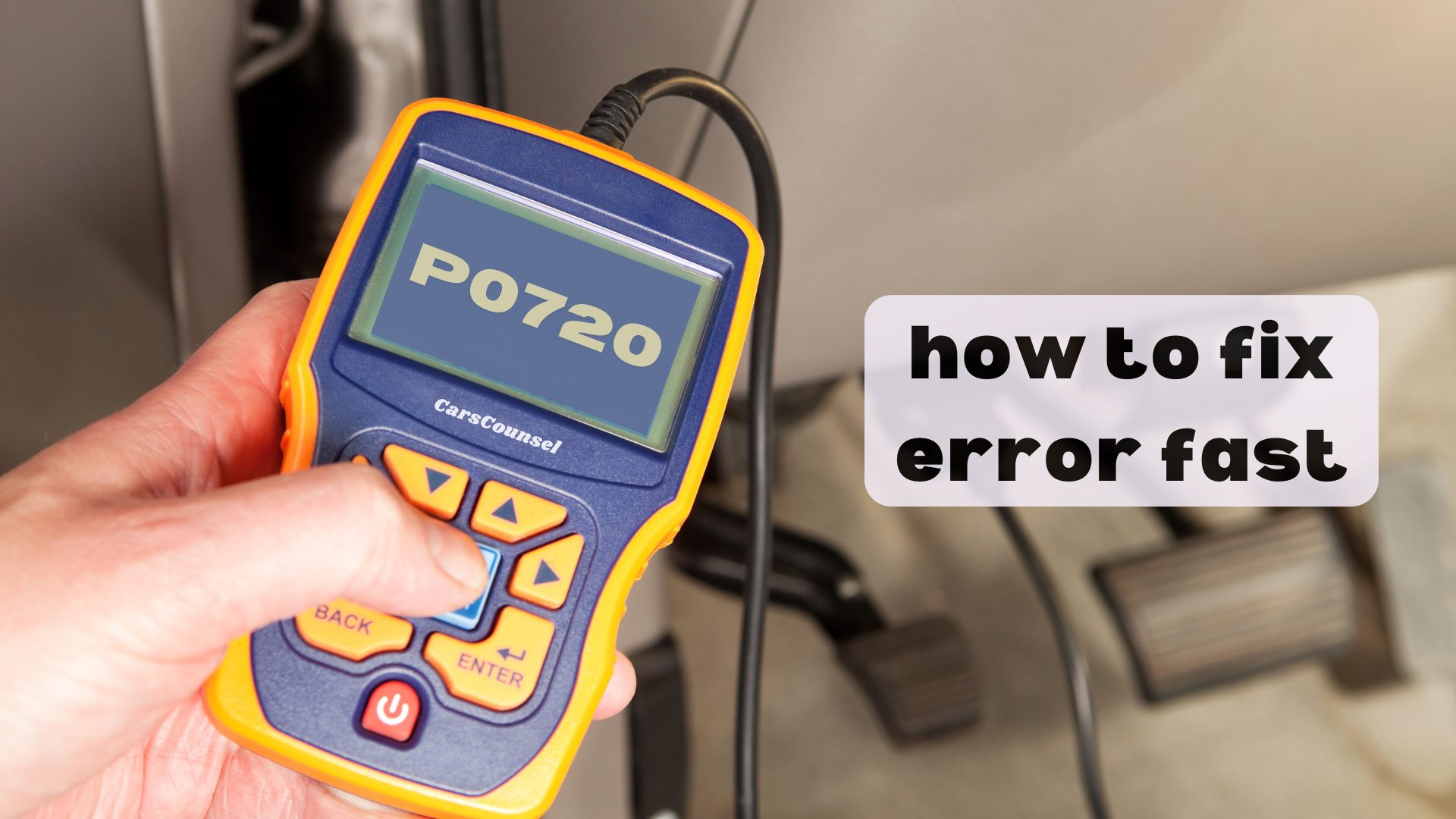
The P0720 code is a generic OBD-II powertrain code indicating an “Output Speed Sensor Circuit Malfunction.” The powertrain or transmission control module has detected an electrical fault or erratic signal in the output speed sensor circuit.
This code identifies a circuit condition and does not automatically prove the sensor itself has failed. Proper diagnosis requires testing the sensor circuit, inspecting the wiring, and verifying transmission mechanical operation before replacing any components.
Quick Navigation
Key Takeaways
- P0720 indicates an electrical fault in the transmission output speed sensor circuit, such as an open, short, or erratic signal.
- The code flags a circuit condition, which does not automatically confirm a failed sensor or internal transmission damage.
- Diagnosis requires verifying the sensor reference voltage, signal circuit, and ground before replacing any components.
- Contaminated transmission fluid or metallic debris on the magnetic sensor tip can also disrupt the signal.
P0720 Code Description and Implications
The P0720 code stands for “Output Speed Sensor Circuit Malfunction.” The transmission control module (TCM) or powertrain control module (PCM) monitors the electrical signal from the output speed sensor (OSS).
This sensor measures the rotational speed of the transmission’s output shaft. The module uses this data to calculate vehicle speed, determine shift points, and control torque converter clutch engagement.
When the module detects a signal that is missing, erratic, or outside the expected electrical parameters, it stores the P0720 code.
Common Causes of the P0720 Code
Several electrical and mechanical conditions can trigger a circuit malfunction code for the output speed sensor.
- Faulty output speed sensor: The internal sensor element or magnetic pickup may have failed electrically or lost its magnetic properties.
- Wiring and connector issues: Chafed wires, broken harnesses, corroded pins, or loose connectors in the sensor circuit can interrupt the signal.
- Metallic debris: Because many output speed sensors are magnetic, metallic shavings from internal transmission wear can accumulate on the sensor tip and distort the signal.
- Contaminated or low transmission fluid: Severely degraded or low fluid can affect sensor operation and internal transmission hydraulics.
- PCM or TCM failure: In rare cases, an internal fault within the control module may prevent it from reading the sensor circuit correctly.
Symptoms Associated With P0720
Because P0720 relates to transmission speed monitoring, symptoms directly affect shifting and vehicle speed readings.
- Illuminated Check Engine Light: The MIL will activate once the module confirms the electrical circuit fault.
- Erratic or harsh shifting: Without accurate output speed data, the transmission may shift at the wrong times, slip, or bang into gear.
- Speedometer malfunction: The dashboard speedometer may read zero, fluctuate wildly, or drop out completely.
- Torque converter clutch issues: The TCC may fail to engage or disengage properly, causing engine stalling at stops or poor highway fuel economy.
- Limp mode: The transmission may default to a single gear to protect itself from further damage.
Diagnosing the P0720 Trouble Code
Accurate diagnosis requires distinguishing between an electrical circuit fault and internal mechanical transmission wear.
- Verify transmission fluid level and condition: Check the dipstick to ensure the fluid is at the correct level and has not been severely contaminated or burnt.
- Scan for additional codes: Check for related codes, such as P0715 (Input Speed Sensor) or P0722 (Output Speed Sensor No Signal), which provide more specific circuit clues.
- Inspect the sensor and wiring: Visually examine the sensor connector and wiring harness for damage, corrosion, or heat exposure near the exhaust.
- Test the sensor circuit: Use a multimeter to test the sensor resistance and check the reference voltage, signal circuit continuity, and ground connections according to the manufacturer wiring diagram.
- Check for metallic debris: Remove the sensor and inspect its magnetic tip for excessive metal shavings, which indicate internal mechanical wear.
Repairing the P0720 Issue
Repairs must address the specific root cause identified during diagnosis. Clearing the code without fixing the underlying condition will result in its return.
- Sensor replacement: If the mechanical and electrical tests confirm the sensor has failed, replace the output speed sensor and clear the codes.
- Wiring repair: Repair or replace any damaged wiring, clean corroded connector terminals, and secure loose connections in the sensor circuit.
- Fluid service: If metallic debris was found on the sensor, a transmission fluid flush and filter change may be necessary, though extensive metal requires internal transmission repair.
- Module diagnosis: If the sensor and wiring test perfectly, follow the manufacturer procedure to diagnose the TCM or PCM.
Cost Considerations for P0720 Repairs
Repair costs for a P0720 code vary significantly based on the underlying cause and the vehicle’s design.
- Output speed sensor replacement: The part is relatively inexpensive, and labor is usually minimal if the sensor is externally mounted on the transmission case.
- Wiring repair: Costs depend entirely on the time required to trace the harness, locate the break or short, and perform a proper repair.
- Internal transmission repair: If metallic debris caused the sensor fault, internal mechanical repairs or a transmission rebuild will involve substantial labor and parts.
Prevention Strategies for Future Occurrences
While electrical sensor failures cannot always be prevented, maintaining the mechanical health of the transmission reduces the likelihood of sensor contamination.
- Follow strict fluid service intervals: Regular transmission fluid and filter changes prevent severe sludge and metallic buildup that can interfere with magnetic speed sensors.
- Protect transmission wiring: Ensure harnesses are routed away from extreme heat sources like exhaust components to prevent insulation melting and short circuits.
- Address leaks promptly: Repairing transmission fluid leaks prevents low fluid levels that can lead to internal wear and subsequent sensor contamination.
Troubleshooting Tips and Best Practices
When addressing a P0720 code, avoid common diagnostic shortcuts that can lead to unnecessary parts replacement.
- Never ignore speedometer issues: A fluctuating speedometer often accompanies P0720. Do not assume it is just a dashboard gauge failure until the transmission sensor circuit is verified.
- Compare input and output speeds: If your scan tool displays live data, compare the input speed sensor and output speed sensor RPMs. They should correlate logically based on the current gear ratio.
- Check for Technical Service Bulletins (TSBs): Some manufacturers issue revised sensor part numbers or wiring harness updates for specific models prone to speed sensor circuit codes.
- Review related faults: If multiple transmission codes are present, review other OBD2 Codes to identify a potential shared ground, module, or internal mechanical issue.
More OBD-II Codes
| P0717 | P0716 | P0715 | P0714 |
| P0713 | P0711 | P0721 | P0722 |
| P0723 | P0725 | P0726 | P0727 |
| P0700 | P0741 | P0733 | P0734 |
| P0735 | P0736 | P0742 | P0743 |
| P0744 | P0745 | P0746 | P0747 |
Frequently Asked Questions
Is P0720 a generic or manufacturer-specific code?
P0720 is a generic OBD-II code. Its basic definition regarding the output speed sensor circuit malfunction is standardized across all vehicle manufacturers, though specific diagnostic steps and wiring diagrams vary by application.
Can I drive my car with a P0720 code?
Driving is not recommended. Without accurate output speed data, the transmission may shift erratically, enter limp mode, or fail to engage the torque converter clutch, creating unsafe driving conditions and potential internal damage.
Will a transmission fluid change fix the P0720 code?
A fluid change will only help if contaminated fluid or minor metallic debris was temporarily disrupting the magnetic sensor tip. If the sensor, wiring, or connector has failed electrically, a fluid change will not resolve the issue.
Does P0720 mean my transmission is broken?
Not necessarily. P0720 specifically indicates an electrical fault in the sensor circuit. While internal mechanical wear can generate metal that fouls the sensor, the code often points to simple wiring, connector, or sensor electrical failure.
Can a bad battery or alternator cause P0720?
Severe voltage fluctuations from a failing alternator or weak battery can distort sensor reference voltages, potentially triggering circuit codes. However, this sets multiple electrical codes simultaneously across different systems rather than just P0720 alone.
What Should You Do About the P0720 Code?
When the P0720 code appears, your first step should be to verify the transmission fluid level and condition. Do not ignore erratic shifting or speedometer failure, as these create unsafe driving conditions.
Confirm the exact factory definition and diagnostic procedure for your specific vehicle application. Have a qualified technician test the sensor circuit and inspect for metallic debris before replacing internal transmission components.


Comments are closed.