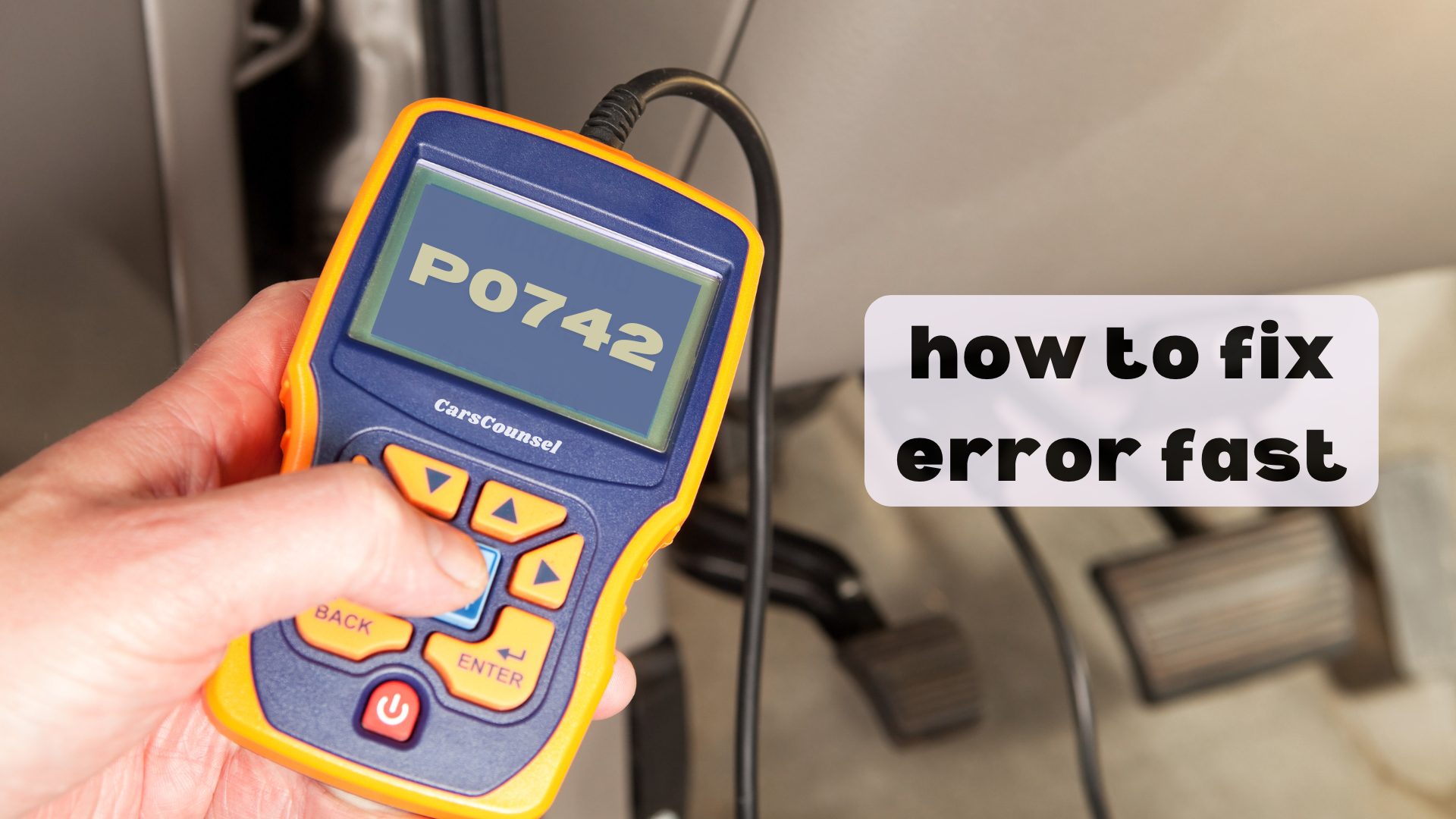
P0742 is a generic OBD-II diagnostic trouble code indicating the powertrain control module detected that the torque converter clutch circuit is stuck on.
This code identifies a detected condition where the clutch remains engaged when it should be released. The underlying cause requires targeted diagnosis based on the exact factory definition.
Quick Navigation
Key Takeaways
- P0742 indicates the torque converter clutch remained engaged when the control module commanded it to disengage.
- Possible causes include a mechanically stuck TCC solenoid, valve body issues, wiring shorts, or degraded transmission fluid.
- Diagnosis involves checking fluid condition, testing the TCC solenoid circuit, and monitoring live data for clutch slip speeds.
- Repairs depend on the confirmed root cause and may involve fluid service, solenoid replacement, or valve body repair.
P0742 Code Description and Implications
P0742 is a generic OBD-II code indicating the powertrain control module (PCM) detected that the torque converter clutch (TCC) is stuck in the engaged position.
The torque converter clutch locks the engine and transmission together at cruising speeds to improve fuel efficiency and reduce heat.
When the PCM commands the clutch to release, it monitors the slip speed between the engine and transmission input shaft.
If the slip speed remains near zero when the clutch should be disengaged, the module logs this code.
Because P0742 is a generic code, this fundamental monitoring logic applies across various vehicles from multiple manufacturers.
However, the exact diagnostic thresholds, transmission architecture, and troubleshooting steps vary depending on the specific vehicle application.
When diagnosing an OBD2 error related to transmission torque transfer, verifying the exact factory definition is the most critical first step.
Common Causes of the P0742 Code
The underlying causes for a stuck-on torque converter clutch generally involve the hydraulic control system, electrical circuits, or internal mechanical components.
Mechanically Stuck TCC Solenoid: The solenoid valve that directs fluid to the torque converter clutch may become jammed in the open position by debris or wear.
Valve Body Issues: A stuck valve or cross-leakage inside the transmission valve body can continuously apply hydraulic pressure to the clutch.
Wiring Short to Ground: On certain applications, a short to ground in the TCC solenoid control circuit can keep the solenoid energized even when the PCM commands it off.
Contaminated Transmission Fluid: Severely degraded fluid or excessive clutch material in the fluid can cause hydraulic valves to stick.
Internal Clutch Failure: Physical welding or severe mechanical binding of the torque converter clutch friction material can prevent disengagement.
Symptoms Associated With P0742
The prominent symptom is the illumination of the Check Engine Light.
The engine may stall when the vehicle comes to a complete stop, similar to stopping a manual transmission vehicle without pressing the clutch pedal.
Drivers may experience harsh forward engagement when shifting from park or neutral into drive.
Fuel economy may decrease because the torque converter cannot unlock to allow engine braking or smooth idle.
Depending on the severity of the mechanical bind, the transmission may overheat due to continuous friction and lack of fluid circulation.
Diagnosing the P0742 Trouble Code
Diagnosis must begin by confirming the exact factory service information and checking the transmission fluid level and condition.
Fluid that is dark, smells burnt, or contains heavy particulate matter indicates internal mechanical wear or severe overheating.
Use a scan tool to monitor the TCC slip speed and commanded state during a test drive.
If the PCM commands the TCC off but the slip speed remains near zero, the clutch is physically or hydraulically locked.
Test the TCC solenoid electrical circuit for proper resistance and check for shorts to ground that could keep the solenoid energized.
If electrical tests are normal, the fault likely lies within the valve body, the solenoid mechanical internals, or the torque converter itself.
Repairing the P0742 Issue
Repairs must follow confirmed diagnosis. Never replace internal transmission components solely based on the presence of the code.
If the fluid is contaminated but no mechanical damage has occurred, a complete fluid and filter service may free a stuck valve.
If electrical testing reveals a short to ground in the wiring harness, repair the harness and clear the codes.
If the TCC solenoid is mechanically jammed or electrically failed, replace the solenoid using a component meeting the correct vehicle specification.
If the valve body is damaged or the torque converter clutch is physically welded, transmission disassembly or torque converter replacement is required.
Cost Considerations for P0742 Repairs
Repair costs vary considerably depending on the confirmed root cause and the specific vehicle application.
A standard transmission fluid and filter service involves moderate parts and labor costs.
Replacing an external or pan-mounted TCC solenoid involves moderate labor costs.
Addressing internal valve body issues or replacing the torque converter involves significant labor and higher parts costs due to transmission removal.
Cost depends on diagnostic time, component accessibility, required parts, programming requirements, and labor.
Prevention Strategies for Future Occurrences
Preventing torque converter clutch faults requires strict adherence to the vehicle’s transmission maintenance schedule.
Changing the transmission fluid and filter at the manufacturer’s recommended intervals helps maintain proper hydraulic pressure and prevents debris from jamming the TCC solenoid or valve body.
Avoiding excessive towing beyond the vehicle’s rated capacity reduces thermal stress and prevents the breakdown of the transmission fluid.
Troubleshooting Tips and Best Practices
Always check for Technical Service Bulletins related to P0742 for your specific vehicle application.
Manufacturers may release updated valve body designs, revised torque converter specifications, or software updates for the transmission control module to address known hydraulic sticktion issues.
Do not assume the transmission requires a complete rebuild simply because a stuck-on clutch code is present.
A simple wiring short, a clogged solenoid screen, or contaminated fluid can produce the P0742 code without catastrophic internal failure.
If the vehicle recently underwent transmission service, verify that the correct fluid type and exact capacity were used.
More OBD-II Codes
| P0741 | P0740 | P0736 | P0735 |
| P0734 | P0733 | P0743 | P0744 |
| P0745 | P0746 | P0747 | P0748 |
| P0700 | P0715 | P0720 | P0750 |
| P0780 | P0785 | P0300 | P0420 |
| P0171 | P0430 | P0174 | P0301 |
Frequently Asked Questions
Is the P0742 code generic or manufacturer-specific?
P0742 is a generic SAE-defined OBD-II code. Its fundamental definition regarding the torque converter clutch being stuck on applies across various manufacturers, though exact diagnostic procedures vary.
Can low transmission fluid cause a P0742 code?
Usually, no. Low fluid typically causes slipping or failure to engage. A stuck-on condition is generally caused by a mechanically jammed solenoid, a wiring short, or internal valve body issues keeping the clutch applied.
Will disconnecting the battery clear the P0742 code?
Disconnecting the battery may temporarily clear the code, but it does not repair the underlying mechanical or electrical fault. It also erases valuable freeze frame data, complicating professional diagnosis.
Can I drive my vehicle with a P0742 code?
Driving is not recommended. If the torque converter clutch remains locked, the engine will likely stall when coming to a stop, creating a severe safety hazard in traffic. The vehicle should be towed.
Does P0742 mean the transmission must be rebuilt?
Not necessarily. While internal mechanical failure is a possible cause, a wiring short, a stuck solenoid, or contaminated fluid can also trigger the code. Electrical and hydraulic tests are required first.
What Should You Do About the P0742 Code?
Confirm the exact factory definition and diagnostic procedure for your specific vehicle application before attempting repairs.
Do not assume the transmission requires a complete rebuild based solely on the presence of the diagnostic trouble code.
Inspect the fluid condition, verify the TCC solenoid electrical circuit, and review live slip speed data to rule out external faults.
Follow the applicable manufacturer diagnostic workflow to isolate the relevant system and components before authorizing major transmission disassembly.

