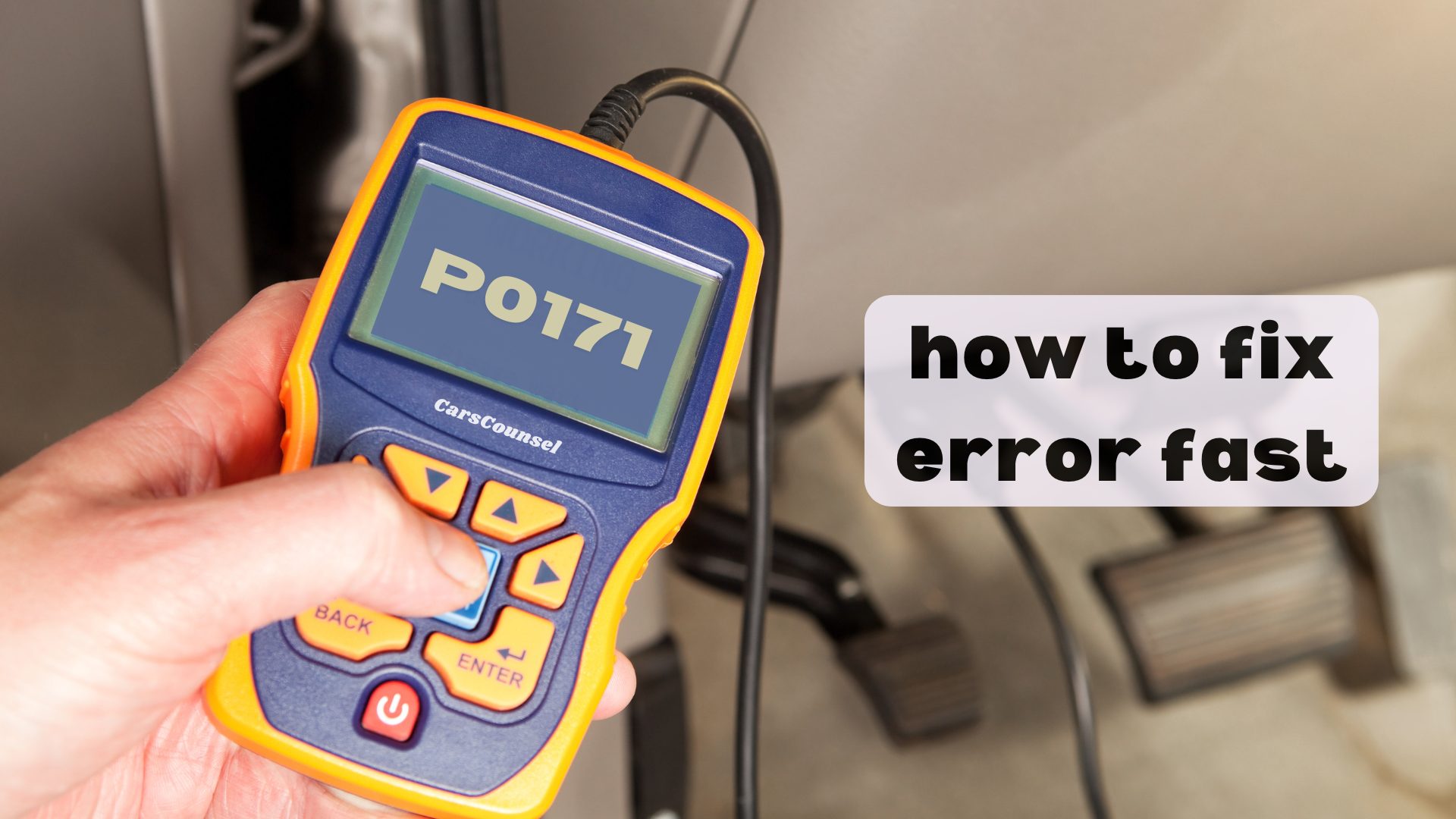
Diagnostic trouble code P0171 is a generic OBD-II powertrain code. It indicates the powertrain control module has detected that the air-fuel mixture on engine Bank 1 is running too lean.
This condition does not automatically prove a specific sensor has failed. The underlying issue could involve unmetered air, low fuel pressure, or sensor inaccuracies. Proper diagnosis is required to identify the exact root cause.
Quick Navigation
Key Takeaways
- P0171 is a generic code indicating the air-fuel mixture on Bank 1 is too lean, meaning there is too much air or not enough fuel.
- Possible causes include unmetered air entering the intake, low fuel pressure, or a failing mass air flow sensor.
- Symptoms often include rough idling, hesitation during acceleration, and an illuminated Check Engine Light.
- Diagnosis involves inspecting the intake system for vacuum leaks, checking fuel pressure, and reviewing live sensor data.
- Repairs depend on the confirmed root cause and may involve fixing intake leaks, replacing a fuel filter, or addressing sensor issues.
P0171 Code Description and Implications
P0171 is a generic OBD-II code, meaning its definition is standardized across all vehicle manufacturers. The powertrain control module monitors the oxygen sensor data to ensure the engine maintains the ideal air-fuel mixture.
When the module detects that Bank 1 is running too lean, it stores this error code. A lean condition means there is an excess of oxygen in the exhaust stream relative to the amount of fuel being burned.
This discrepancy can stem from unmetered air bypassing the mass air flow sensor, inadequate fuel delivery, or inaccurate sensor readings. Identifying the exact source is necessary to restore proper engine operation.
Common Causes of the P0171 Code
Because P0171 is a rationality code, the root cause often involves factors outside the oxygen sensor itself.
Unmetered air entering the intake system is a frequent cause. Vacuum leaks, cracked intake boots, or loose clamps after the mass air flow sensor allow unmeasured air to reach the engine.
Fuel delivery issues can also trigger this code. A clogged fuel filter, a failing fuel pump, or dirty fuel injectors can restrict fuel volume, causing the mixture to lean out under load.
Symptoms Associated With P0171
Symptoms vary depending on the severity of the lean condition and the specific vehicle application.
Drivers may notice hesitation, stumbling, or a lack of power during acceleration. The engine control module may struggle to deliver the correct fuel volume, leading to a lean misfire.
Rough idling or unstable engine speeds can occur if the sensor provides erratic readings or if a vacuum leak is present. In most applications, the Check Engine Light will illuminate once the monitor detects the fault.
Diagnosing the P0171 Trouble Code
Diagnosis must begin by verifying the exact conditions that triggered the code using freeze-frame data and live data streaming.
Technicians compare the live fuel trim readings at idle and at higher RPMs. If fuel trims are high at idle but normalize at higher RPMs, a vacuum leak is the likely culprit.
If fuel trims remain high across all RPM ranges, a fuel delivery issue or a faulty mass air flow sensor is more probable.
A thorough visual inspection of the entire intake tract is critical to identify cracked rubber boots or disconnected vacuum lines.
Repairing the P0171 Issue
Repairs must follow confirmed diagnosis based on the identified root cause.
If intake leaks are found, the damaged hoses, boots, or gaskets must be replaced to ensure all incoming air passes through the mass air flow sensor.
If fuel pressure is low, the fuel filter, fuel pump, or pressure regulator must be serviced or replaced. If the mass air flow sensor fails testing, it must be replaced.
Cost Considerations for P0171 Repairs
Repair costs depend entirely on the confirmed root cause and component accessibility.
Fixing a simple vacuum leak or replacing an engine air filter requires minimal parts and labor.
Cost depends on diagnostic time, component accessibility, required parts, programming requirements, and labor.
Prevention Strategies for Future Occurrences
Some electrical or mechanical failures cannot be reliably prevented.
Using a high-quality engine air filter and replacing it at the manufacturer’s recommended intervals helps prevent debris from contaminating the mass air flow sensor.
Inspecting exposed intake hoses and vacuum lines for dry rot or cracking can help identify developing unmetered air leaks before they trigger a fault.
Troubleshooting Tips and Best Practices
Never assume the oxygen sensor is faulty simply because the code references the air-fuel mixture. Unmetered air from a cracked intake boot is a common culprit that will cause a new sensor to fail immediately.
Avoid using harsh chemicals or compressed air to clean the mass air flow sensor, as these can permanently damage the delicate sensing elements.
Check for technical service bulletins applicable to your exact vehicle application, as manufacturers frequently release updated sensor calibrations or revised intake boot designs for recurring lean faults.
More OBD-II Codes
| P0161 | P0172 | P0130 | P0100 |
| P0156 | P0173 | P0131 | P0101 |
| P0155 | P0174 | P0132 | P0111 |
| P0150 | P0201 | P0133 | P0170 |
| P0141 | P0202 | P0135 | P0300 |
| P0140 | P0203 | P0136 | P0420 |
Frequently Asked Questions
Is P0171 a generic or manufacturer-specific code?
Yes. P0171 is a generic OBD-II code. Its standardized definition applies across all vehicle manufacturers, though specific diagnostic procedures may vary by application.
Can I drive my car with a P0171 code?
It depends on the symptoms. While the vehicle may remain drivable, severe hesitation, stalling, or a severe lean condition can cause catalytic converter damage or unsafe driving conditions.
Will disconnecting the battery clear the P0171 code?
Disconnecting the battery may temporarily clear the code, but it does not repair the underlying intake leak or fuel delivery fault. The code will return once the monitor runs again.
Can a dirty mass air flow sensor cause a P0171 code?
Yes. A contaminated mass air flow sensor can underreport the volume of incoming air, causing the engine control module to inject insufficient fuel and trigger the lean fault.
Does P0171 always mean the oxygen sensor is bad?
No. A system too lean fault frequently points to unmetered air from a cracked intake boot, a restricted fuel filter, or a failing fuel pump rather than an internal oxygen sensor failure.
What Should You Do About the P0171 Code?
Confirm the exact conditions that triggered the code by reviewing freeze-frame data and live fuel trim readings. Because P0171 is a generic rationality fault, identifying whether it stems from unmetered air, low fuel pressure, or a sensor issue is mandatory.
Follow the applicable manufacturer diagnostic steps to inspect the intake system and test the relevant fuel delivery components. Once the root cause is confirmed, complete the necessary repairs and verify that the system operates correctly and the code does not return.


Comments are closed.