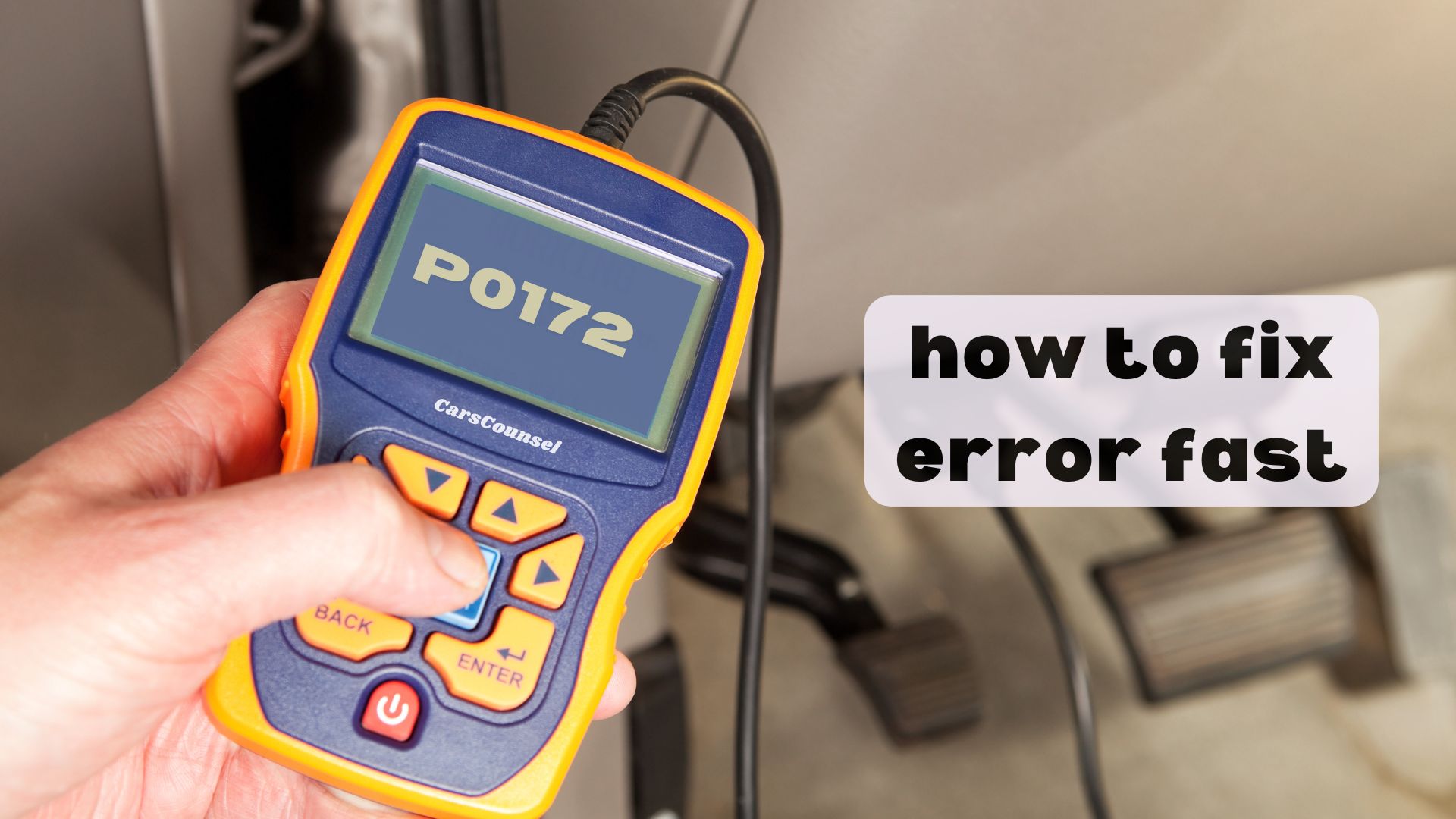
P0172 is a generic OBD-II powertrain fault code indicating that the powertrain control module has detected a rich air-fuel mixture condition on engine bank 1. This means the module is reducing fuel injector pulse width to compensate for excess fuel.
Exact vehicle application must be verified before diagnosis. The code identifies a fuel trim condition, but further testing is required to identify whether the root cause is mechanical, electrical, or a sensor fault.
Quick Navigation
Key Takeaways
- P0172 is a generic OBD-II code indicating that the fuel trim system on bank 1 has reached its rich correction limit.
- Possible causes include excessive fuel pressure, leaking fuel injectors, restricted air intake, or faulty sensor inputs like the MAF or oxygen sensors.
- Symptoms often include an illuminated Check Engine Light, decreased fuel economy, rough idling, and a rich exhaust odor.
- Diagnosis requires inspecting the intake system for restrictions and testing fuel pressure, injector balance, and live sensor data.
- Repairs involve addressing the confirmed mechanical or electrical fault, such as replacing a leaking injector or cleaning a restricted air filter.
P0172 Code Description and Implications
P0172 is a generic OBD-II diagnostic trouble code. It indicates that the powertrain control module (PCM) has detected that the fuel trim system on bank 1 is running excessively rich.
The PCM constantly monitors the oxygen sensors to adjust the air-fuel mixture. When the short-term and long-term fuel trims reach their maximum negative correction limits, the module determines that it can no longer compensate for the excess fuel.
This condition means the engine is receiving too much fuel or not enough air on bank 1. Identifying the root cause requires evaluating the fuel delivery, air intake, and sensor feedback systems.
Common Causes of the P0172 Code
Possible causes for a rich condition include excessively high fuel pressure from a failing fuel pressure regulator or a restricted fuel return line.
Leaking or stuck-open fuel injectors on bank 1 can also introduce unmetered fuel into the cylinders, triggering the rich code.
A restricted air intake system, such as a severely clogged air filter or a collapsed intake duct, can restrict airflow and enrich the mixture.
Faulty sensor inputs, such as a contaminated mass airflow (MAF) sensor or a biased oxygen sensor, can also cause the PCM to miscalculate fuel delivery.
Symptoms Associated With P0172
The most immediate symptom is an illuminated Check Engine Light. Because the engine is running rich, fuel economy will noticeably decrease.
The vehicle may exhibit a rough idle, engine hesitation, or stumbling during acceleration due to the overly rich air-fuel mixture.
A strong fuel odor may be present from the exhaust, and prolonged rich operation can eventually lead to fouled spark plugs or catalytic converter damage.
Diagnosing the P0172 Trouble Code
Diagnosis begins by verifying the exact freeze-frame data and live fuel trim values to confirm the rich condition on bank 1.
Technicians inspect the air intake system for restrictions, collapsed hoses, or a severely dirty air filter that could limit airflow.
Fuel pressure is measured and compared to manufacturer specifications to rule out a failing pressure regulator. Injector balance tests or leak-down tests can identify if a bank 1 injector is leaking.
Live data from the MAF sensor and oxygen sensors is reviewed to determine if a sensor is providing biased or inaccurate readings to the PCM.
Repairing the P0172 Issue
If high fuel pressure is confirmed, the fuel pressure regulator or restricted return line must be repaired or replaced according to manufacturer procedures.
If an injector leak-down test confirms a leaking fuel injector, the confirmed failed injector must be replaced.
If the air intake is restricted, the air filter or intake ducting must be serviced. If live data and electrical testing confirm a failed MAF or oxygen sensor, the confirmed failed sensor must be replaced.
Cost Considerations for P0172 Repairs
Cost depends on diagnostic time, component accessibility, required parts, programming requirements, and labor.
Replacing an air filter or cleaning a MAF sensor involves minimal cost. Replacing fuel injectors or a fuel pressure regulator requires more labor, especially if the fuel rail or intake manifold must be removed.
Prevention Strategies for Future Occurrences
Inspecting and replacing the engine air filter at the manufacturer’s recommended intervals helps prevent airflow restrictions that can alter the air-fuel mixture.
Using high-quality fuel and periodic fuel system cleaners may help prevent carbon buildup that can cause fuel injectors to stick or leak.
Troubleshooting Tips and Best Practices
Never assume an oxygen sensor has failed just because a rich fuel trim code is present. The oxygen sensor reports the rich exhaust condition; the root cause is often mechanical or fuel-related.
Do not ignore a rich condition. Prolonged rich operation will overheat and destroy the catalytic converter, leading to much more expensive repairs.
Check for technical service bulletins related to updated PCM calibrations, revised MAF sensors, or updated fuel injector part numbers for your specific model year and engine configuration.
More OBD-II Codes
| P0171 | P0173 | P0130 | P0101 |
| P0170 | P0174 | P0131 | P0300 |
| P0161 | P0201 | P0132 | P0420 |
| P0156 | P0202 | P0133 | P0440 |
| P0155 | P0203 | P0442 | P0455 |
| P0150 | P0204 | P0456 | P0441 |
Frequently Asked Questions
Is P0172 a generic or manufacturer-specific code?
Yes. P0172 is a generic OBD-II code, meaning its definition as a bank 1 system too rich condition is standardized across all vehicle makes and models.
Can I drive my car with a P0172 code?
Short distances may be possible, but driving with a rich condition should be minimized. Prolonged rich operation can foul spark plugs and destroy the catalytic converter.
Will disconnecting the battery clear the P0172 code?
Disconnecting the battery may temporarily clear the code and reset fuel trims, but it does not repair the underlying mechanical or sensor fault causing the rich condition.
Can a bad catalytic converter cause a P0172 code?
No. A failing catalytic converter triggers efficiency codes like P0420. P0172 specifically indicates that the engine is running rich, which can eventually damage the converter.
Does P0172 always mean the oxygen sensor is bad?
No. The oxygen sensor reports the rich exhaust condition. The root cause is often high fuel pressure, a leaking injector, restricted air intake, or a biased MAF sensor.
What Should You Do About the P0172 Code?
Confirm the exact live data and diagnostic procedure for your specific vehicle application. Because P0172 identifies a fuel trim condition, evaluating the fuel delivery, air intake, and sensor feedback systems is mandatory.
Follow the applicable diagnostic steps to test fuel pressure, check for intake restrictions, and evaluate sensor data. Once the root cause is confirmed, repair or replace the failed components and verify system operation.

