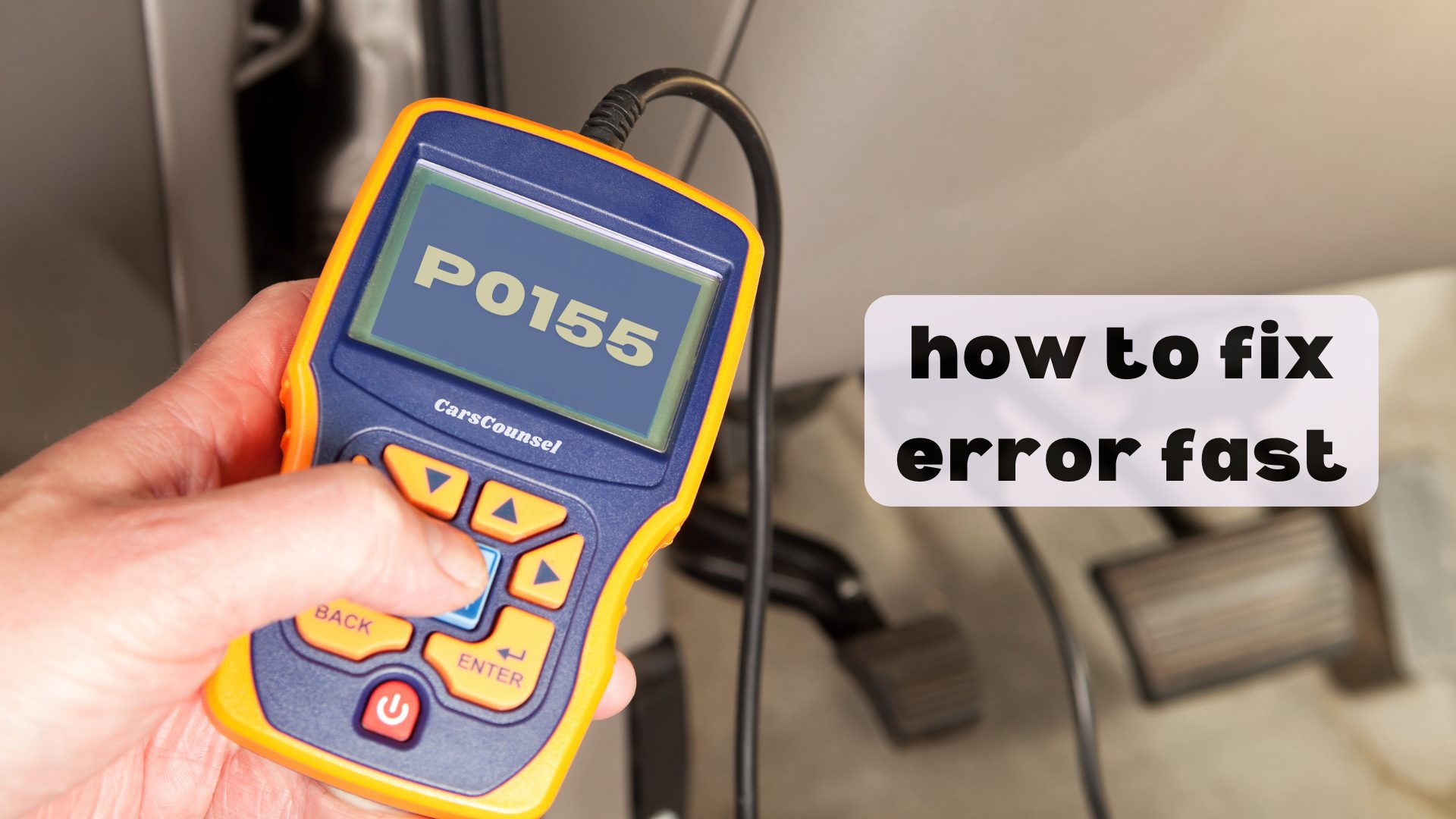
Diagnostic trouble code P0155 is a generic powertrain fault code indicating an “O2 Sensor Heater Circuit Malfunction (Bank 2 Sensor 1).” It signals that the engine control module detected an issue with the upstream oxygen sensor heater circuit on the engine’s second bank.
Because this code identifies an electrical circuit condition rather than a confirmed component failure, exact vehicle application must be verified. Further electrical diagnosis is required to identify whether the fault lies in the sensor heater element, wiring, or control module.
Quick Navigation
Key Takeaways
- P0155 indicates a malfunction in the heater circuit for the Bank 2 Sensor 1 oxygen sensor, affecting cold-start emissions monitoring.
- Possible causes include a failed internal heater element, damaged wiring, corroded connectors, or a blown heater circuit fuse.
- Symptoms typically include an illuminated Check Engine Light, though drivability issues are rare since the heater only affects warm-up time.
- Diagnosis requires checking the heater fuse, inspecting the wiring harness, and measuring circuit resistance against manufacturer specifications.
- Repairs depend on the confirmed root cause and may involve repairing wiring or replacing the oxygen sensor with a correct specification component.
P0155 Code Description and Implications
P0155 stands for “O2 Sensor Heater Circuit Malfunction (Bank 2 Sensor 1).” Modern oxygen sensors use an internal heating element to reach operating temperature quickly, allowing the engine to enter closed-loop fuel control sooner.
Bank 2 refers to the engine bank that does not contain cylinder number one. Sensor 1 designates the upstream sensor, located before the catalytic converter.
When the control module detects an open, short, or out-of-range resistance in this specific heater circuit, it stores P0155. This prevents the sensor from providing accurate air-fuel mixture feedback during cold starts.
Common Causes of the P0155 Code
The underlying cause of a heater circuit malfunction depends on the specific electrical fault the module detected. Possible causes include:
- A failed internal heater element within the Bank 2 Sensor 1 oxygen sensor.
- Broken, chafed, or shorted wires in the sensor harness, often caused by contact with hot exhaust components.
- Corrosion or moisture intrusion inside the sensor electrical connector.
- A blown fuse or faulty relay supplying power to the oxygen sensor heater circuits.
- Poor grounds or excessive resistance in the heater control circuit returning to the engine control module.
Symptoms Associated With P0155
The most consistent symptom is an illuminated Check Engine Light. Because the heater circuit only operates to warm the sensor during startup, drivability symptoms are uncommon once the exhaust gases naturally heat the sensor.
Some vehicles may experience slightly decreased fuel economy or increased cold-start emissions. However, severe performance issues, stalling, or overheating are not directly caused by a heater circuit malfunction.
MIL behavior varies by application. Some vehicles may require multiple drive cycles to illuminate the warning light, while others command it immediately upon detecting the circuit fault.
Diagnosing the P0155 Trouble Code
Diagnosis must begin by confirming the exact factory definition and checking for related codes. A visual inspection of the Bank 2 Sensor 1 wiring harness and connector is critical, as exhaust heat frequently damages these circuits.
Technicians typically check the oxygen sensor heater fuse and relay first. If power is present at the harness connector with the key on, the focus shifts to the sensor and ground circuit.
Using a multimeter, the resistance of the sensor’s heater element is measured and compared to the exact manufacturer specifications. An open or shorted reading confirms an internal sensor failure.
Repairing the P0155 Issue
Repairs must follow confirmed diagnosis. If a blown fuse is found, the circuit must be checked for shorts before installing a new fuse, as simply replacing it will not fix the underlying fault.
If wiring damage or connector corrosion is confirmed, the affected wires must be repaired or the connector replaced using proper soldering and heat-shrink methods.
If the sensor heater element fails resistance testing, the Bank 2 Sensor 1 oxygen sensor must be replaced with a component meeting the correct vehicle specification.
Cost Considerations for P0155 Repairs
Repair costs depend entirely on the confirmed root cause, component accessibility, and local labor rates. Replacing a blown fuse or repairing a short wire may only require minimal parts and labor.
Conversely, replacing an upstream oxygen sensor on a transverse V6 engine can be labor-intensive due to tight exhaust manifold clearances. Accurate estimates require a confirmed diagnosis from a qualified technician.
Prevention Strategies for Future Occurrences
Some electrical failures cannot be reliably prevented, as internal heater elements eventually wear out. However, ensuring that wiring harnesses are properly secured away from hot exhaust components can prevent chafing and melting.
Keeping sensor connectors clean and properly sealed helps reduce moisture intrusion and corrosion. Addressing oil or coolant leaks promptly also prevents contaminants from degrading the sensor wiring and connectors.
Troubleshooting Tips and Best Practices
Avoid replacing the oxygen sensor solely based on a heater circuit code without verifying the fuse and harness. The sensor is often blamed when a simple wiring repair or fuse replacement is the actual solution.
Do not confuse Bank 2 Sensor 1 with Bank 1 Sensor 1. Installing or testing the wrong sensor will not resolve the P0155 code and wastes diagnostic time.
Check for technical service bulletins applicable to your exact vehicle application, as some manufacturers release updated wiring harnesses or revised sensor part numbers for recurring heater circuit issues.
More OBD-II Codes
| P0150 | P0156 | P0030 | P0130 |
| P0141 | P0161 | P0050 | P0131 |
| P0140 | P0170 | P0135 | P0132 |
| P0138 | P0171 | P0031 | P0133 |
| P0137 | P0172 | P0300 | P0420 |
| P0136 | P0173 | P0430 | P0440 |
Frequently Asked Questions
Is P0155 a generic or manufacturer-specific code?
P0155 is a generic powertrain code. Its fundamental definition as an O2 sensor heater circuit malfunction on Bank 2 Sensor 1 applies across vehicle manufacturers, though exact testing procedures vary.
Can I drive my car with a P0155 code?
Driving short distances is usually possible, as a heater circuit fault rarely affects immediate drivability. However, prolonged driving may increase cold-start emissions and prevent the vehicle from passing an emissions inspection.
Will disconnecting the battery clear the P0155 code?
Disconnecting the battery may temporarily clear the code, but it does not repair the electrical fault. The code will return once the module runs its self-test and detects the circuit malfunction again.
Can an exhaust leak cause a P0155 code?
No. An exhaust leak typically causes lean fuel trim codes or rationality faults by introducing false oxygen. P0155 specifically indicates an electrical malfunction within the sensor’s internal heater circuit.
Does P0155 affect the catalytic converter?
A heater circuit fault delays the sensor’s warm-up time, which slightly delays closed-loop fuel control. While not an immediate threat, prolonged open-loop operation during cold starts can marginally increase emissions over time.
What Should You Do About the P0155 Code?
Confirm the exact factory definition and diagnostic procedure for your specific vehicle application. Because P0155 identifies an electrical circuit condition, a systematic evaluation of the fuse, wiring, and sensor heater element is required.
Follow the applicable manufacturer diagnostic steps to test the relevant system and components. Once the root cause is confirmed, complete the necessary repairs and verify that the heater circuit operates correctly during the next cold start.

