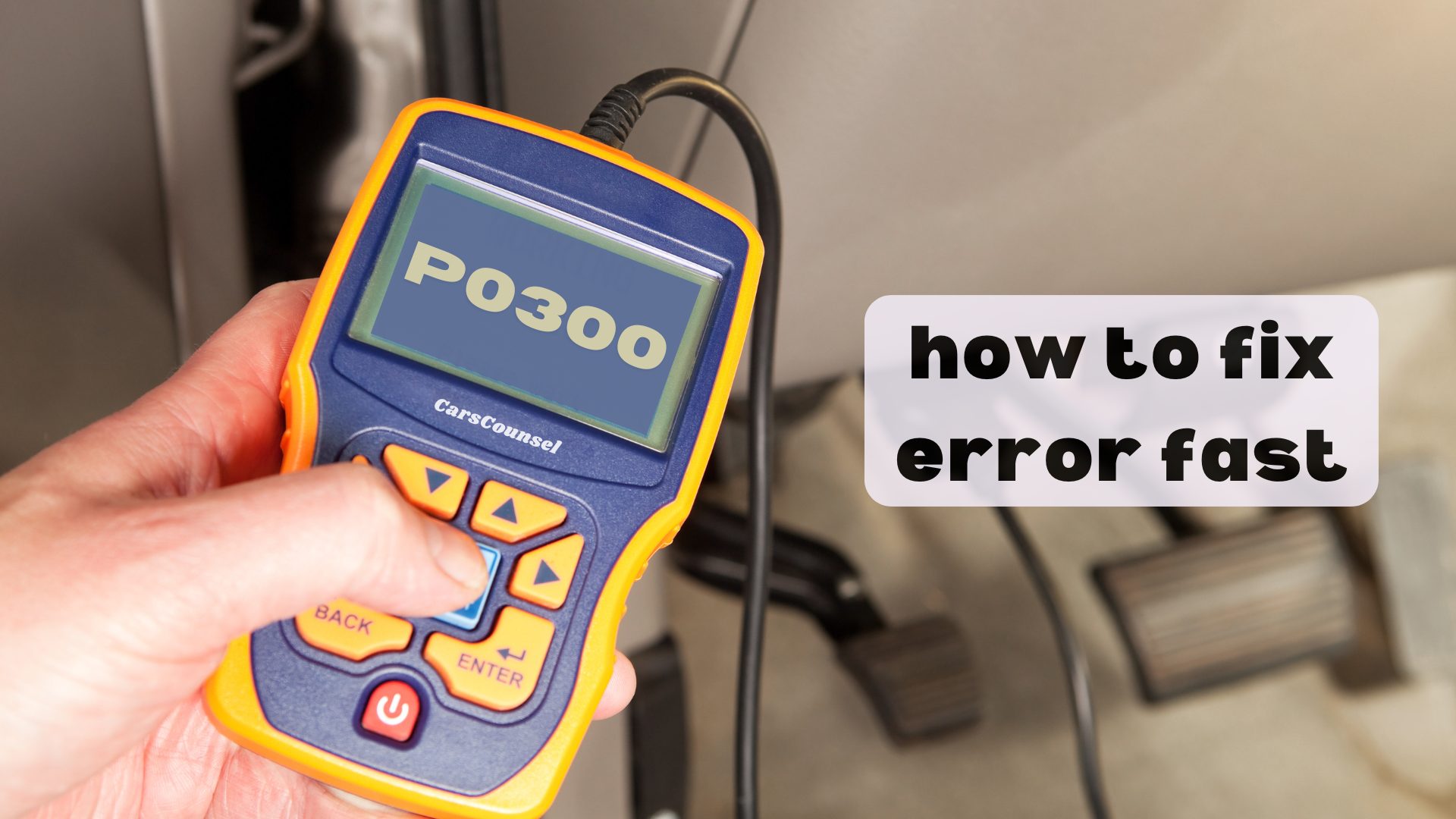
Diagnostic trouble code P0300 is a generic OBD-II powertrain code. It indicates the powertrain control module has detected random misfires or misfires across multiple engine cylinders.
This condition does not automatically prove a specific component has failed. The underlying issue could involve ignition, fuel delivery, or mechanical faults. Proper diagnosis is required to identify the exact root cause.
Quick Navigation
Key Takeaways
- P0300 is a generic code indicating random or multiple cylinder misfires detected by the engine computer.
- Possible causes include failing ignition components, fuel delivery issues, vacuum leaks, or internal mechanical faults.
- Symptoms often include rough idling, hesitation, lack of power, and an illuminated or flashing Check Engine Light.
- Diagnosis involves checking misfire counters, inspecting for vacuum leaks, and testing ignition and fuel systems.
- Repairs depend on the confirmed root cause and may involve replacing spark plugs, coils, or fixing intake leaks.
P0300 Code Description and Implications
P0300 is a generic OBD-II code, meaning its definition is standardized across all vehicle manufacturers. The powertrain control module monitors crankshaft speed variations to detect misfires.
When the module detects misfires occurring randomly or cannot isolate them to a single cylinder, it stores this error code.
A misfire occurs when the air-fuel mixture in a cylinder fails to ignite properly. This disrupts engine balance, reduces power, and increases harmful emissions.
Common Causes of the P0300 Code
Because P0300 affects multiple cylinders or occurs randomly, the root cause often involves a system-wide issue rather than a single cylinder component.
Ignition system faults are a frequent cause. Worn spark plugs, failing ignition coils, or damaged spark plug wires can cause weak or missing sparks across multiple cylinders.
Fuel delivery issues can also trigger this code. Low fuel pressure, a failing fuel pump, or clogged fuel injectors can starve multiple cylinders of adequate fuel.
Unmetered air entering the intake system through vacuum leaks can lean out the air-fuel mixture globally, causing random misfires.
Internal mechanical issues like low compression, jumped timing, or failing variable valve timing components can also prevent proper combustion.
Symptoms Associated With P0300
Symptoms vary depending on the severity of the misfire condition and the specific vehicle application.
Drivers may notice rough idling, hesitation, or a severe lack of power during acceleration. The engine may shake or vibrate noticeably at stoplights.
In severe cases, the Check Engine Light will flash. A flashing light indicates active misfires that can quickly overheat and destroy the catalytic converter.
Diagnosing the P0300 Trouble Code
Diagnosis must begin by retrieving freeze-frame data and viewing live misfire counters using a scan tool.
Technicians check for related codes that might point to a system-wide issue, such as mass air flow sensor faults or fuel trim codes.
A thorough visual inspection of the intake tract and vacuum hoses is critical to identify unmetered air leaks.
If no leaks are found, technicians test fuel pressure and volume, then inspect the ignition components, sometimes swapping parts to see if the misfire pattern changes.
Mechanical tests like a compression test or leak-down test may be necessary if electrical and fuel systems check out.
Repairing the P0300 Issue
Repairs must follow confirmed diagnosis based on the identified root cause.
If a vacuum leak is found, the damaged hoses, intake gaskets, or boots must be replaced to ensure proper air metering.
If ignition components are worn or failing, the spark plugs, coils, or wires must be replaced.
If fuel pressure is low, the fuel filter, fuel pump, or pressure regulator must be serviced or replaced.
Cost Considerations for P0300 Repairs
Repair costs depend entirely on the confirmed root cause and component accessibility.
Replacing spark plugs or fixing a simple vacuum hose requires minimal parts and labor.
Cost depends on diagnostic time, component accessibility, required parts, programming requirements, and labor.
Prevention Strategies for Future Occurrences
Some mechanical failures cannot be reliably prevented.
Following the manufacturer’s recommended maintenance schedule for spark plug and ignition component replacement helps prevent wear-related misfires.
Using high-quality fuel and replacing the fuel filter at recommended intervals helps maintain proper fuel delivery system health.
Troubleshooting Tips and Best Practices
Never ignore a flashing Check Engine Light. A flashing light indicates severe misfires that can cause rapid and expensive catalytic converter damage.
Avoid replacing random ignition components without checking for vacuum leaks first. Unmetered air is a frequent and inexpensive fix that mimics ignition failures.
Check for technical service bulletins applicable to your exact vehicle application, as manufacturers frequently release updated ignition components or software calibrations for recurring misfire issues.
More OBD-II Codes
| P0299 | P0301 | P0171 | P0011 |
| P0268 | P0302 | P0174 | P0014 |
| P0267 | P0303 | P0335 | P0135 |
| P0265 | P0304 | P0340 | P0172 |
| P0264 | P0305 | P0420 | P0101 |
| P0262 | P0306 | P0430 | P0440 |
Frequently Asked Questions
Is P0300 a generic or manufacturer-specific code?
Yes. P0300 is a generic OBD-II code. Its standardized definition applies across all vehicle manufacturers, though specific diagnostic procedures may vary by application.
Can I drive my car with a P0300 code?
It depends on the symptoms. If the Check Engine Light is flashing, you must stop driving immediately to prevent severe catalytic converter damage.
Will disconnecting the battery clear the P0300 code?
Disconnecting the battery may temporarily clear the code, but it does not repair the underlying ignition, fuel, or mechanical fault. The code will return.
Can a vacuum leak cause a P0300 code?
Yes. Unmetered air entering the intake manifold leans out the air-fuel mixture across multiple cylinders, which can easily trigger a random misfire fault.
Does P0300 always mean the engine is failing internally?
No. A random misfire fault frequently points to worn spark plugs, failing ignition coils, or a simple vacuum leak rather than catastrophic internal engine failure.
What Should You Do About the P0300 Code?
Confirm the exact conditions that triggered the code by reviewing freeze-frame data and live misfire counters. Because P0300 is a generic fault, identifying whether it stems from ignition, fuel delivery, or unmetered air is mandatory.
Follow the applicable manufacturer diagnostic steps to inspect the intake system and test the relevant ignition and fuel components. Once the root cause is confirmed, complete the necessary repairs and verify that the system operates correctly and the code does not return.

