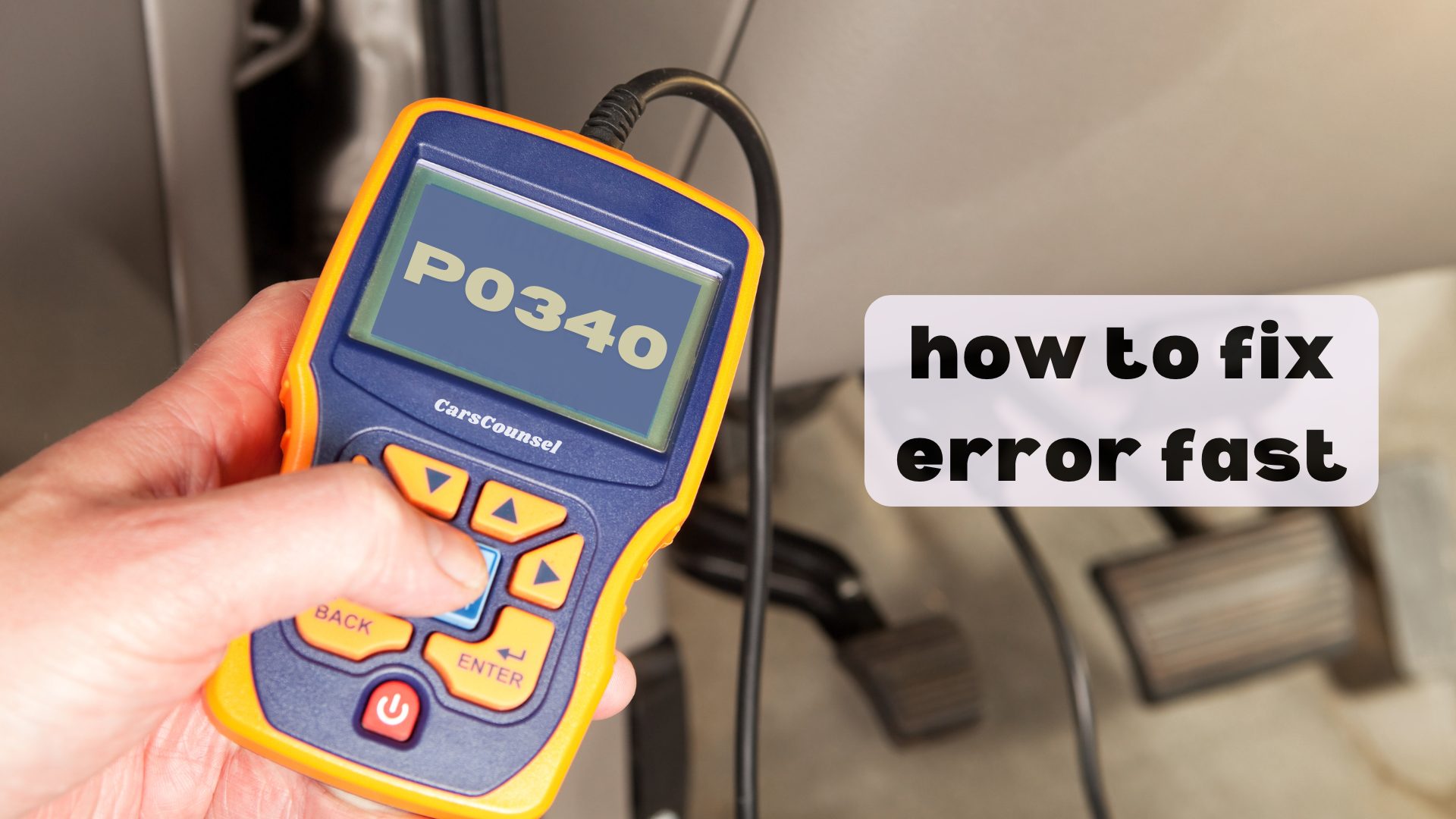
The P0340 code is a generic OBD-II diagnostic trouble code indicating a malfunction in the camshaft position sensor “A” circuit. The powertrain control module detects an unexpected voltage or signal loss from the sensor on bank 1 or the single sensor engine.
Because P0340 is a generic circuit code, it points to an electrical fault rather than a confirmed failed part. Testing the wiring, connectors, and sensor signal is necessary to identify the exact root cause.
Quick Navigation
Key Takeaways
- P0340 is a generic OBD-II code indicating an electrical circuit malfunction in the camshaft position sensor “A” circuit.
- Possible causes include damaged wiring, corroded connectors, a failed sensor, or a damaged reluctor ring.
- Symptoms often include an illuminated check engine light, engine stalling, rough idling, or a no-start condition.
- Diagnosis requires inspecting the sensor circuit and verifying the signal using a scan tool or oscilloscope.
P0340 Code Description and Implications
P0340 indicates the PCM has detected an electrical fault in the camshaft position (CMP) sensor “A” circuit. The CMP sensor monitors the rotational position of the camshaft to synchronize fuel injection and ignition timing.
When the PCM sees an open circuit, a short to ground or voltage, or an erratic signal, it sets this fault code. Because this is a generic code, the definition applies across all makes, though specific diagnostic steps vary.
Common Causes of the P0340 Code
Possible causes include damaged, chafed, or broken wiring in the CMP sensor circuit.
Corroded, loose, or oil-contaminated electrical connectors at the sensor or PCM can also interrupt the signal.
A failed camshaft position sensor that no longer generates a proper electrical signal is another potential cause.
Mechanical issues such as a damaged reluctor ring, excessive timing chain stretch, or metallic debris on the sensor tip can disrupt the magnetic field.
Symptoms Associated With P0340
The primary symptom of a P0340 code is an illuminated check engine light on the dashboard.
Drivers may experience engine stalling, hesitation during acceleration, or rough idling due to incorrect ignition timing.
In severe cases, the engine may crank but fail to start if the PCM cannot determine camshaft position to initiate fuel injection.
Diagnosing the P0340 Trouble Code
Diagnosis begins by verifying the exact factory service information and visually inspecting the CMP sensor wiring and connectors for physical damage or oil intrusion.
Technicians use a digital multimeter to check the sensor’s power, ground, and signal circuits for opens or shorts.
An oscilloscope or advanced scan tool is used to view the live sensor waveform and verify the signal pattern matches the manufacturer’s specification.
Repairing the P0340 Issue
If testing confirms the wiring harness is damaged or shorted, repairing the circuit and protecting the wires resolves the electrical fault.
If the sensor fails the electrical and signal tests, replacing the confirmed failed component and clearing the code is required.
If the reluctor ring is damaged or timing components are stretched, mechanical repairs to the engine timing system are necessary.
Cost Considerations for P0340 Repairs
Repair costs vary depending on the underlying fault and component accessibility. Replacing an externally mounted camshaft position sensor involves minimal parts and labor.
Repairing deep engine wiring or addressing internal timing chain and reluctor ring issues requires significant labor and disassembly.
Cost depends on diagnostic time, component accessibility, required parts, programming requirements, and labor.
Prevention Strategies for Future Occurrences
Inspecting exposed engine wiring harnesses and connectors can help identify developing damage from heat, vibration, or moving components.
Addressing engine oil leaks promptly helps prevent oil from wicking into the sensor connector, which can degrade the signal and cause circuit faults.
Troubleshooting Tips and Best Practices
Never assume a circuit code automatically requires replacing the camshaft position sensor. Always verify the reference voltage, ground, and signal wire continuity first.
Clearing the code without repairing the electrical fault or mechanical timing issue will only result in the monitor failing again.
If P0340 is accompanied by crankshaft position sensor codes or timing correlation codes, the diagnosis must address the combined system faults and mechanical timing alignment.
More OBD-II Codes
| P0335 | P0339 | P0325 | P0300 |
| P0301 | P0302 | P0016 | P0017 |
| P0411 | P0420 | P0430 | P0440 |
| P0441 | P0442 | P0455 | P0456 |
| P1391 | P1390 | P0303 | P0304 |
| P0305 | P0306 | P0011 | P0014 |
Frequently Asked Questions
Is P0340 a generic OBD-II code?
Yes. P0340 is a generic OBD-II code, meaning its core definition regarding a camshaft position sensor circuit malfunction applies universally across all vehicle makes and models.
Can I drive my vehicle with a P0340 code?
It depends on the symptoms. If the engine runs normally, you may drive it to a shop. If it stalls, misfires severely, or will not start, driving is unsafe and requires towing.
Will a bad battery cause a P0340 code?
No. A weak battery typically causes low-voltage system codes or multiple random module faults. P0340 specifically indicates a localized circuit malfunction within the camshaft position sensor wiring or signal path.
Can a stretched timing chain trigger P0340?
Yes. While P0340 is a circuit code, severe mechanical timing issues or a damaged reluctor ring can disrupt the sensor’s magnetic field, creating an erratic signal that the PCM interprets as a circuit fault.
How do I test the camshaft position sensor?
Technicians test the sensor by checking for reference voltage and ground at the connector, then using an oscilloscope or scan tool to verify the live signal waveform while the engine is cranking or running.
What Should You Do About the P0340 Code?
Confirm the exact factory diagnostic procedure for your specific vehicle, then inspect the camshaft position sensor circuit for physical damage or oil intrusion.
Because P0340 indicates an electrical fault in the relevant system and components, testing the sensor, wiring, and signal pattern is required to find the root cause.
Once the fault is confirmed, perform the necessary repairs and verify the fix by clearing the codes and completing a test drive.


Comments are closed.