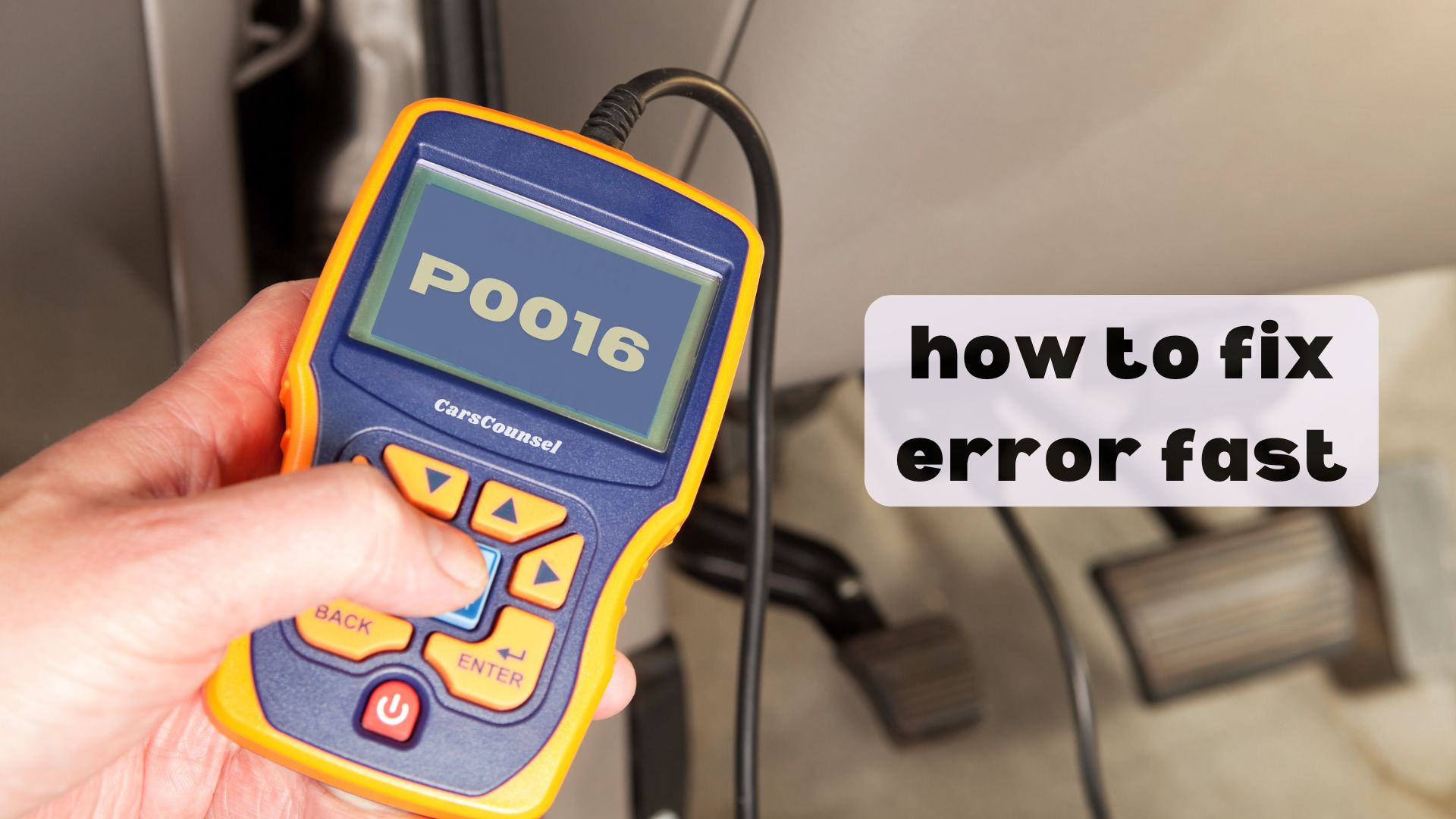
The P0016 trouble code is a generic OBD-II powertrain code indicating a correlation fault between the crankshaft position and the camshaft position on Bank 1, Sensor A.
Because it is a generic code, the definition applies universally, but the exact diagnostic procedures and timing specifications vary by vehicle application.
Quick Navigation
Key Takeaways
- P0016 is a generic code indicating the powertrain control module detected a misalignment between the crankshaft and Bank 1 intake camshaft position signals.
- Possible causes include a stretched timing chain, jumped timing belt, failed variable valve timing components, or faulty position sensors.
- Symptoms typically include an illuminated Check Engine Light, rough idling, engine stalling, misfires, and decreased fuel efficiency.
- Proper diagnosis requires comparing live sensor data, inspecting timing marks, and testing the variable valve timing oil control circuits.
- Repairs range from replacing a faulty sensor or VVT solenoid to performing a major timing component replacement.
P0016 Code Description and Implications
The P0016 code is a generic powertrain definition. It indicates that the powertrain control module (PCM) has detected that the signal from the crankshaft position sensor and the Bank 1 intake camshaft position sensor (Sensor A) are out of sync.
The PCM uses these signals to precisely control ignition timing, fuel injection, and variable valve timing. When the physical relationship between the crankshaft and camshaft falls outside the expected parameters, the PCM sets this code.
Common Causes of the P0016 Code
Mechanical timing issues and electrical faults are the primary triggers for this correlation fault. The PCM continuously monitors the relative positions of the rotating assemblies.
Timing chain or belt issues: A stretched timing chain, a worn timing belt, or a failed tensioner can cause the mechanical timing to jump a tooth, physically misaligning the camshaft and crankshaft.
Variable Valve Timing (VVT) faults: A stuck VVT phaser, a failed oil control valve (solenoid), or low engine oil pressure can prevent the camshaft from returning to its base timing position, triggering the correlation fault.
Sensor or wiring failures: A faulty crankshaft position sensor, a faulty camshaft position sensor, or damaged wiring can send erratic signals to the PCM, making it appear as though the mechanical timing has slipped.
Symptoms Associated With P0016
When the PCM detects a timing correlation fault, it illuminates the Check Engine Light.
Rough running and stalling: If the mechanical timing is physically off or the VVT system is stuck, the engine may idle roughly, misfire, hesitate during acceleration, or stall entirely.
Decreased performance: Incorrect valve timing severely impacts engine breathing, leading to noticeable power loss and reduced fuel efficiency. In severe cases where the timing has jumped significantly, the engine may enter a limp mode or fail to start.
Diagnosing the P0016 Trouble Code
Accurate diagnosis begins by confirming the exact factory timing specifications and variable valve timing operation for your specific vehicle.
Live data review: Use a scan tool to monitor the live crankshaft and camshaft position data. Compare the correlation angle against the manufacturer’s specification at idle and under load.
Mechanical inspection: If the live data confirms a physical misalignment, a mechanical inspection is required. This involves removing the timing cover to verify the timing marks on the chain or belt align perfectly with the manufacturer’s specifications.
Repairing the P0016 Issue
Repairs must address the specific root cause identified during testing.
Electrical and VVT repair: If the mechanical timing marks are perfectly aligned, the issue may be a failed VVT solenoid, a stuck phaser, or a faulty position sensor. Replace the confirmed failed electrical component and verify oil pressure.
Mechanical timing repair: If the timing marks are misaligned, the timing chain, belt, tensioners, and guides must be replaced. Use components meeting the correct vehicle specification, then retest the correlation data.
Cost Considerations for P0016 Repairs
Cost depends on diagnostic time, component accessibility, required parts, programming requirements, and labor.
Replacing a VVT solenoid or position sensor is generally a straightforward repair with moderate costs. However, replacing a stretched timing chain or belt requires significant labor to access the front of the engine, substantially increasing the overall repair cost.
Prevention Strategies for Future Occurrences
Maintaining proper engine oil levels and using the exact oil viscosity specified by the manufacturer is critical for applications using oil-pressure-actuated variable valve timing systems.
Adhering to the manufacturer’s recommended replacement intervals for timing belts and associated tensioners helps prevent sudden mechanical failure and timing misalignment.
Troubleshooting Tips and Best Practices
Do not immediately replace the camshaft or crankshaft sensors just because a P0016 code is present. A sensor will only set a correlation code if the mechanical timing is actually off or if the VVT system is malfunctioning.
Always check the engine oil level and condition first. Low oil pressure or severely degraded oil can prevent the VVT phasers from operating correctly, causing a false timing correlation fault.
Check for Technical Service Bulletins for your specific vehicle. Manufacturers frequently release updated timing chain kits, revised VVT phasers, or updated PCM calibrations to address chronic correlation faults.
More OBD-II Codes
| P0014 | P0013 | P0012 | P0011 |
| P0010 | P0004 | P0017 | P0020 |
| P0030 | P0031 | P0036 | P0050 |
| P0340 | P0335 | P0339 | P0300 |
| P0420 | P0430 | P0171 | P0174 |
| P0301 | P0302 | P0303 | P0304 |
Frequently Asked Questions
Is P0016 a generic or manufacturer-specific code?
No. P0016 is a generic OBD-II powertrain code. Its definition as a crankshaft and Bank 1 camshaft position correlation fault applies universally across all vehicle makes.
Can I drive my car with a P0016 code?
Driving is not recommended. If the mechanical timing has jumped, continued driving can cause the pistons to strike the valves in interference engines, resulting in catastrophic engine failure.
Will an oil change fix a P0016 code?
It may help if the code was caused by low oil level or degraded oil preventing the variable valve timing system from operating. However, it will not fix a stretched chain or a failed sensor.
Can a bad catalytic converter cause a P0016 code?
No. P0016 specifically monitors the correlation between the crankshaft and camshaft position signals. A catalytic converter efficiency issue triggers different codes, such as P0420 or P0430.
Does P0016 always mean the timing chain is stretched?
No. The code identifies a detected correlation fault. This can be caused by a stuck VVT solenoid, low oil pressure, a faulty position sensor, or damaged wiring, not just a stretched chain.
What Should You Do About the P0016 Code?
Confirm the exact factory timing specifications for your vehicle, then follow the applicable manufacturer diagnostic procedure. Because P0016 is a generic code, the diagnostic path for the correlation fault is standardized, but the exact timing marks and VVT operation vary by application.
Inspect the relevant system and components, including the timing chain or belt, VVT solenoids, and position sensors. Repair any confirmed mechanical misalignments, or replace the relevant system components only after testing verifies the failure.

