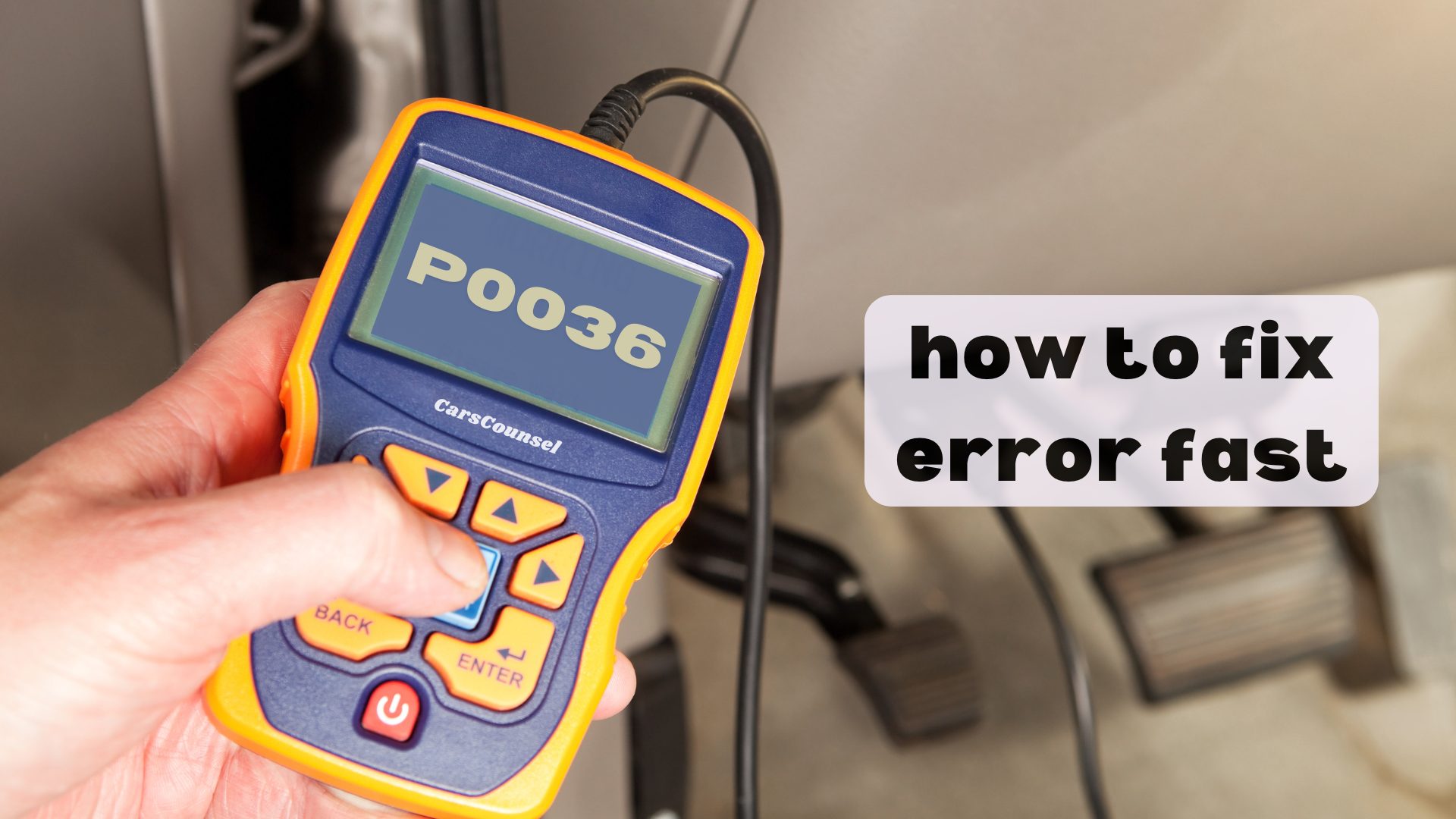
P0036 is a generic OBD-II code indicating that the powertrain control module has detected an electrical fault in the heater circuit for the Bank 1 Sensor 2 oxygen sensor. This definition is standardized across all compliant vehicles.
Because this code monitors the electrical heater circuit, it does not automatically prove the sensor has failed. Blown fuses, damaged wiring, or poor connections must be tested and ruled out first.
Quick Navigation
Key Takeaways
- P0036 indicates an electrical fault in the heater circuit of the downstream oxygen sensor on Bank 1.
- Possible causes include a failed sensor heater element, blown fuses, damaged wiring, or corroded connectors.
- Diagnosis requires checking the heater circuit fuse, inspecting the wiring, and measuring the heater element resistance.
- Repair involves fixing the wiring or replacing the confirmed faulty oxygen sensor.
P0036 Code Description and Implications
The P0036 code is defined as “HO2S Heater Control Circuit (Bank 1 Sensor 2).” It is a generic code applicable to all OBD-II compliant vehicles.
The powertrain control module monitors the heater circuit for the downstream oxygen sensor on Bank 1, which is the engine bank containing cylinder number one.
If the module detects an open, short, or unexpected resistance in the heater circuit, it stores the P0036 code.
Common Causes of the P0036 Code
- A failed internal heater element within the Bank 1 Sensor 2 oxygen sensor.
- A blown fuse supplying power to the oxygen sensor heater circuit.
- Damaged, chafed, or broken wiring in the heater control or power circuits.
- Corroded, loose, or melted connectors at the oxygen sensor or control module.
- A failed powertrain control module, though this is rare.
Symptoms Associated With P0036
- Illuminated Check Engine Light.
- Delayed closed-loop fuel operation or delayed catalyst monitor readiness.
- Usually no noticeable drivability symptoms, as the heater only affects sensor warm-up time.
Diagnosing the P0036 Trouble Code
Diagnosis must begin by checking for other related OBD2 Codes and verifying the battery and charging system health.
Inspect the fuse for the oxygen sensor heater circuit and visually inspect the wiring harness and connector for heat damage, corrosion, or breaks.
Measure the resistance of the oxygen sensor heater element using a multimeter and compare it to the manufacturer specification.
Verify power and ground at the sensor connector with the ignition on to confirm the circuit integrity.
Repairing the P0036 Issue
Repairs must follow confirmed diagnosis. Do not replace components based on the code description alone.
Replace blown fuses and investigate the cause of the overload. Repair or replace damaged wiring and connectors.
If the heater element fails resistance testing or the circuit is confirmed good, replace the Bank 1 Sensor 2 oxygen sensor.
Cost Considerations for P0036 Repairs
Cost depends on diagnostic time, component accessibility, required parts, and labor.
Replacing a fuse or repairing a localized wire involves minimal expenses.
Replacing an oxygen sensor involves moderate parts and labor costs. Exact pricing varies by vehicle model and region.
Prevention Strategies for Future Occurrences
- Inspect exposed wiring near the exhaust system for heat damage or melting during routine maintenance.
- Avoid using harsh chemicals or high-pressure water directly on electrical connectors to prevent corrosion.
Troubleshooting Tips and Best Practices
- Do not replace the oxygen sensor based solely on the code. Verify the fuse and wiring first, as a simple blown fuse is a verified cause.
- Bank 1 Sensor 2 is located downstream of the catalytic converter. Ensure you are testing the correct sensor before purchasing parts.
- Check for technical service bulletins related to wiring harness routing or connector updates for your specific vehicle.
More OBD-II Codes
| P0031 | P0030 | P0016 | P0012 |
| P0010 | P0004 | P0050 | P0100 |
| P0101 | P0107 | P0108 | P0111 |
| P0130 | P0136 | P0141 | P0150 |
| P0155 | P0161 | P0420 | P0430 |
| P0135 | P0140 | P0156 | P0131 |
Frequently Asked Questions
Is P0036 a generic or manufacturer-specific code?
Yes, P0036 is a generic OBD-II code. Its definition regarding the Bank 1 Sensor 2 oxygen sensor heater circuit is standardized across all compliant vehicles.
Can an exhaust leak cause a P0036 code?
No. P0036 specifically monitors the electrical heater circuit of the oxygen sensor. An exhaust leak might cause a sensor reading code, but not a heater circuit electrical fault.
Will a P0036 code affect my drivability?
Typically, no. The heater element only helps the sensor reach operating temperature faster. The vehicle may run normally, but the Check Engine Light will illuminate.
Can I replace just the heater element?
No. The heater element is integrated into the oxygen sensor assembly. If the heater fails, the entire oxygen sensor must be replaced with a correct specification component.
Is it safe to drive with a P0036 code?
It is generally safe for short trips, as the heater circuit fault does not usually affect engine performance. However, the vehicle may fail an emissions test due to the illuminated Check Engine Light.
What Should You Do About the P0036 Code?
Confirm the exact physical location of Bank 1 Sensor 2 for your specific engine, then follow the applicable manufacturer diagnostic procedure. Inspect the heater circuit fuse, wiring, and sensor resistance to identify the root cause. Address the relevant system and components, verify the repair, and then clear the codes.

