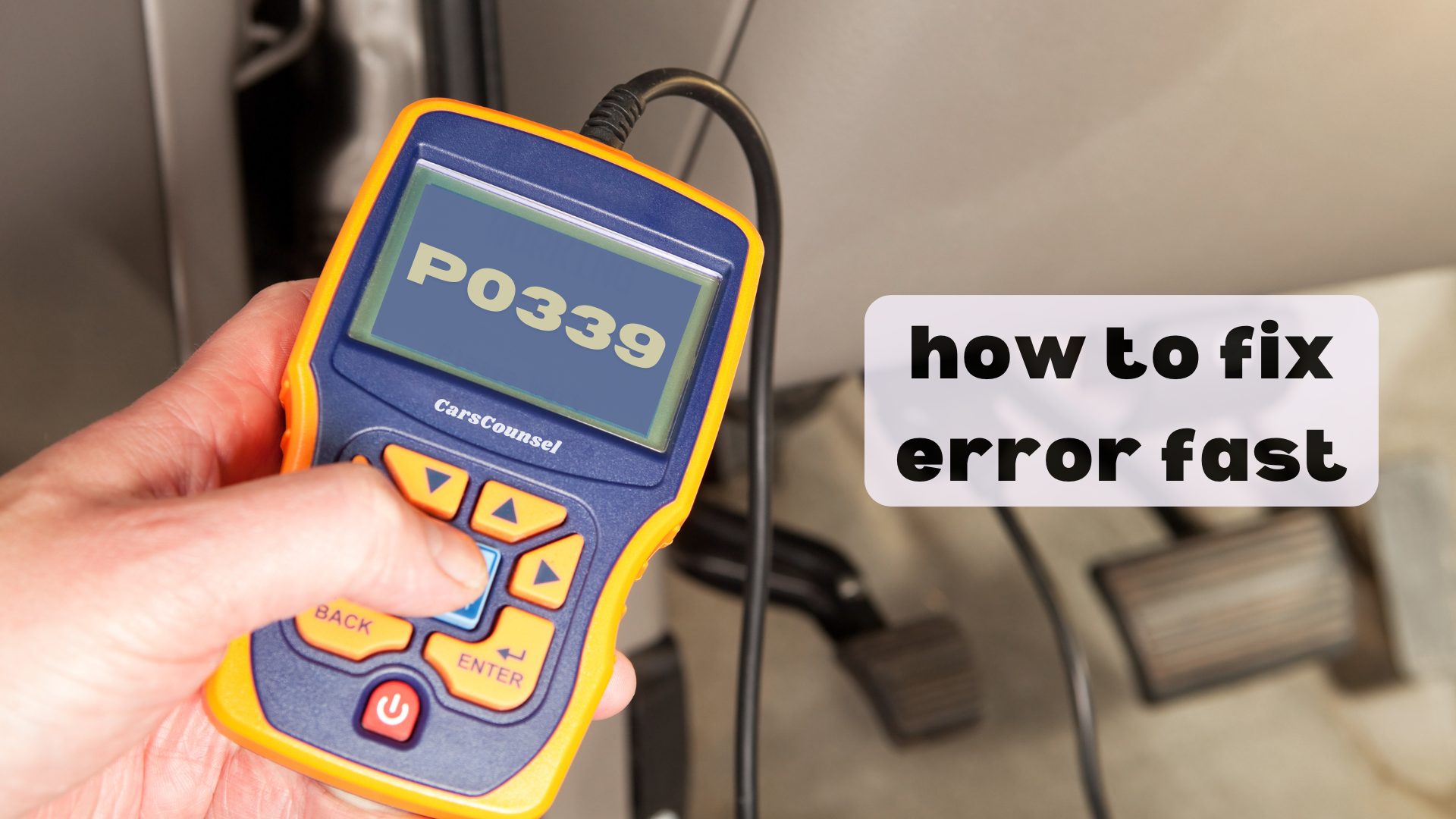
The P0339 code is a generic OBD-II powertrain code indicating a “Crankshaft Position Sensor ‘A’ Circuit Intermittent” fault among various OBD2 Codes. It means the control module detected an erratic or dropping signal from the sensor.
This code does not automatically mean the crankshaft position sensor has failed. Possible causes include damaged wiring, loose connectors, or a damaged reluctor ring. Exact diagnosis requires verifying the sensor circuit and signal pattern.
Quick Navigation
Key Takeaways
- P0339 indicates the crankshaft position sensor signal is intermittent or dropping out unexpectedly.
- This fault disrupts ignition timing and fuel injection, potentially causing stalling or no-start conditions.
- Possible causes include chafed wiring, poor electrical connections, or a damaged reluctor wheel.
- Diagnosis requires monitoring the live sensor data and inspecting the physical circuit and mounting.
P0339 Code Description and Implications
The P0339 code stands for “Crankshaft Position Sensor ‘A’ Circuit Intermittent.” The powertrain control module relies on the crankshaft position sensor to determine engine speed and piston position.
If the module detects that the sensor’s signal is erratic, dropping out, or fluctuating outside the expected parameters while the engine is running, it stores this code.
Because this is a generic code, the exact sensor type and diagnostic pinouts vary by manufacturer and engine design.
Common Causes of the P0339 Code
Multiple conditions can cause an intermittent signal fault. The underlying cause must be confirmed through testing rather than assuming the sensor has failed.
Damaged wiring, chafed harnesses, or corroded connectors in the sensor circuit can cause the signal to drop out when the vehicle vibrates or the engine moves.
A failing crankshaft position sensor may internally break down under heat, causing the signal to intermittently disappear.
Physical damage to the reluctor ring, such as missing teeth or debris buildup, can interrupt the magnetic or Hall-effect signal.
Symptoms Associated With P0339
When the crankshaft position signal becomes intermittent, the vehicle may exhibit several drivability issues. Symptoms depend on how frequently the signal drops out.
Illuminated Check Engine Light: The warning lamp will turn on once the intermittent fault is detected and confirmed over consecutive drive cycles.
Engine stalling or hesitation: The engine may suddenly stall or hesitate if the module loses the crankshaft signal and cannot calculate spark timing.
Extended cranking or no-start: The engine may crank for a long time or fail to start if the signal is missing during initial rotation.
Diagnosing the P0339 Trouble Code
Proper diagnosis begins by verifying the exact vehicle application and inspecting the physical sensor mounting before performing electrical tests.
Verify the code and check for related misfire codes: Confirm P0339 and look for camshaft position sensor codes that might indicate a timing chain issue.
Inspect the wiring and connectors: Check the sensor harness for chafing against engine brackets, heat damage, or corroded pins.
Monitor live data and signal waveform: Use a scan tool or oscilloscope to watch the RPM signal while the engine is running to identify signal dropouts.
Inspect the reluctor ring: If accessible, visually inspect the reluctor wheel for damaged teeth, excessive rust, or metallic debris clinging to the sensor tip.
Repairing the P0339 Issue
Repairs must follow confirmed diagnostic testing. The exact repair path depends on whether the fault is in the wiring, the sensor, or the mechanical hardware.
Wiring repair: Repair or replace any damaged wiring, corroded pins, or loose connectors in the sensor circuit.
Sensor replacement: Replace the crankshaft position sensor if live data or oscilloscope testing confirms the signal is dropping out internally.
Reluctor ring repair: If the reluctor wheel is damaged or has missing teeth, replace the mechanical component according to manufacturer procedures.
Cost Considerations for P0339 Repairs
Repair costs vary significantly based on the root cause, vehicle make, and labor accessibility.
Wiring repair: Costs depend on the time required to trace and repair damaged harnesses in tight engine compartments.
Sensor replacement: The part is generally affordable, but labor costs vary widely depending on whether the sensor is easily accessible or requires removing major components.
Reluctor ring replacement: This often requires partial engine disassembly or transmission removal, resulting in significantly higher labor costs.
Prevention Strategies for Future Occurrences
While electrical faults cannot always be prevented, maintaining the engine bay can reduce the risk of circuit failures.
Protect wiring harnesses: Ensure sensor wiring is secured away from hot exhaust components, sharp edges, and moving accessory belts.
Address oil leaks: Oil soaking into electrical connectors can degrade weather seals and cause intermittent circuit faults or signal disruption.
Troubleshooting Tips and Best Practices
Do not ignore intermittent stalling: An intermittent crankshaft signal can cause the engine to shut off without warning while driving, creating a safety hazard.
Check for technical service bulletins: Some manufacturers have known issues with specific sensor connectors or wiring harness routing that require updated pigtail connectors.
Verify the sensor type: Magnetic sensors are tested for resistance and AC voltage output, while Hall-effect sensors require a clean DC power, ground, and digital signal.
Use exact specifications: Always refer to the factory service manual for the correct pinout diagrams and signal thresholds for your specific vehicle.
More OBD-II Codes
| P0325 | P0327 | P0330 | P0332 |
| P0335 | P0340 | P0300 | P0301 |
| P0302 | P0303 | P0304 | P0305 |
| P0306 | P0313 | P0320 | P0321 |
| P1300 | P1336 | P0016 | P0017 |
| P0011 | P0014 | P0012 | P0010 |
Frequently Asked Questions
Is it safe to drive with a P0339 code?
No. An intermittent crankshaft position signal can cause the engine to stall unexpectedly while driving or fail to restart, creating a significant safety hazard. Diagnose the issue immediately.
Can a bad battery cause a P0339 code?
Usually, no. While severe voltage drops can cause module resets, P0339 specifically monitors the crankshaft sensor signal integrity. However, always verify the charging system during diagnosis.
Will disconnecting the battery clear the P0339 code?
Disconnecting the battery may temporarily reset the module, but it will not repair a physical wiring fault or a failing sensor. The code will return once the monitor runs.
How much does it cost to fix a P0339 code?
Costs vary widely. Replacing an accessible sensor is relatively inexpensive, while repairing a damaged harness or replacing a reluctor ring requires significant labor and specialized mechanical work.
Can a stretched timing chain cause P0339?
Typically, no. A stretched timing chain usually triggers camshaft correlation codes. P0339 specifically indicates an intermittent electrical or signal fault in the crankshaft sensor circuit itself.
What Should You Do About the P0339 Code?
Confirm the exact factory definition and diagnostic procedure for your specific vehicle application. Begin by inspecting the sensor wiring and connectors for physical damage or heat exposure.
Do not replace the crankshaft position sensor without verified diagnostic evidence. Follow the manufacturer’s pinpoint tests to isolate the fault to the wiring, sensor, or mechanical hardware before authorizing repairs.

