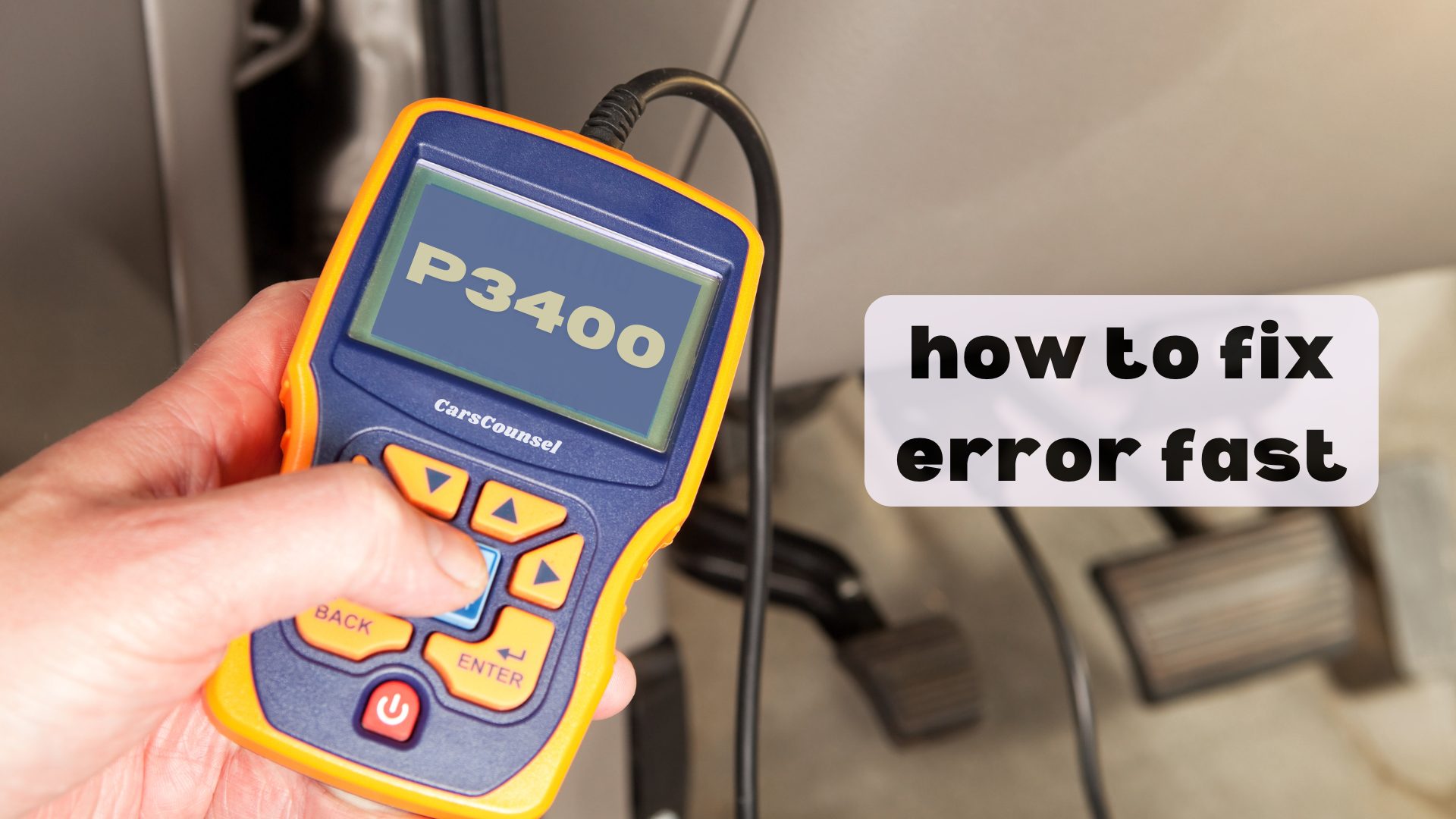
The P3400 code is a generic OBD-II powertrain code indicating a “Cylinder Deactivation System Bank 1” fault. The control module detects a malfunction in the system designed to shut down specific cylinders to improve fuel economy.
This code identifies a system performance or electrical condition and does not automatically prove a solenoid or lifter has failed. Proper diagnosis requires verifying oil pressure, inspecting the deactivation solenoid, and checking circuit integrity.
Quick Navigation
Key Takeaways
- P3400 indicates the control module detected a fault within the cylinder deactivation system on engine bank 1.
- The code flags a system condition, which does not automatically confirm a failed deactivation solenoid or collapsed lifter.
- Low, dirty, or incorrect engine oil is a primary cause to verify before authorizing mechanical repairs.
- Diagnosis requires checking oil pressure, inspecting the solenoid screen for debris, and testing the control circuit.
P3400 Code Description and Implications
The P3400 code stands for “Cylinder Deactivation System Bank 1.” Systems like Honda’s Variable Cylinder Management (VCM), GM’s Active Fuel Management (AFM), and Chrysler’s Multi-Displacement System (MDS) use oil pressure to collapse specific valve lifters.
This allows the engine to run on fewer cylinders during light-load cruising. If the control module detects an electrical fault or a hydraulic performance issue preventing cylinder deactivation or reactivation, it stores the P3400 code.
Common Causes of the P3400 Code
Several hydraulic, mechanical, and electrical conditions can cause a cylinder deactivation system fault.
- Low or degraded engine oil: Insufficient oil volume or degraded oil prevents the hydraulic lifters and solenoids from operating correctly.
- Faulty cylinder deactivation solenoid: The VCM, AFM, or MDS solenoid may be mechanically stuck, clogged with debris, or electrically failed.
- Collapsed or stuck lifters: Internal mechanical wear can cause the deactivation lifters to fail in the collapsed position.
- Oil pressure issues: A failing oil pump or clogged oil filter can starve the deactivation system of required hydraulic pressure.
- Wiring and connector issues: Damaged harnesses or poor connections in the solenoid control circuit.
Symptoms Associated With P3400
Because P3400 relates to cylinder activation, symptoms directly affect engine smoothness and efficiency.
- Illuminated Check Engine Light: The MIL activates once the module confirms the deactivation system fault.
- Engine misfires or rough idle: If a lifter is stuck collapsed or the system fails to reactivate cylinders, the engine will misfire.
- Reduced fuel economy: The system remains in full-cylinder mode, eliminating the fuel-saving benefits.
- Engine vibration: Unbalanced engine operation during light-load cruising conditions.
Diagnosing the P3400 Trouble Code
Accurate diagnosis requires verifying hydraulic health and comparing live solenoid data.
- Verify oil level and condition: Check the dipstick to ensure the oil is at the correct level and has not been severely degraded or contaminated.
- Scan for additional codes: Check for specific misfire codes (P0300-series) or other cylinder deactivation codes that pinpoint the affected cylinders.
- Inspect the deactivation solenoid: Remove the VCM/MDS/AFM solenoid and inspect its filter screen for metallic debris or sludge.
- Test the solenoid circuit: Measure the solenoid resistance and verify the control wiring for continuity and proper voltage.
- Perform mechanical tests: If electrical and hydraulic supply tests pass, an internal mechanical issue like a collapsed lifter may require further engine disassembly.
Repairing the P3400 Issue
Repairs must address the specific root cause identified during diagnosis. Clearing the code without fixing the underlying condition will result in its return.
- Oil and filter service: If the oil is low or degraded, a fluid and filter change may restore proper hydraulic operation.
- Solenoid replacement: If the solenoid is clogged, mechanically stuck, or fails electrical testing, replace the component and clean the oil passages.
- Wiring repair: Repair any damaged wiring or corroded connectors in the solenoid control circuit.
- Internal engine repair: If a deactivation lifter has collapsed or failed mechanically, the engine requires significant disassembly to replace the lifters and related hardware.
Cost Considerations for P3400 Repairs
Repair costs for a P3400 code vary significantly based on the underlying cause and the vehicle’s design.
- Oil and filter service: Minimal cost if degraded oil or a clogged filter is the sole cause.
- Solenoid replacement: Moderate cost, depending on part pricing and component accessibility on the engine block.
- Internal engine repair: If lifters or camshafts are damaged, the repair involves substantial labor and parts, making it the most expensive scenario.
Prevention Strategies for Future Occurrences
Maintaining the engine’s lubrication system reduces the likelihood of deactivation faults.
- Follow strict oil service intervals: Regular oil and filter changes prevent sludge buildup that can clog deactivation solenoid screens and starve lifters.
- Use the correct oil specification: Using the wrong oil viscosity or type can alter hydraulic operation and damage the deactivation system.
- Address oil leaks promptly: Repairing engine oil leaks prevents low fluid levels that lead to immediate hydraulic starvation.
Troubleshooting Tips and Best Practices
When addressing a P3400 code, avoid common diagnostic shortcuts that lead to unnecessary parts replacement.
- Never ignore misfires: If the engine is misfiring due to a stuck collapsed lifter, continued driving can damage the catalytic converter and cylinder walls.
- Check for Technical Service Bulletins (TSBs): Some manufacturers issue updated solenoid screens, revised lifters, or software calibrations for specific applications prone to deactivation faults.
- Review related faults: If multiple misfire or camshaft timing codes are present, review other OBD2 Codes to identify a shared oil pressure or timing issue.
- Avoid defeat devices: While aftermarket devices exist to disable cylinder deactivation, these modify emissions and fuel economy systems and are not recommended for street-driven vehicles.
More OBD-II Codes
| P3300 | P3000 | P3401 | P3425 |
| P3441 | P3449 | P3497 | P0300 |
| P0301 | P0302 | P0303 | P0304 |
| P0305 | P0306 | P0171 | P0174 |
| P0420 | P0430 | P0011 | P0014 |
| P0017 | P0135 | P0299 | P0700 |
Frequently Asked Questions
Is P3400 a generic or manufacturer-specific code?
Yes, P3400 is a generic OBD-II code. Its definition regarding the cylinder deactivation system on bank 1 is standardized across manufacturers, though specific system names like VCM, AFM, or MDS vary.
Can I drive my car with a P3400 code?
Driving is not recommended if the engine is misfiring or vibrating severely. A stuck collapsed lifter can cause catastrophic internal engine damage if the vehicle is driven extensively.
Will an oil change fix the P3400 code?
An oil and filter change may resolve the issue if low or severely degraded oil was preventing the hydraulic lifters from operating. It will not fix a failed solenoid or mechanically collapsed lifter.
Does P3400 mean my engine needs a rebuild?
Not necessarily. While a collapsed lifter requires significant engine disassembly, the code frequently points to a simple oil level issue, a clogged solenoid screen, or a wiring fault. Proper diagnosis is required.
Can a bad battery or alternator cause P3400?
Severe voltage fluctuations can distort solenoid control signals, potentially triggering circuit codes. However, this usually sets multiple electrical codes across different systems rather than an isolated cylinder deactivation fault.
What Should You Do About the P3400 Code?
When the P3400 code appears, your first step should be to verify the engine oil level and condition. Do not ignore misfires or severe engine vibrations, as these symptoms indicate active mechanical distress.
Confirm the exact factory definition and diagnostic procedure for your specific vehicle application. Have a qualified technician verify oil pressure and test the deactivation solenoid circuits before authorizing major internal engine repairs.

