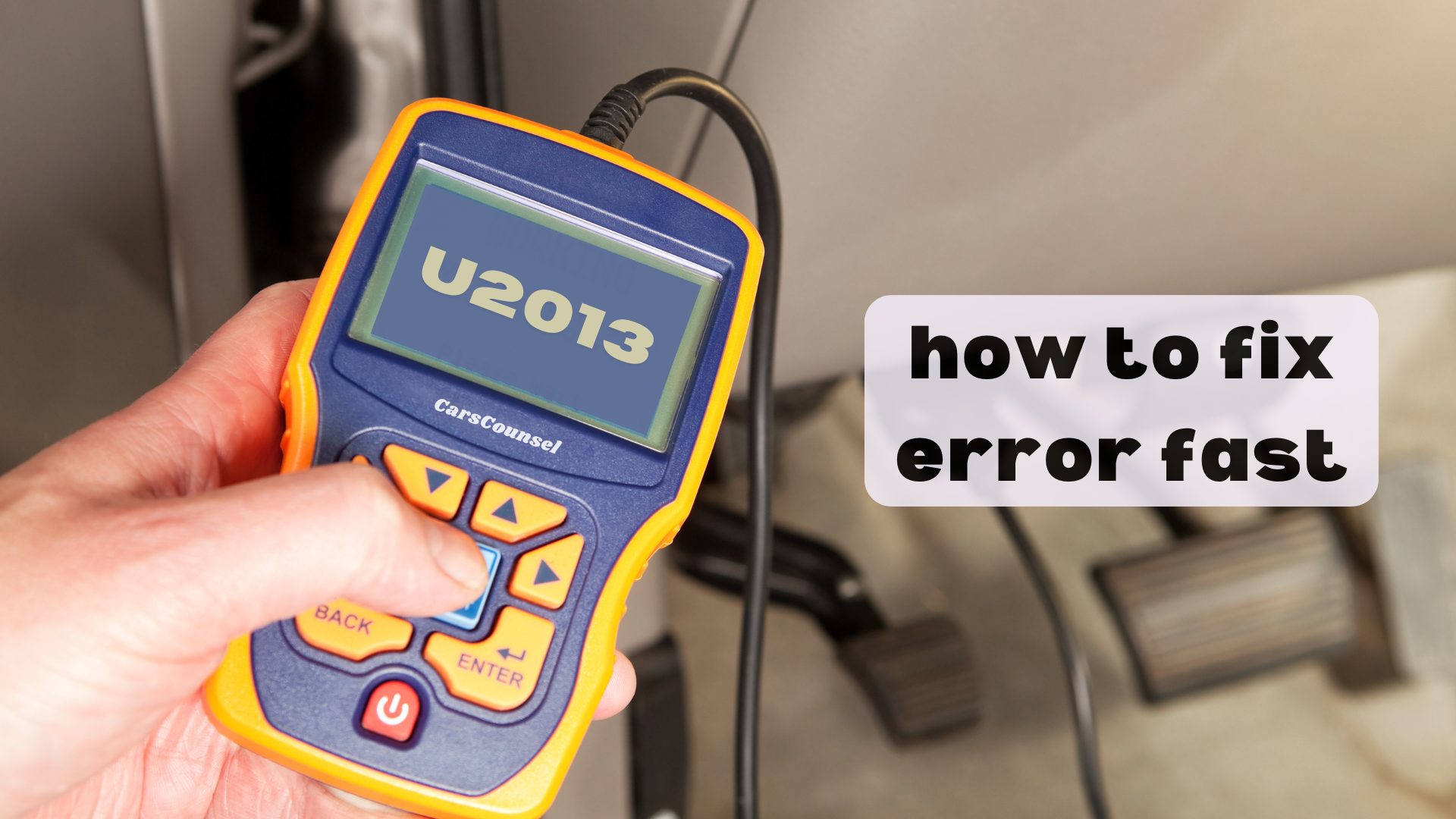
The U2013 code is a manufacturer-specific network code. Its exact definition depends on the vehicle application, but it is strongly verified on certain Ford, Lincoln, and Mazda applications as a switch bank circuit failure or missing data message among various OBD2 Codes.
This code does not automatically mean a control module has failed. Possible causes include damaged wiring, poor grounds, or a faulty switch panel. Exact diagnosis requires verifying the specific network architecture and circuit definitions for your vehicle.
Quick Navigation
Key Takeaways
- U2013 is a manufacturer-specific network code indicating a communication or circuit fault with a specific module or switch bank.
- Possible causes include damaged wiring, corroded connectors, or a failed switch panel assembly.
- Diagnosis requires verifying the exact factory definition and testing the specific communication or signal circuits.
- Repairs may involve wiring repair, connector cleaning, or replacing the affected switch bank or control module.
U2013 Code Description and Implications
The U2013 code stands for a manufacturer-specific network fault. Because “U” codes starting with “2” are manufacturer-specific, the exact definition varies by automaker.
On certain Ford, Lincoln, and Mazda applications, U2013 indicates a “Switch Bank 3 Circuit Failure” or a missing data message from a specific dashboard control panel, such as the Front Controls Interface Module.
On other applications, it may relate to missing compass calibration data or a sub-bus communication failure between auxiliary modules.
When the monitoring module detects an open circuit, short, or missing message from this specific component, it stores this code.
Common Causes of the U2013 Code
Multiple conditions can trigger this manufacturer-specific network fault. The underlying cause must be confirmed through testing rather than assuming a single component has failed.
Damaged wiring or corroded connectors in the specific switch bank or sub-bus circuit can interrupt the signal or data messages.
A failed switch panel assembly or Front Controls Interface Module can cause an internal circuit failure, preventing communication.
Poor electrical grounds or low system voltage can cause auxiliary modules to drop offline and fail to send required data messages.
Symptoms Associated With U2013
When a specific switch bank or auxiliary module experiences a circuit or communication fault, the vehicle may exhibit several issues. Symptoms depend on the exact application and the affected component.
Illuminated Check Engine Light or specific module warning indicators may appear once the fault is confirmed.
Inoperative dashboard controls, such as the climate control buttons, radio presets, or information display switches, may stop responding to inputs.
Missing compass or navigation data may occur on applications where the code relates to calibration data messages.
Diagnosing the U2013 Trouble Code
Proper diagnosis begins by verifying the exact vehicle application and identifying the specific component associated with the affected switch bank or sub-bus.
Verify the exact factory definition and check for technical service bulletins regarding known switch panel or wiring harness issues for your specific model.
Inspect the wiring harness and connectors leading to the affected switch bank or auxiliary module for chafing, broken wires, or moisture intrusion.
Test the specific signal circuits, power, and ground supplies to the component using a multimeter according to the manufacturer’s pinpoint tests.
Repairing the U2013 Issue
Repairs must follow confirmed diagnostic testing. The exact repair path depends on whether the fault is in the wiring, the connector, or the component itself.
Wiring repair: Repair or replace any damaged wiring, corroded pins, or loose connectors in the affected switch bank or sub-bus circuit.
Component replacement: If the wiring and power supplies are verified, replace the failed switch panel assembly, Front Controls Interface Module, or affected auxiliary control module.
Software updates: On some applications, a module software update may be required to resolve false communication faults.
Cost Considerations for U2013 Repairs
Repair costs vary significantly based on the root cause, vehicle make, and labor accessibility.
Wiring repair: Costs depend on the time required to trace and repair the damaged circuit harness behind the dashboard.
Component replacement: Replacing a dashboard switch panel or Front Controls Interface Module involves parts costs and may require specialized labor for module configuration and calibration.
Prevention Strategies for Future Occurrences
While electrical faults cannot always be prevented, protecting the interior and dashboard wiring can reduce the risk of circuit failures.
Address moisture intrusion: Repair windshield or cowl leaks promptly to prevent water from dripping onto dashboard modules and switch panels.
Avoid dashboard modifications: Ensure any aftermarket accessories are installed without splicing into or damaging the factory switch bank wiring harnesses.
Troubleshooting Tips and Best Practices
Do not ignore related network codes: Codes like U0073 or U0100 may indicate a broader network failure rather than an isolated switch bank fault.
Check for aftermarket accessories: Poorly installed remote starters or alarm systems spliced into the dashboard harness can disrupt sub-bus communication.
Verify battery health: Severely low system voltage can cause auxiliary modules to drop offline temporarily. Always load-test the battery and check for parasitic draws.
Use exact specifications: Always refer to the factory service manual for the correct pinout diagrams and circuit definitions for your specific vehicle.
More OBD-II Codes
| U1900 | U1120 | U1064 | U1041 |
| U1017 | U1001 | P3497 | P3449 |
| P3441 | P3425 | P3401 | P3400 |
| U0073 | U0100 | U0151 | C1111 |
| C1611 | B1352 | P0606 | P0603 |
| P0601 | P0600 | P0523 | P0522 |
Frequently Asked Questions
Is U2013 a generic OBD-II code?
No. U2013 is a manufacturer-specific network code. Its exact definition depends on the automaker, but it frequently relates to dashboard switch bank circuits or missing auxiliary data messages.
Can I drive with a U2013 code?
It depends on the affected system. If the code disables climate controls or navigation, the car is usually drivable. However, if it affects critical powertrain or safety modules, diagnose it immediately.
Will disconnecting the battery clear the U2013 code?
Disconnecting the battery may temporarily reset the modules, but it will not repair a physical wiring fault or a failed switch panel. The code will return once the monitor runs.
How much does it cost to fix a U2013 code?
Costs vary widely. Repairing a damaged dashboard wire is relatively inexpensive, while replacing and programming a failed Front Controls Interface Module requires significant parts and specialized labor.
Can aftermarket accessories trigger U2013?
Yes. Aftermarket alarms, stereos, or remote starters spliced into the dashboard wiring harness can disrupt sub-bus communication or switch bank circuits, causing the module to detect a fault.
What Should You Do About the U2013 Code?
Confirm the exact factory definition and diagnostic procedure for your specific vehicle application. Begin by inspecting the wiring and connectors for the affected switch bank or auxiliary module.
Do not replace control modules without verified diagnostic evidence. Follow the manufacturer’s pinpoint tests to isolate the fault to the wiring, connector, or internal hardware before authorizing repairs.

