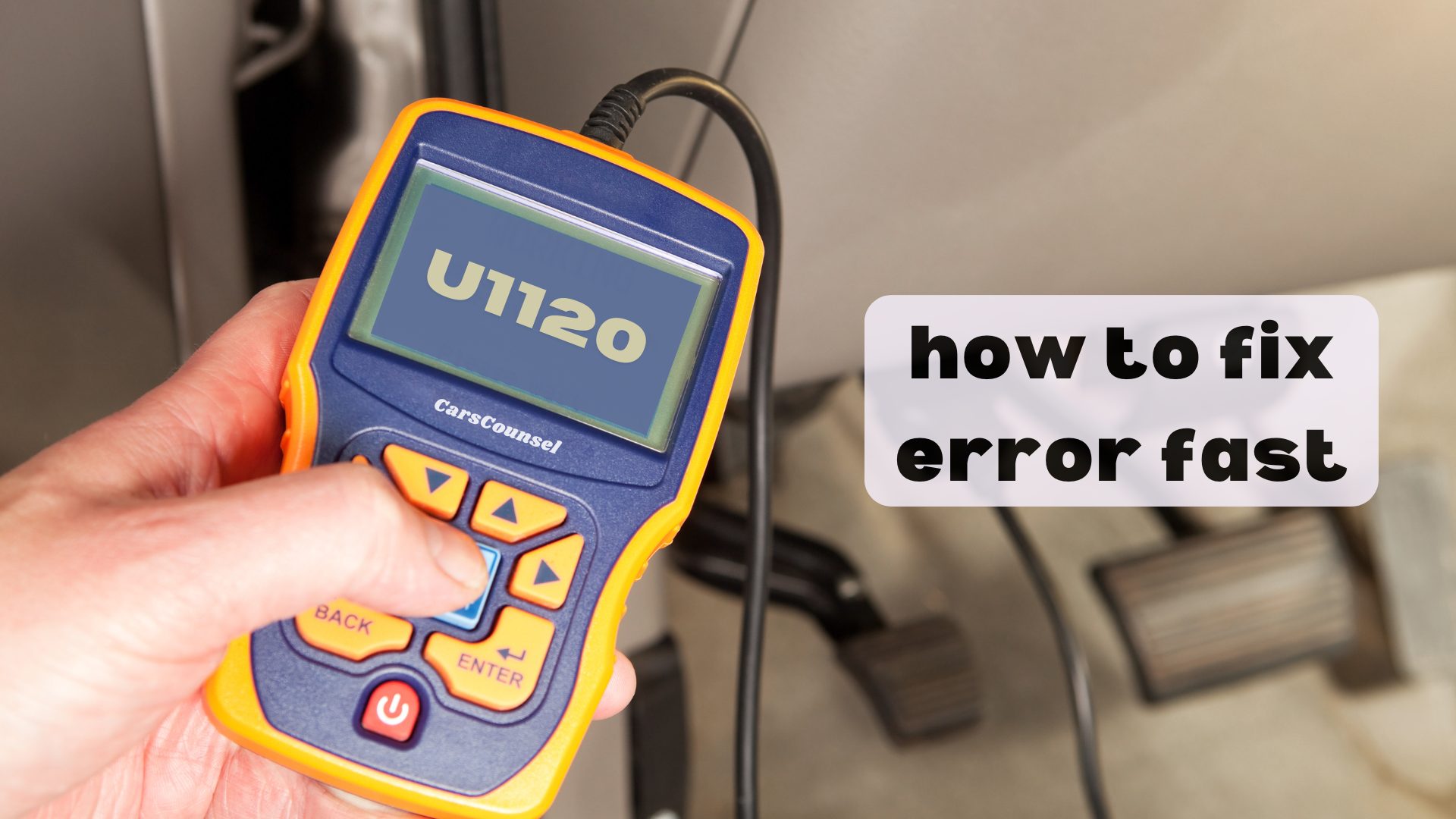
The U1120 code is a manufacturer-specific network diagnostic trouble code, commonly indicating “Lost Wheel Distance Message” in Chrysler, Dodge, and Jeep applications. It means a control module detected missing wheel speed data on the communication network.
This code does not automatically prove a sensor or module has failed. Diagnosis requires checking the network wiring, testing wheel speed sensors, and verifying module communication before replacing components.
Quick Navigation
Key Takeaways
- The U1120 code indicates a control module detected missing or invalid wheel speed data on the communication network.
- Possible causes include a failed wheel speed sensor, damaged network wiring, corroded connectors, or a faulty ABS module.
- Diagnosis involves inspecting the sensor harness, testing the wheel speed sensors, and checking network communication.
- Repairs may involve repairing wiring, replacing a confirmed failed sensor, or addressing ABS module issues.
U1120 Code Description and Implications
The U1120 code indicates that a control module detected missing or invalid wheel speed data on the communication network. This manufacturer-specific network code is frequently found in Chrysler, Dodge, and Jeep applications.
The anti-lock braking system (ABS) and electronic stability control (ESC) modules rely on wheel speed data to function correctly. This data is typically shared across the vehicle’s communication network.
When a module expecting this data fails to receive it, or receives an implausible signal, it stores this network communication code and may disable the ABS and ESC systems.
Common Causes of the U1120 Code
A failed wheel speed sensor is a possible cause. If a sensor fails internally, it cannot generate the signal required by the ABS module to calculate and broadcast wheel distance.
Damaged wiring, chafed insulation, or corroded connectors in the wheel speed sensor harness or the main communication network will interrupt the data transmission.
A faulty ABS control module that fails to process or broadcast the wheel speed signals to the rest of the network can also trigger this communication fault.
Symptoms Associated With U1120
An illuminated ABS and ESC warning light is expected once the monitor detects the missing wheel distance message. MIL behavior varies by application, but these specific safety lights will command on.
You may experience a loss of anti-lock braking and stability control functions. The base hydraulic brakes will still operate, but the electronic enhancements will be disabled.
In some applications, the speedometer may stop working, or the transmission may shift harshly if it relies on network wheel speed data for shift scheduling.
Diagnosing the U1120 Trouble Code
Diagnosis must begin by confirming the exact factory definition for your specific vehicle application. Check for related wheel speed sensor circuit codes, such as sensor open or short codes.
Perform a thorough visual inspection of the wiring harness and connectors at all four wheel speed sensors. Look for chafed wires near the wheel bearings, corrosion, or physical damage.
Use a scan tool to monitor the live wheel speed data from all four corners while driving at a low speed. If one sensor reads zero or erratic data, focus diagnosis on that specific corner.
If all sensors read correctly but the code persists, check the communication network wiring and verify the ABS module is correctly broadcasting the data to other modules.
Repairing the U1120 Issue
Repairs must follow confirmed diagnosis. If a specific wheel speed sensor is found to be providing no signal or erratic data, replace the sensor using a component meeting the exact vehicle specification.
If the wiring harness is found to be broken, shorted, or corroded, repair the circuit and secure the harness away from moving suspension components.
If the manufacturer diagnostic procedure confirms the ABS control module as the fault, follow the applicable module service or replacement procedure.
Cost Considerations for U1120 Repairs
Cost depends on diagnostic time, component accessibility, required parts, programming requirements, and labor.
Replacing a single wheel speed sensor involves minimal parts and moderate labor expenses.
If the ABS control module requires replacement and programming, or if extensive network wiring repair is needed, the labor and parts costs will increase significantly.
Prevention Strategies for Future Occurrences
Inspecting exposed wheel speed sensor wiring harnesses during routine tire rotations or brake service can help identify developing insulation damage or moisture intrusion before it causes a network fault.
Ensuring that the wheel bearing and sensor mounting areas are kept clean during brake service helps prevent physical damage to the sensor or its wiring.
Some electrical sensor failures occur due to normal component aging and harsh wheel well environments, and cannot be reliably prevented.
Troubleshooting Tips and Best Practices
Do not attempt to fix a U1120 code by simply replacing the ABS module without checking the individual wheel speed sensors and their wiring first. A single failed sensor is a frequent cause.
Always verify the exact network architecture for your application. The wheel speed sensors may wire directly to the ABS module, which then broadcasts the data, or they may be on a separate sub-network.
Check for technical service bulletins for your exact vehicle application, as some manufacturers release updated wheel speed sensor harnesses or revised ABS module software to address chronic communication faults.
More OBD-II Codes
| U0100 | U0101 | U0107 | U0109 |
| U0121 | U0126 | U0140 | U0141 |
| U0151 | U0155 | U1000 | U1001 |
| U1017 | U1041 | U1064 | U1900 |
| U2013 | C0035 | C0040 | C0045 |
| C1109 | C1111 | C1205 | C1210 |
Frequently Asked Questions
Is the U1120 code generic or manufacturer-specific?
No. U1120 is a manufacturer-specific network code. Its exact definition depends on the vehicle application, though it frequently relates to wheel speed data in Chrysler, Dodge, and Jeep vehicles.
Will a U1120 code cause my engine to stall?
It typically will not cause stalling. However, you will lose anti-lock braking and stability control functions, and the transmission may shift harshly if it relies on network wheel speed data.
Does a U1120 code mean my ABS module is broken?
Not necessarily. While the ABS module can fail, the code is frequently caused by a single failed wheel speed sensor or damaged wiring at a wheel hub. Proper network and sensor testing is required first.
Can a bad wheel bearing cause a U1120 code?
Yes. On applications where the wheel speed sensor reads a reluctor ring integrated into the wheel bearing, a damaged bearing or ruined reluctor ring will cause a missing wheel speed message.
Can I clear the U1120 code without fixing the problem?
Clearing the code only resets the warning light. If the underlying sensor failure, wiring damage, or module issue remains, the monitor will detect the missing data immediately and turn the ABS light back on.
What Should You Do About the U1120 Code?
Confirm the exact factory definition and check for related wheel speed or network codes for your specific vehicle application. Follow the applicable manufacturer diagnostic procedure to verify whether the fault lies in a wheel speed sensor, the network wiring, or the ABS module.
Once testing confirms the root cause, repair or replace the confirmed failed component in the relevant system and components, then retest the ABS and ESC operation and clear the codes.

