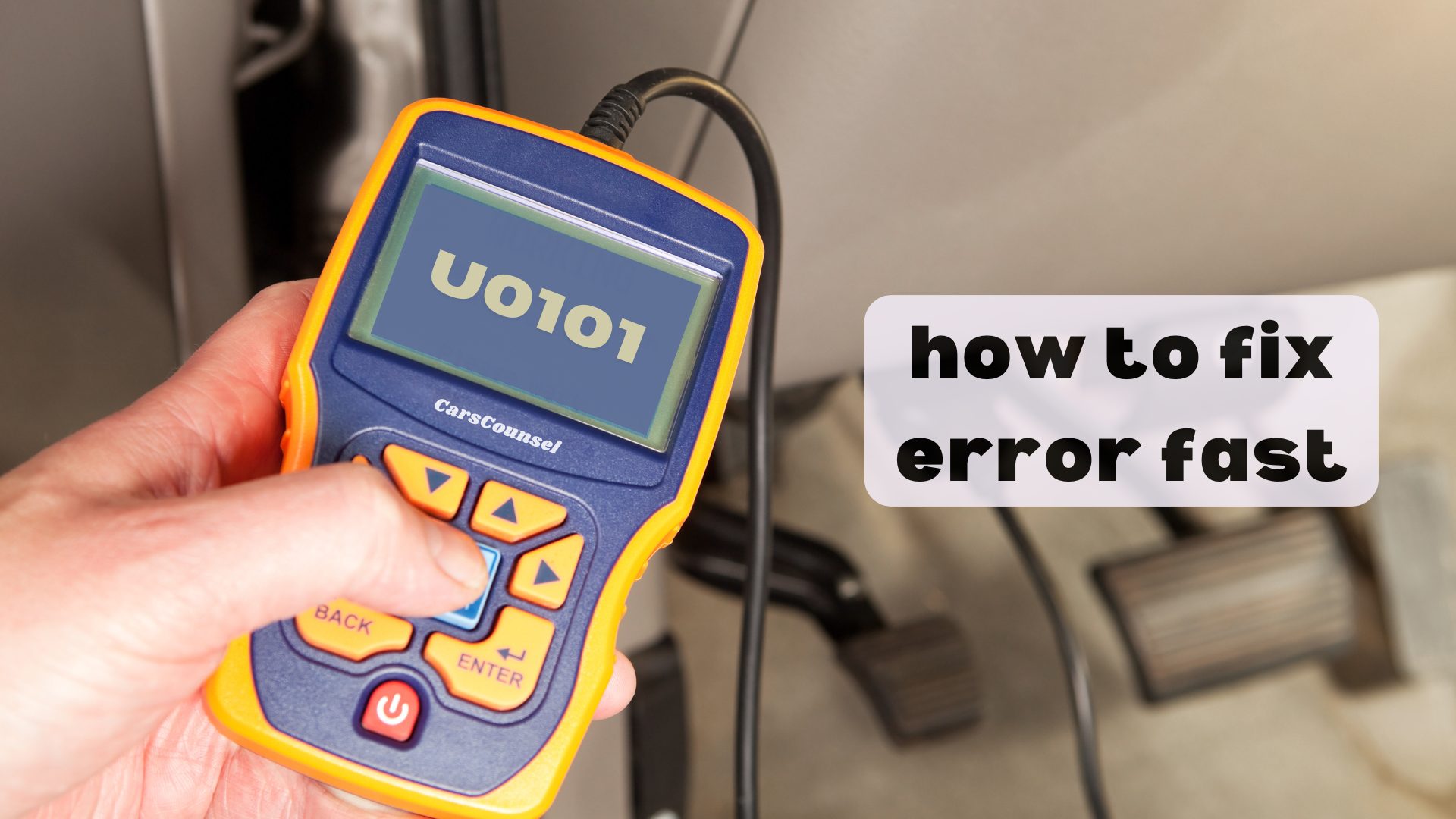
The U0101 code is a generic network code indicating “Lost Communication with TCM” (Transmission Control Module) among various OBD2 codes. It means a control module on the CAN bus network is no longer receiving expected data messages from the TCM.
This code does not automatically mean the TCM has failed. Possible causes include blown fuses, damaged CAN bus wiring, or poor grounds. Exact diagnosis requires verifying the TCM’s power, ground, and network circuits.
Quick Navigation
Key Takeaways
- U0101 indicates a loss of CAN bus communication with the Transmission Control Module.
- This is a network fault, not necessarily an internal transmission mechanical failure.
- Possible causes include missing power or ground to the TCM, or damaged CAN High/CAN Low wiring.
- Diagnosis requires verifying the TCM’s electrical supply and network signals before replacing the module.
U0101 Code Description and Implications
The U0101 code stands for “Lost Communication with TCM.” Modern vehicles use a Controller Area Network (CAN) bus to allow modules to share critical data.
When the powertrain control module (PCM) or another monitoring module stops receiving the expected periodic messages from the TCM, it stores this network code.
Because this is a generic code, the exact network architecture and diagnostic pinouts vary by manufacturer and vehicle platform.
Common Causes of the U0101 Code
Multiple conditions can disable communication with the Transmission Control Module. The underlying cause must be confirmed through testing rather than assuming the module has failed.
Blown fuse or missing power supply: A lack of battery voltage prevents the TCM from waking up and communicating on the network.
Poor or corroded grounds: Disrupted ground connections at the TCM can prevent its internal logic and network transceiver from functioning correctly.
Open or shorted CAN bus wiring: Damaged CAN High or CAN Low circuits between the TCM and the rest of the network will halt data transmission.
Internal module failure: Physical damage from heat, vibration, or water intrusion can cause the TCM’s internal network transceiver to fail.
Symptoms Associated With U0101
When the primary transmission control network fails, the vehicle may exhibit several drivability issues. Symptoms depend on how the powertrain module reacts to the missing data.
- Illuminated warning lamps: The Check Engine Light and a separate transmission warning indicator will typically turn on simultaneously.
- Limp mode or default gear operation: The PCM may limit engine output and lock the transmission in a single gear to protect the drivetrain.
- Harsh shifting or no engagement: The transmission may fail to shift smoothly or refuse to engage gears without TCM data.
- No-start condition: Some applications may prevent the engine from cranking if the immobilizer system requires TCM authorization.
Diagnosing the U0101 Trouble Code
Proper diagnosis begins by verifying the exact vehicle network architecture and checking the electrical supply before condemning the control module.
- Verify module communication: Use a scan tool to see which modules are online and which are offline to identify the scope of the network failure.
- Check TCM power and ground: Measure the voltage at the TCM’s main power and ground pins with the key on to check for missing supply or voltage drops.
- Inspect network circuits: Measure the CAN High and CAN Low circuits at the TCM connector for continuity, shorts to ground, or shorts to voltage.
- Isolate the module: If a short is detected on the network, systematically disconnect modules to see if the bus comes back online.
Repairing the U0101 Issue
Repairs must follow confirmed diagnostic testing. The exact repair path depends on whether the fault is in the wiring, a fuse, or the module itself.
- Fuse or power repair: Replace any blown fuses and repair damaged power supply wiring to restore voltage to the TCM.
- Ground repair: Clean, tighten, or replace any corroded TCM ground straps and chassis connection points to ensure a stable electrical return path.
- Wiring repair: Repair or replace any damaged CAN bus wiring, ensuring the twisted pair geometry is maintained to prevent signal interference.
- Module replacement: If all power, ground, and network checks pass but the module remains offline, the TCM requires replacement and programming.
Cost Considerations for U0101 Repairs
Repair costs vary significantly based on the root cause, vehicle make, and labor accessibility. Exact pricing depends on your local shop rates.
- Fuse or wiring repair: Costs depend on the time required to trace and repair damaged network harnesses hidden behind interior panels.
- Module replacement: Replacing and programming a Transmission Control Module involves higher parts costs and specialized labor for software configuration and adaptation resets.
Prevention Strategies for Future Occurrences
While electrical faults cannot always be prevented, protecting the vehicle’s wiring harnesses can reduce the risk of network shorts and communication failures.
- Protect wiring harnesses: Ensure network wiring is secured away from moving parts, sharp edges, and excessive heat sources under the hood or chassis.
- Address moisture intrusion: Repair weather seals to prevent water from corroding module connectors and causing network shorts or internal TCM damage.
Troubleshooting Tips and Best Practices
- Do not ignore battery warnings: Severely low system voltage can cause modules to drop off the network temporarily. Test the battery and charging system first.
- Check aftermarket accessories: Poorly installed aftermarket alarms or trackers spliced into the CAN bus can cause network failures and trigger this code.
- Verify network resistance: On some networks, checking the terminating resistance at the OBD-II port can help identify if a module is pulling the bus down.
- Use exact specifications: Always refer to the factory service manual for the correct network pinout diagrams and resistance values for your specific vehicle.
More OBD-II Codes
| U0001 | U0073 | U0100 | P0700 |
| P0705 | P0715 | U0107 | U0109 |
| U010C | U0121 | U0126 | U0140 |
| U0141 | U0151 | U0155 | P0717 |
| P0720 | P0730 | P0740 | P0741 |
| P0750 | P0760 | P0770 | P0780 |
Frequently Asked Questions
Is it safe to drive with a U0101 code?
No. A disabled transmission network can cause the vehicle to enter limp mode, experience unpredictable shifting, or stall unexpectedly. Diagnose the issue immediately to avoid safety hazards.
Can a bad battery cause a U0101 code?
Yes. Severely low system voltage can cause the Transmission Control Module to shut down or drop off the communication network. Always verify the battery and charging system first.
Will disconnecting the battery clear the U0101 code?
Disconnecting the battery may temporarily reset the modules, but it will not repair a physical wiring fault or internal module failure. The code will return once monitors run.
How much does it cost to fix a U0101 code?
Costs vary widely. Repairing a chafed wire or blown fuse is relatively inexpensive, while diagnosing and replacing a failed Transmission Control Module requires significant parts and specialized programming labor.
Can aftermarket accessories trigger U0101?
Yes. Aftermarket alarms, trackers, or tuning devices spliced into the CAN bus wiring can disrupt the network signals or cause a short circuit, leading to communication loss with the TCM.
What Should You Do About the U0101 Code?
Confirm the exact network architecture for your specific vehicle application. Begin by checking the TCM’s power, ground, and CAN bus circuits at the module connector.
Do not replace the Transmission Control Module without verified diagnostic evidence. Follow the manufacturer’s pinpoint tests to isolate the fault before authorizing repairs.

