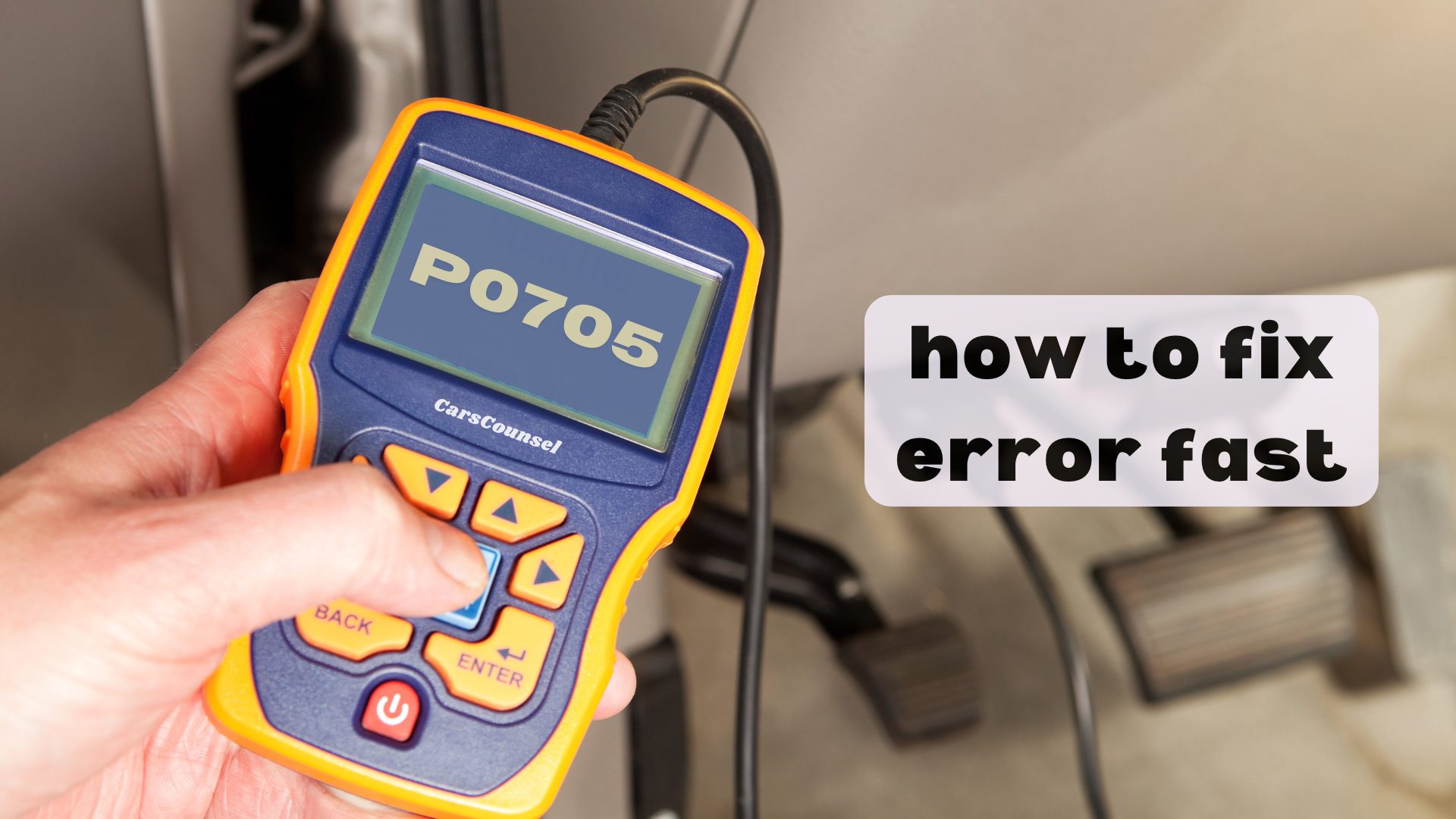
The P0705 code is a generic powertrain code indicating a transmission range sensor circuit malfunction. It is one of many standardized OBD2 Codes used across various vehicle manufacturers.
This code does not automatically mean the sensor has failed. Possible causes include misadjustment, wiring damage, or internal sensor faults. Exact diagnosis requires verifying your specific vehicle’s application.
Quick Navigation
Key Takeaways
- The P0705 code indicates an invalid or irrational signal from the transmission range sensor circuit.
- A misadjusted sensor or damaged wiring harness can interrupt the PRNDL signal to the control module.
- Diagnosis requires verifying sensor adjustment and testing circuit continuity before replacing components.
- A faulty neutral safety switch function may prevent the engine from cranking in Park or Neutral.
P0705 Code Description and Implications
The P0705 code stands for “Transmission Range Sensor Circuit Malfunction (PRNDL Input).”
The transmission range sensor, also known as the neutral safety switch or gear position sensor, tells the powertrain control module which gear is selected.
If the module receives an irrational signal, a missing signal, or a combination of inputs that do not match any valid gear position, it stores this code.
Because this is a generic code, the exact sensor location, adjustment procedure, and wiring diagram vary by manufacturer and transmission model.
Common Causes of the P0705 Code
Several conditions can trigger a transmission range sensor circuit malfunction. The underlying cause must be confirmed through testing rather than assuming a single component has failed.
- Misadjusted transmission range sensor: The sensor may be mechanically out of alignment with the transmission shift shaft.
- Damaged wiring or connectors: Corrosion, chafed wires, or loose pins in the sensor harness can interrupt the signal.
- Faulty transmission range sensor: Internal electrical failures or worn contacts inside the sensor can cause invalid signals.
- Faulty control module: In rare cases, a software glitch or internal failure in the PCM or TCM may cause incorrect circuit monitoring.
Symptoms Associated With P0705
When the transmission range sensor circuit malfunctions, the vehicle may exhibit several drivability issues. Symptoms depend on whether the signal is missing, irrational, or intermittent.
- Illuminated Check Engine Light: The MIL will typically turn on once the fault is detected and confirmed over consecutive drive cycles.
- No-start condition: The engine may not crank because the module does not detect Park or Neutral, disabling the starter relay.
- Erratic shifting or limp mode: The transmission may default to a fail-safe gear or shift harshly due to missing gear position data.
- Incorrect gear display: The PRNDL indicator on the instrument cluster may show the wrong gear or remain blank.
Diagnosing the P0705 Trouble Code
Proper diagnosis begins by verifying the exact vehicle application and checking the most accessible components first.
Avoid replacing the transmission or control module without confirming the root cause.
- Verify the code and check for TSBs: Use a scan tool to confirm P0705 and check for manufacturer technical service bulletins regarding known sensor or software issues.
- Inspect wiring and connectors: Check the harness leading to the transmission range sensor for damage, corrosion, or loose connections.
- Check sensor adjustment: Verify that the sensor is mechanically aligned with the transmission shift shaft according to the manufacturer’s exact procedure.
- Test the sensor circuit: Measure the sensor’s resistance or voltage outputs in each gear position and compare the readings to the factory specifications.
Repairing the P0705 Issue
Repairs must follow confirmed diagnostic testing. The exact repair path depends on whether the fault is mechanical, electrical, or internal to the sensor.
- Sensor adjustment: If the sensor is misaligned, loosen the mounting bolts and align the sensor marks according to the service manual.
- Wiring repair: Repair or replace any damaged wiring, corroded pins, or loose connectors in the control circuit.
- Sensor replacement: If electrical testing confirms the sensor is internally faulty, replace the transmission range sensor.
- Module service: If the circuit and sensor test perfectly, the PCM or TCM may require reprogramming or replacement, though this is rare.
Cost Considerations for P0705 Repairs
Repair costs vary significantly based on the root cause, vehicle make, and labor accessibility. Exact pricing depends on your local shop rates and parts availability.
- Sensor adjustment: Usually requires minimal labor if the sensor is externally mounted and easily accessible.
- Wiring repair: Costs depend on the time required to trace and repair the damaged circuit.
- Sensor replacement: External sensors are relatively quick to replace, while internal switch assemblies require transmission pan removal or partial disassembly.
Prevention Strategies for Future Occurrences
While electrical faults cannot always be prevented, maintaining the mechanical linkage can reduce the risk of sensor misalignment and circuit failures.
- Avoid forcing the shift lever: Forcing the shifter when the transmission is binding can damage the mechanical linkage or sensor alignment.
- Protect exposed connectors: Ensure the sensor electrical connector is fully seated and the weather seal is intact to prevent moisture intrusion.
- Address linkage issues promptly: Repair any worn shift cable bushings or loose linkage components that could alter the sensor’s physical position.
Troubleshooting Tips and Best Practices
- Do not ignore a no-start condition: If the vehicle only starts in Neutral but not Park, the sensor is likely misadjusted or failing, which is a safety hazard.
- Check for related codes: Codes like P0706 or P0707 provide more specific electrical clues than the general P0705 circuit code.
- Verify aftermarket accessories: Remote starters or alarm systems wired into the neutral safety switch circuit can cause false codes if installed incorrectly.
- Use exact specifications: Always refer to the factory service manual for the correct alignment marks and pinout diagrams for your specific vehicle.
More OBD-II Codes
| P0704 | P0703 | P0700 | P0651 |
| P0650 | P0641 | P0706 | P0707 |
| P0708 | P0711 | P0713 | P0714 |
| P0715 | P0716 | P0717 | P0720 |
| P0721 | P0722 | P0723 | P0725 |
| P0730 | P0731 | P0732 | P0733 |
Frequently Asked Questions
Can a P0705 code prevent my car from starting?
Yes. The transmission range sensor acts as a neutral safety switch. If the control module does not detect Park or Neutral, it will disable the starter relay to prevent the vehicle from starting in gear.
Is it safe to drive with a P0705 code?
Driving with this code is not recommended. The transmission may enter limp mode, shift erratically, or fail to engage the correct gear. Additionally, the vehicle may stall or fail to restart once turned off.
How do I know if my transmission range sensor needs adjustment?
If the vehicle only starts in Neutral but not Park, or if the dashboard gear indicator does not match the shift lever position, the sensor may be mechanically misaligned. Consult the service manual for adjustment marks.
Can a bad shift cable cause a P0705 code?
Yes. A stretched, binding, or improperly adjusted shift cable can prevent the transmission shift shaft from fully reaching the correct gear detent, causing the transmission range sensor to send an invalid signal to the control module.
Will disconnecting the battery clear the P0705 code?
Disconnecting the battery may temporarily reset the check engine light, but it does not repair the underlying mechanical or electrical fault. The code will return once the monitor runs again, and you may lose important freeze-frame data.
What Should You Do About the P0705 Code?
Confirm the exact factory definition and diagnostic procedure for your specific vehicle application. Begin by inspecting the shift linkage and sensor wiring, then verify the sensor’s mechanical adjustment.
Do not replace the transmission or control module without verified diagnostic evidence. Follow the manufacturer’s pinpoint tests to isolate the fault to the linkage, wiring, or sensor before authorizing repairs.

