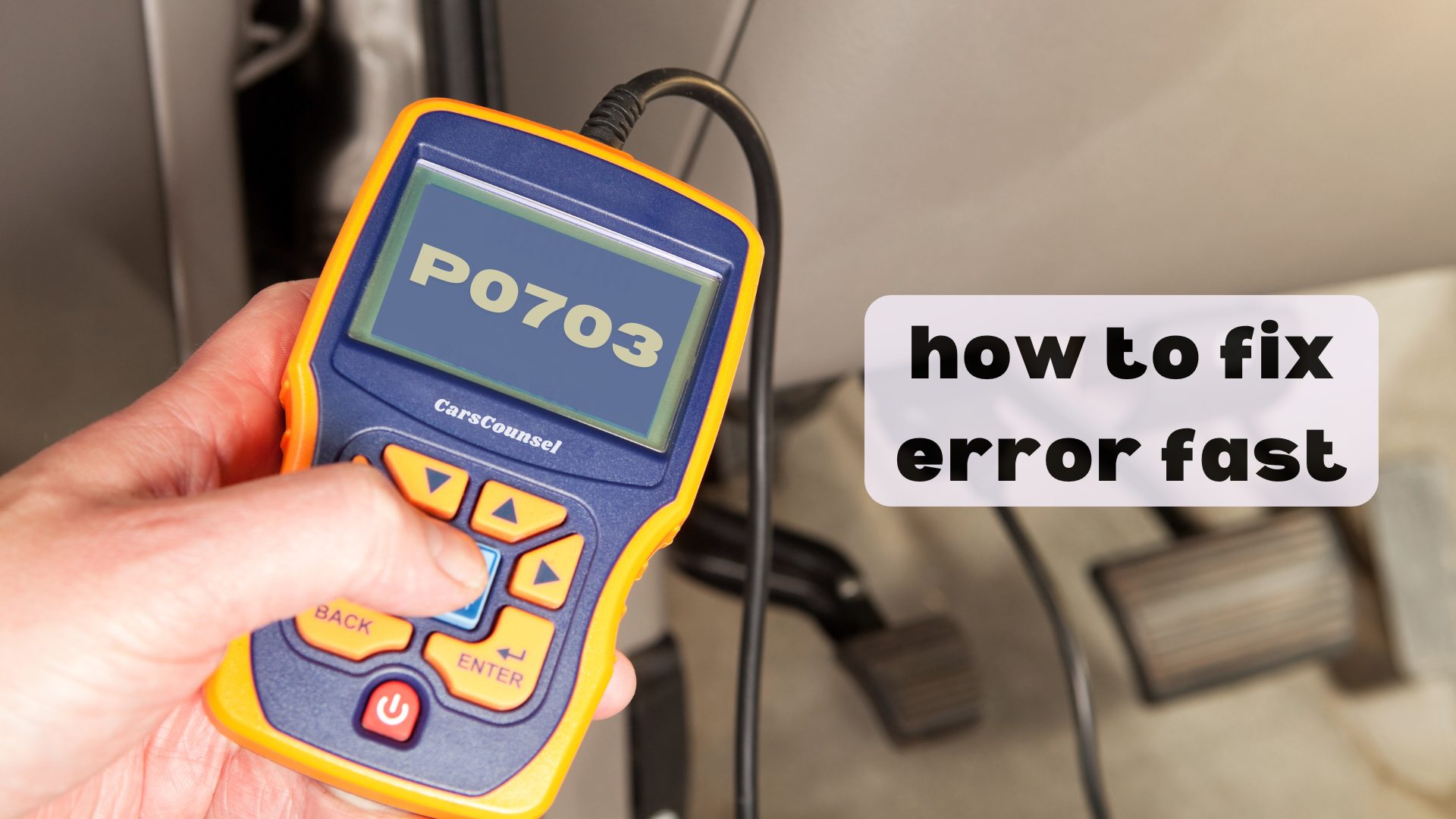
P0703 is a generic OBD-II diagnostic trouble code indicating the powertrain control module detected a malfunction in the brake switch “B” circuit.
This code identifies an electrical circuit condition rather than confirming a single failed component. The underlying cause requires targeted electrical diagnosis based on the exact factory definition.
Quick Navigation
Key Takeaways
- P0703 indicates a fault in the Brake Switch “B” circuit, which the control module uses to disengage the torque converter clutch and cruise control.
- Possible causes include a misadjusted or failed brake switch, damaged wiring, corroded connectors, or blown fuses.
- Diagnosis involves verifying brake light operation, testing the brake switch adjustment and electrical continuity, and inspecting the wiring harness.
- Repairs depend on the confirmed root cause and may involve adjusting or replacing the brake switch, or repairing the wiring.
P0703 Code Description and Implications
P0703 is a generic OBD-II code indicating the powertrain control module (PCM) or transmission control module (TCM) detected a malfunction in the Brake Switch “B” circuit.
The brake switch sends a signal to the control modules when the brake pedal is pressed. This signal is critical for disengaging the torque converter clutch (TCC), canceling cruise control, and illuminating the brake lights.
When the module detects an illogical signal, an open circuit, or a short in this specific circuit, it logs the P0703 code.
Because P0703 is a generic code, this fundamental monitoring logic applies across various vehicles from multiple manufacturers.
However, the exact circuit architecture, switch type, and diagnostic troubleshooting steps vary depending on the specific vehicle application.
When diagnosing OBD2 errors related to transmission and braking inputs, verifying the exact factory definition is the most critical first step.
Common Causes of the P0703 Code
The underlying causes for a brake switch circuit code generally involve the switch itself, the adjustment, or the control wiring.
Misadjusted Brake Switch: The switch may be out of position, causing the module to receive conflicting signals regarding pedal position.
Failed Brake Switch: The internal contacts of the switch may wear out or fail, interrupting the signal.
Wiring and Connector Issues: Damaged wiring, chafed insulation, or corroded connectors in the brake switch circuit can interrupt the signal or cause a short.
Blown Fuses: A blown fuse supplying power to the brake switch or the control module’s input circuit can trigger the code.
Faulty Control Module: In rare cases, an internal fault in the PCM or TCM may prevent proper circuit monitoring.
Symptoms Associated With P0703
The prominent symptom is the illumination of the Check Engine Light.
The torque converter clutch may fail to engage or disengage properly, leading to reduced fuel efficiency or engine stalling when coming to a stop.
Cruise control may become inoperative or fail to cancel when the brake pedal is pressed.
Depending on the application, the brake lights may fail to illuminate, remain on constantly, or operate erratically.
The transmission may experience harsh shifting or enter a limp mode to protect the drivetrain.
Diagnosing the P0703 Trouble Code
Diagnosis must begin by confirming the exact factory service information and wiring diagrams for the vehicle’s specific make and model.
Start by verifying the operation of the brake lights. If the brake lights do not work or stay on constantly, the issue likely lies with the brake switch or its primary circuit.
Inspect the brake switch adjustment. On many vehicles, the switch must be precisely aligned with the brake pedal stopper.
Use a digital multimeter to test the brake switch for proper continuity and operation as the pedal is pressed and released.
Check the wiring harness and connectors between the brake switch and the PCM/TCM for damage, corrosion, or loose pins.
If the switch and wiring test correctly, use a scan tool to monitor the brake switch live data while pressing the pedal to verify the module receives the correct signal.
Repairing the P0703 Issue
Repairs must follow confirmed diagnosis. Never replace transmission or control modules solely based on the presence of the code.
If the brake switch is misadjusted, adjust it according to the manufacturer’s specifications.
If the brake switch fails electrical testing, replace it with a component meeting the correct vehicle specification.
If external wiring damage or connector corrosion is found, repair the harness and secure the connections before re-evaluating the system.
If a blown fuse is found, replace the fuse and determine the root cause of the electrical overload.
If all external circuits and the switch test correctly, follow the manufacturer’s diagnostic procedure to evaluate the PCM or TCM.
Cost Considerations for P0703 Repairs
Repair costs vary considerably depending on the confirmed root cause and the specific vehicle application.
Adjusting a misaligned brake switch involves minimal labor and no parts cost.
Replacing a brake switch involves minimal parts costs and standard labor.
Repairing damaged wiring involves moderate labor depending on accessibility.
Cost depends on diagnostic time, component accessibility, required parts, programming requirements, and labor.
Prevention Strategies for Future Occurrences
Preventing brake switch circuit codes requires attention to the vehicle’s pedal assembly and electrical connections.
Avoiding excessive force or resting your foot on the brake pedal can prevent premature wear and misalignment of the brake switch.
Inspecting exposed wiring near the pedal assembly for interference or damage can help identify developing issues before they cause an open circuit.
Troubleshooting Tips and Best Practices
Always check for Technical Service Bulletins related to P0703 for your specific vehicle application.
Manufacturers may release updated brake switch designs, revised pedal stopper pads, or software updates to address known signal correlation faults.
Do not assume the transmission or torque converter is mechanically failed simply because a brake switch circuit code is present.
P0703 specifically points to the electrical input signal from the brake pedal, not necessarily a mechanical failure inside the transmission.
If the vehicle recently underwent pedal assembly, steering column, or dash work, verify that the brake switch was properly reinstalled and adjusted.
More OBD-II Codes
| P0700 | P0691 | P0690 | P0688 |
| P0685 | P0683 | P0704 | P0705 |
| P0706 | P0707 | P0708 | P0711 |
| P0504 | P0571 | P0572 | P0573 |
| P0713 | P0715 | P0716 | P0717 |
| P0720 | P0721 | P0722 | P0723 |
Frequently Asked Questions
Is the P0703 code generic or manufacturer-specific?
P0703 is a generic SAE-defined OBD-II code. Its fundamental definition regarding a malfunction in the Brake Switch “B” circuit applies across various manufacturers, though exact diagnostic steps vary.
Can a bad brake light bulb cause a P0703 code?
Usually, no. The brake switch “B” circuit typically monitors the signal sent directly to the PCM or TCM, which is often separate from the high-current circuit powering the exterior brake light bulbs.
Will disconnecting the battery clear the P0703 code?
Disconnecting the battery may temporarily clear the code, but it does not repair the underlying electrical or adjustment fault. It also erases valuable freeze frame data and resets readiness monitors, complicating professional diagnosis.
Can I drive my vehicle with a P0703 code?
Driving is not recommended if the brake lights are inoperative or if the torque converter clutch fails to disengage, which can cause the engine to stall when stopping. Verify brake light operation before driving.
Does P0703 mean the transmission must be rebuilt?
No. This code points to an electrical fault in the brake switch input circuit. The issue is typically a misadjusted switch, a failed switch, or damaged wiring near the brake pedal, not an internal transmission mechanical failure.
What Should You Do About the P0703 Code?
Confirm the exact factory definition and diagnostic procedure for your specific vehicle application before attempting repairs.
Do not assume the transmission requires internal mechanical repairs based solely on the presence of the diagnostic trouble code.
Inspect the brake switch adjustment, verify the circuit continuity, and review live data to rule out external electrical faults.
Follow the applicable manufacturer diagnostic workflow to isolate the relevant system and components before replacing any hardware.

