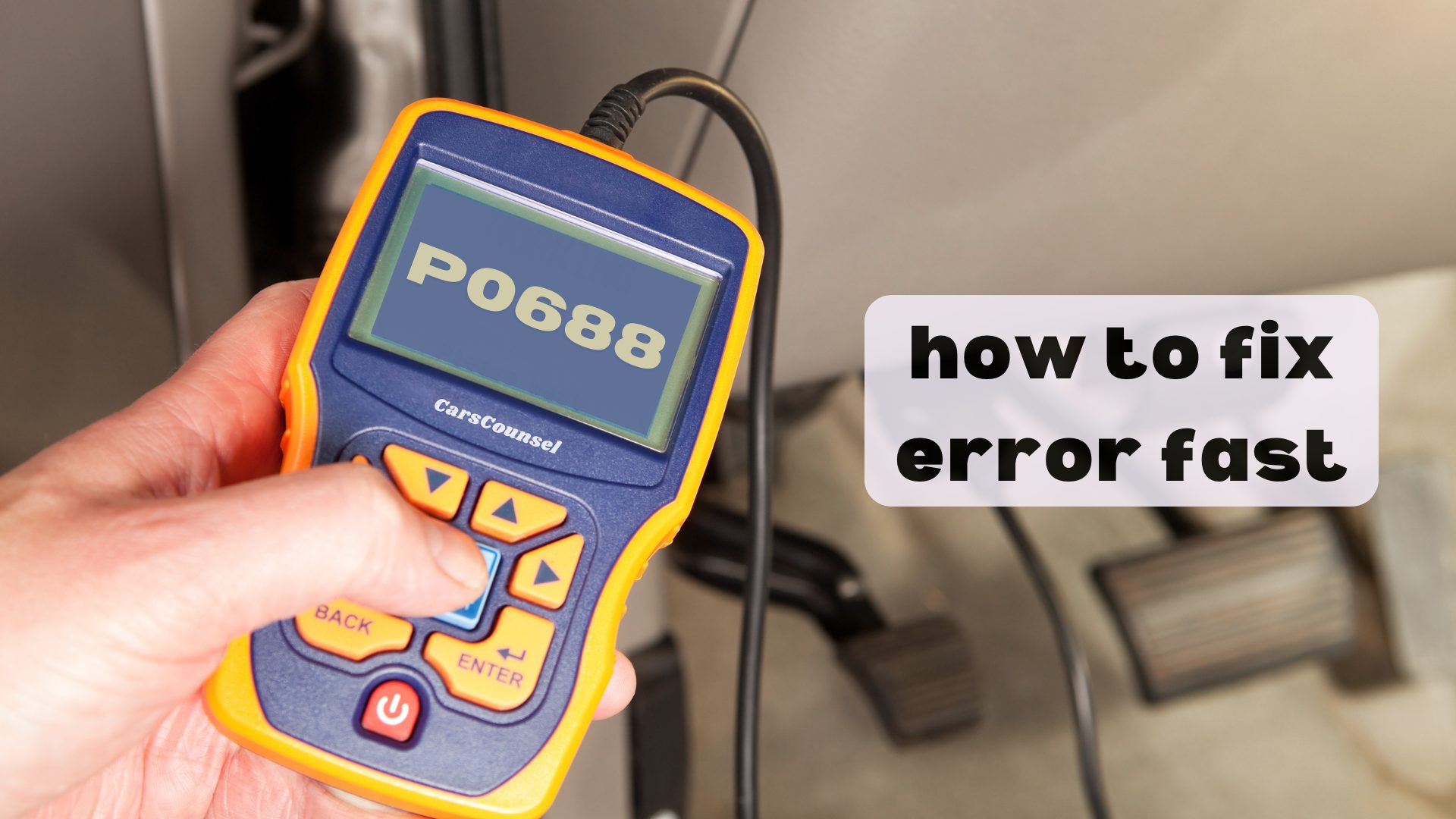
Among OBD2 codes, P0688 is a generic SAE definition indicating an ECM/PCM Power Relay Sense Circuit Open fault. It means the control module detected an open circuit or missing voltage on the relay sense feedback line.
Because this code points to a specific power distribution circuit, exact application verification is required. The code indicates an electrical condition, and testing is necessary to isolate the fault to the relay, wiring, or control module.
Quick Navigation
Key Takeaways
- Condition detected: The PCM identified an open circuit or lack of voltage on the ECM/PCM power relay sense feedback line.
- Electrical checks required: Diagnosis involves testing the power relay, inspecting the sense circuit wiring, and verifying module power and grounds.
- System impacts: A faulty sense circuit can prevent the engine from starting, cause unexpected stalling, or trigger limp mode.
- Component testing: The ECM/PCM power relay, fuse box connections, and related wiring harness must be evaluated to isolate the root cause.
P0688 Code Description and Implications
P0688 is a generic SAE definition for ECM/PCM Power Relay Sense Circuit/Open. The powertrain control module uses a main power relay to supply switched battery voltage to its internal processors and critical engine sensors.
When the module commands the relay on, it monitors a dedicated sense circuit to verify that voltage is actually reaching the module. If the sense circuit reads zero volts or indicates an open condition while the relay is commanded active, the module stores P0688.
Common Causes of the P0688 Code
- Failed ECM/PCM power relay: The internal contacts of the main power relay may fail to close, preventing voltage from reaching the sense circuit.
- Blown fuse or fusible link: A blown main engine control fuse will interrupt power to the relay contacts, causing an open sense circuit condition.
- Damaged or chafed wiring: The sense circuit wire between the relay output and the PCM connector may be broken, chafed, or disconnected.
- Corroded fuse box or connectors: Moisture intrusion or corrosion in the underhood fuse box or at the PCM connector can interrupt the electrical path.
Symptoms Associated With P0688
Possible symptoms include:
- Illuminated Check Engine Light (MIL).
- Engine cranking but failing to start due to lack of PCM power.
- Engine stalling unexpectedly while driving if the relay intermittently drops out.
- Multiple communication or sensor codes stored alongside P0688 due to module power loss.
Diagnosing the P0688 Trouble Code
Diagnosing a power relay sense circuit code requires a digital multimeter, a scan tool, and the vehicle’s specific wiring diagrams. The first step is to verify the exact factory definition.
- Visual inspection: Inspect the underhood fuse box, the ECM/PCM power relay, and the main engine control fuses for signs of heat damage, corrosion, or blown elements.
- Test the relay: Swap the ECM/PCM power relay with a known good identical relay to verify if the fault follows the relay.
- Check circuit voltage: Use a multimeter to verify battery voltage at the relay input terminal and at the PCM sense pin when the ignition is turned on.
- Test circuit continuity: If voltage is present at the relay but missing at the PCM, test the sense wire for an open circuit or high resistance.
Repairing the P0688 Issue
Repairs must follow confirmed diagnosis. Never replace the powertrain control module based solely on the presence of a P0688 code.
- Relay replacement: If the power relay fails testing or swapping, replace it with a component meeting the correct vehicle specification.
- Fuse replacement: If a main control fuse is blown, replace the fuse and investigate the underlying cause of the overcurrent condition.
- Wiring repair: If the sense circuit is broken or chafed, repair the wire using solder and heat shrink tubing.
- Connector service: Clean corroded fuse box terminals or PCM connector pins and apply dielectric grease to prevent moisture intrusion.
Cost Considerations for P0688 Repairs
Cost depends on diagnostic time, component accessibility, required parts, programming requirements, and labor.
Replacing a standard relay or fuse is straightforward, while repairing a damaged wiring harness inside an integrated underhood fuse box can be more involved.
Prevention Strategies for Future Occurrences
- Protect electrical connections: Ensure the underhood fuse box cover is properly seated to prevent moisture and debris from corroding the relays and fuses.
- Inspect battery grounds: Verify that the main battery ground cables to the chassis and engine block are clean and tight to ensure stable module power.
Troubleshooting Tips and Best Practices
- Do not ignore related codes: P0688 can accompany communication loss codes or multiple sensor circuit codes. If the PCM loses power, it cannot monitor other systems, causing a cascade of false faults.
- Check for TSBs: Some manufacturers issue Technical Service Bulletins for updated fuse box designs or revised relay part numbers to address chronic power distribution faults.
- Verify aftermarket accessories: Poorly installed aftermarket electronics spliced into the ignition or PCM power circuits can overload the relay sense circuit and trigger this code.
More OBD-II Codes
| P0670 | P0671 | P0673 | P0674 |
| P0683 | P0685 | P0690 | P0700 |
| P0703 | P0704 | P0705 | P0706 |
| P0601 | P0602 | P0603 | P0604 |
| P0605 | P0606 | P0620 | P0638 |
| P0641 | P0651 | P0660 | P0661 |
Frequently Asked Questions
Can a bad battery cause a P0688 code?
A severely discharged or failing battery can cause system voltage drops that interrupt the PCM power relay circuit. However, P0688 specifically targets the sense circuit. Always load-test the battery, but focus diagnosis on the relay and wiring.
Is it safe to drive with a P0688 code?
Driving is not recommended. A power relay sense fault indicates the PCM may lose power unexpectedly. This can cause the engine to stall without warning while driving, resulting in a loss of power steering and braking assist.
Will replacing the ECM/PCM power relay fix a P0688 code?
It will fix the issue if the internal relay contacts have failed to close. However, if the root cause is a blown fuse, a broken sense wire, or a corroded fuse box connection, replacing the relay will not resolve the circuit fault.
Does P0688 mean my PCM needs to be replaced?
Not necessarily. P0688 indicates an open circuit in the power supply path. The root cause is a failed relay, blown fuse, or damaged wiring. Proper circuit testing is required before condemning the control module.
Can aftermarket accessories trigger a P0688 code?
Yes. Aftermarket electronics spliced into the ignition or PCM power circuits can overload the relay or introduce voltage drops on the sense line. Always ensure accessories are wired correctly and fused independently.
What Should You Do About the P0688 Code?
Because the P0688 code indicates an open circuit in the ECM/PCM power relay sense circuit, it requires verifying the relay, fuses, and wiring before replacing components. Confirm the exact factory definition for your vehicle.
Inspect the underhood fuse box for damage, check the relay operation, and test the relevant system and components. Follow the manufacturer’s diagnostic procedure to isolate the faulty component, repair the confirmed root cause, and verify the repair.

