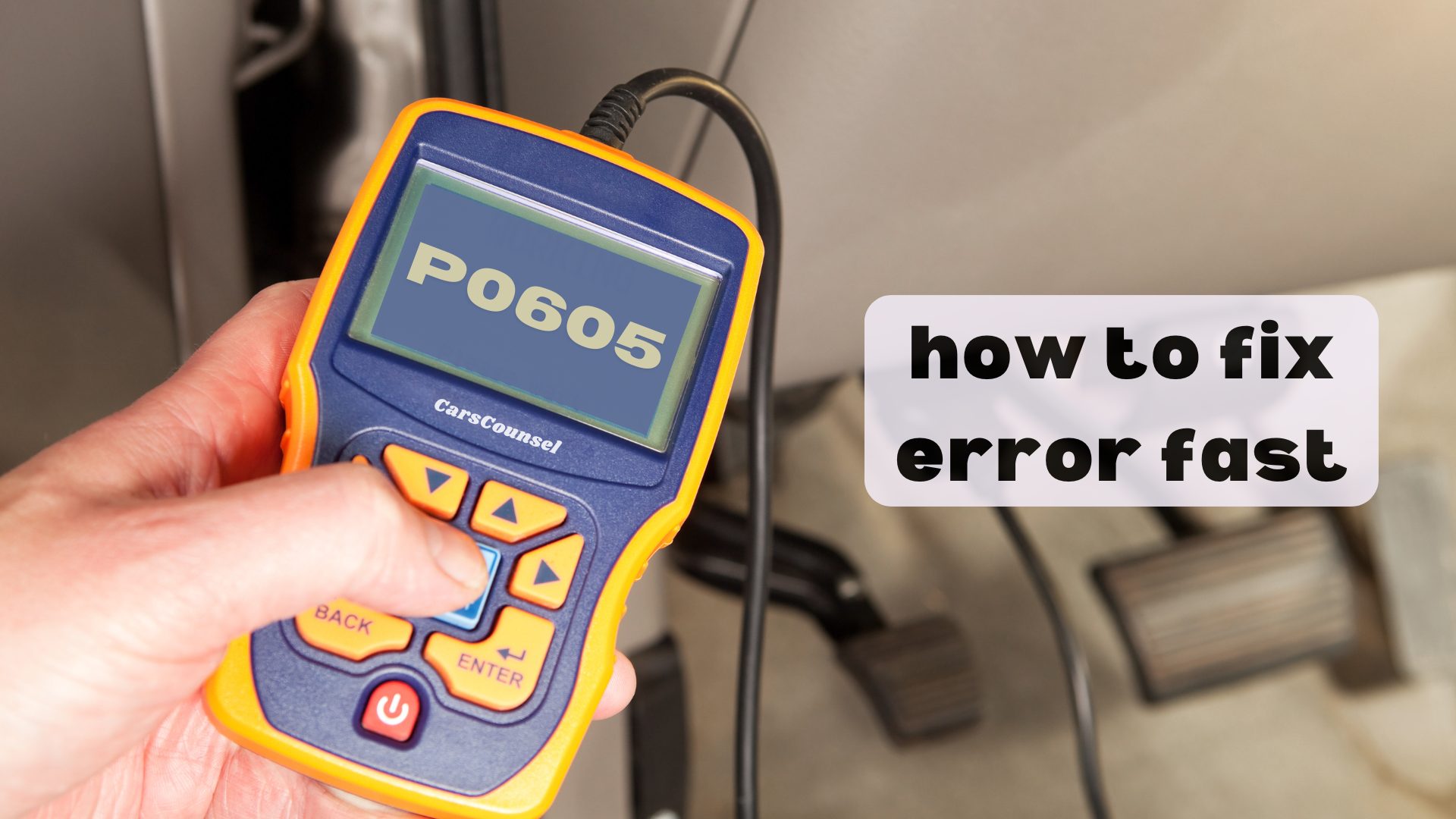
Among OBD2 codes, P0605 is a generic powertrain definition indicating an Internal Control Module Read Only Memory (ROM) Error. It means the engine or powertrain control module detected a checksum failure in its permanent memory.
Because this code points to a severe internal module fault or power disruption, the exact diagnostic path depends on your vehicle’s electrical architecture. Testing the battery, grounds, and module power is required before condemning the control module.
Quick Navigation
Key Takeaways
- Condition detected: The control module identified a checksum error or corruption within its internal Read-Only Memory (ROM).
- Electrical checks required: Diagnosis involves verifying stable battery voltage, checking module power feeds, and inspecting ground circuits.
- Drivability impacts: A ROM error can cause a no-start condition, immediate stalling, or trigger a fail-safe limp mode.
- Module replacement: If power and grounds are verified, the control module typically requires replacement and programming.
P0605 Code Description and Implications
The P0605 code is a generic SAE definition for Internal Control Module Read Only Memory (ROM) Error. The powertrain control module (PCM) uses ROM to store its base operating software and calibration data.
During startup or continuous operation, the module performs a self-test on its ROM. If the checksum fails or the memory is corrupted, it stores P0605.
This code indicates a severe internal fault within the control module or a major power disruption that corrupted the memory check. It does not automatically prove the module has failed physically.
Common Causes of the P0605 Code
- Loss of power or ground: A severe voltage drop during cranking or a corroded ground connection can cause the module to fail its internal self-test.
- Electrical surges: Jump-starting a vehicle incorrectly, a failing alternator, or aftermarket accessories can introduce voltage spikes that corrupt module memory.
- Failed PCM/ECM: Internal degradation of the ROM chip or the main processor can cause permanent memory corruption.
- Software corruption: A failed software update or interrupted flash procedure can leave the ROM in an invalid state.
Symptoms Associated With P0605
Possible symptoms include:
- Illuminated Check Engine Light (MIL).
- No-start condition, where the engine cranks but fails to fire.
- Engine stalling immediately after starting.
- Harsh transmission shifts or activation of a fail-safe limp mode.
- Multiple unrelated communication or sensor codes stored simultaneously due to processor failure.
Diagnosing the P0605 Trouble Code
Diagnosing an internal module code requires a digital multimeter and the vehicle’s specific wiring diagrams. The first step is to verify the exact factory definition for your specific make and model.
A professional diagnostic workflow includes:
- Check battery and charging system: Verify the battery is fully charged and the alternator is not producing excessive AC ripple or overcharging.
- Inspect module power and grounds: Use a multimeter to verify that all main power feeds and ground pins at the PCM connector have minimal voltage drop.
- Check for aftermarket devices: Remove any aftermarket tuners, alarm systems, or trackers plugged into the OBD-II port or spliced into the data bus.
- Attempt a module reset: Disconnecting the battery to let the modules sleep, or performing a factory software reflash, can sometimes clear temporary corruption.
Repairing the P0605 Issue
Repairs must follow confirmed diagnosis. Never replace the PCM based solely on the presence of a P0605 code.
- Wiring repair: If power or ground circuits are found to have high resistance, repair the wiring or clean the ground points.
- Software reflash: If the module is physically intact but the software is corrupted, flashing the latest OEM calibration may restore operation.
- Module replacement: If power, grounds, and software are verified and the code returns, the PCM must be replaced and programmed to the vehicle.
Cost Considerations for P0605 Repairs
The cost to resolve a P0605 code depends heavily on the root cause, diagnostic time, and component accessibility.
If the issue is a corroded ground, the repair primarily involves labor. If the module requires a software reflash, the price includes dealer-level programming time. Replacing and programming a new PCM involves the cost of the module and setup labor.
Prevention Strategies for Future Occurrences
While internal module failures are not always predictable, you can protect the vehicle’s computers from common electrical damage.
- Maintain battery health: Replace weak batteries and test the alternator to prevent voltage spikes or drops that stress the PCM.
- Proper jump-starting: Follow correct jump-start procedures to avoid sending voltage spikes into the vehicle’s sensitive electronic modules.
- Avoid OBD-II port abuse: Be cautious with cheap aftermarket tuning devices that may interrupt module communication or cause bus shorts.
Troubleshooting Tips and Best Practices
- Do not immediately replace the PCM: Always verify the battery, alternator, and module grounds first. A weak battery during cranking is a frequent cause of false ROM errors.
- Check for TSBs: Some manufacturers issue Technical Service Bulletins for known software bugs that cause false P0605 codes, which can be fixed with a dealer-level reflash.
- Inspect the OBD-II port: Check for bent pins or moisture in the diagnostic port, which can short the communication bus and trigger module internal faults.
More OBD-II Codes
| P0604 | P0603 | P0602 | P0601 |
| P0600 | P0599 | P0606 | P0607 |
| P0615 | P0620 | P0621 | P0622 |
| P0627 | P0628 | P0629 | P0633 |
| U0100 | U0101 | U0140 | U0155 |
| P0300 | P0420 | P0171 | P0455 |
Frequently Asked Questions
Can a bad battery cause a P0605 code?
Yes. If the battery voltage drops severely during engine cranking, the PCM may not receive enough stable power to complete its internal self-test, resulting in a false ROM error code.
Is it safe to drive with a P0605 code?
No. A ROM error indicates the engine control module cannot reliably execute its base programming. This can lead to sudden stalling, a no-start condition, or unpredictable engine behavior while driving.
Will reflashing the PCM fix a P0605 code?
It might. If the ROM corruption was caused by a software glitch or a failed previous update, a dealer-level reflash with the latest OEM calibration can restore the memory checksum and clear the code.
Does P0605 mean my PCM needs to be replaced?
Not always. While a physically failed ROM chip requires PCM replacement, the code can also be triggered by poor grounds, a failing alternator, or electrical surges. Electrical diagnosis must be performed first.
Can an aftermarket tuner cause a P0605 code?
Yes. Aftermarket tuning devices that modify the PCM’s internal calibration can alter the ROM checksum. If the tuner malfunctions or is removed improperly, it can leave the ROM in a corrupted state.
What Should You Do About the P0605 Code?
Because the P0605 code indicates a severe internal memory or power fault within the control module, it requires systematic electrical diagnosis rather than trial-and-error parts replacement. Confirm the exact factory definition for your specific vehicle application.
Inspect the battery, alternator, and module grounds for voltage drops. Verify the integrity of the power and ground circuits. Follow the manufacturer’s diagnostic procedure to isolate the faulty component, repair the confirmed root cause, and verify the repair.

