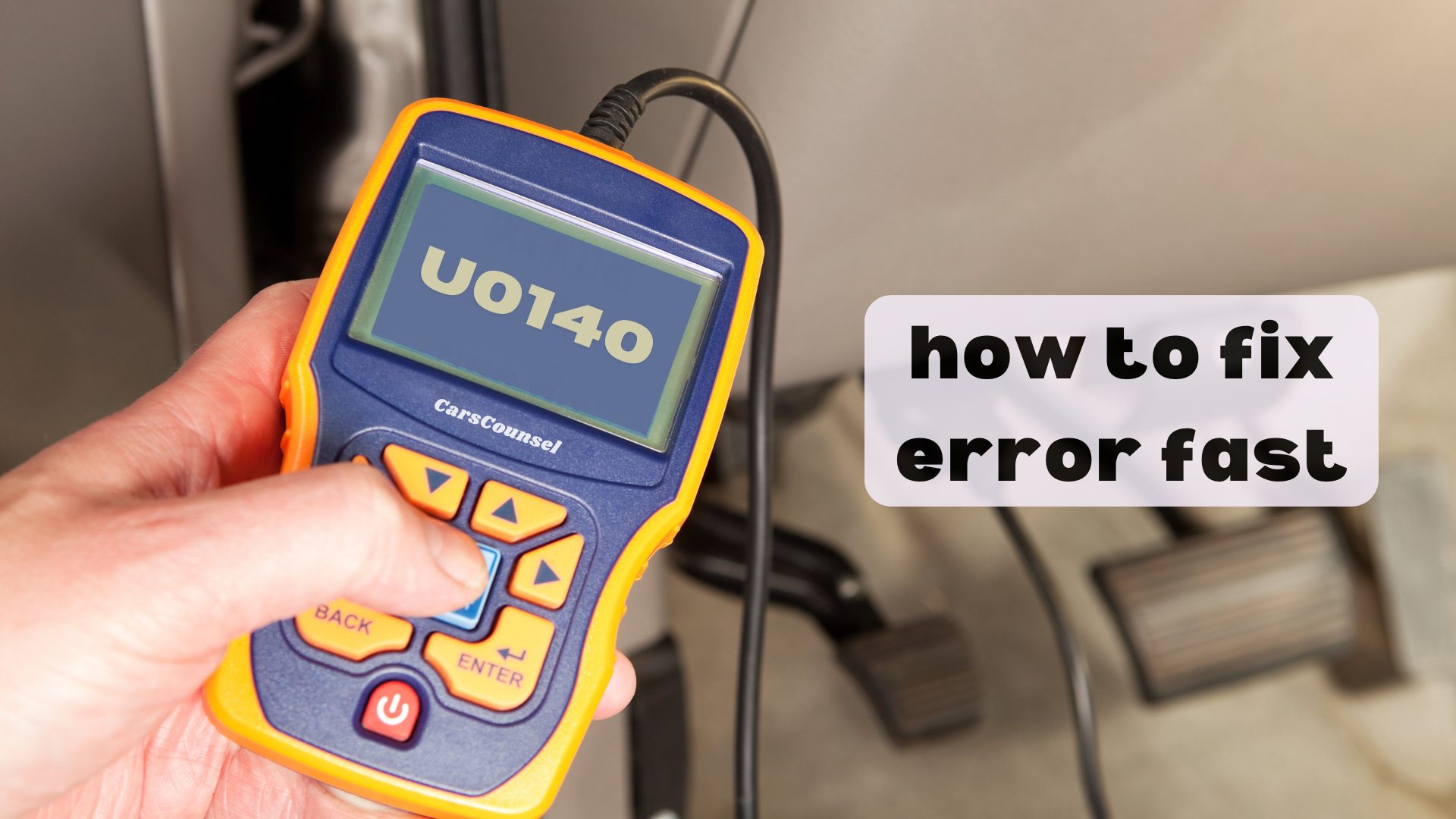
U0140 is a generic OBD-II network communication code indicating that a control module has lost communication with the Body Control Module (BCM). This means expected data messages are missing from the vehicle’s CAN bus network.
This code identifies a network communication condition rather than confirming a single failed component. The underlying cause could involve wiring faults, power or ground issues to the BCM, or the BCM itself, requiring targeted diagnosis.
Quick Navigation
Key Takeaways
- U0140 indicates the control module detected a loss of communication with the Body Control Module over the vehicle’s data network.
- Possible causes include open or shorted CAN bus wiring, poor module grounds, a lack of power to the BCM, or an internal BCM failure.
- Diagnosis requires verifying BCM power and ground circuits, checking CAN bus network integrity, and scanning for related module codes.
- Repairs depend on the confirmed root cause and may involve wiring repair, connector replacement, or BCM replacement and programming.
U0140 Code Description and Implications
The U0140 code indicates that a monitoring control module, often the Powertrain Control Module (PCM), has stopped receiving expected periodic messages from the Body Control Module (BCM).
Modern vehicles rely on a Controller Area Network (CAN) bus to allow various modules to share data efficiently.
The BCM manages numerous body functions, including exterior lighting, power windows, door locks, and immobilizer systems.
When the PCM or another module does not receive the BCM’s status messages within a specific timeout period, it sets a U0140 code.
Because U0140 is a generic network code, this fundamental communication monitoring logic applies across various vehicles from multiple manufacturers.
However, the exact network topology, pinout specifications, and diagnostic troubleshooting steps vary significantly depending on the specific vehicle application.
When diagnosing network-related trouble codes, generic diagnostic paths cannot account for manufacturer-specific wiring diagrams or module configurations.
Common Causes of the U0140 Code
The underlying causes for a lost communication code generally involve the network wiring, module power supplies, or the module itself.
Wiring and Connector Issues: Damaged CAN High or CAN Low wiring, chafed insulation, or corroded connectors can interrupt the data network, preventing the BCM from communicating.
Loss of Power or Ground: If the BCM loses its main battery power supply or its chassis ground connections, it will power down and disappear from the network entirely.
Internal Module Failure: An internal hardware or software failure within the BCM may prevent it from transmitting data onto the network bus.
Network Bus Faults: A short to ground or short to voltage on the CAN bus circuits from another module can pull the entire network down, causing multiple U-codes.
Symptoms Associated With U0140
The prominent symptom is the illumination of the Check Engine Light, often accompanied by multiple other warning indicators on the instrument cluster.
Depending on the vehicle’s network architecture, the loss of the BCM can cause a no-start condition if the immobilizer system cannot verify the key.
Drivers may experience a complete loss of BCM-controlled features, such as power door locks, interior lighting, wipers, or power windows.
The instrument cluster may display various service warnings due to the missing vehicle data normally provided by the BCM.
Diagnosing the U0140 Trouble Code
Diagnosis must begin by confirming the exact factory service information and network topology for the vehicle’s make and model.
Start by using a capable scan tool to check for communication with the BCM directly. If the scanner cannot communicate with the BCM, the module is completely offline.
Verify that the BCM is receiving proper battery voltage on its main power pins and has clean, tight ground connections.
If power and ground are confirmed, use a digital multimeter or oscilloscope to test the CAN High and CAN Low circuits at the BCM connector for proper network activity.
Inspect the wiring harness for physical damage, especially in areas where the harness passes through the firewall or door jambs.
If the network circuits test correctly and power is present, the fault may lie within the BCM itself, requiring module diagnosis.
Repairing the U0140 Issue
Repairs must follow confirmed diagnosis. Never replace the BCM solely based on the presence of the code without verifying network integrity and power supplies.
If external wiring damage or connector corrosion is found on the CAN bus or power circuits, repair the harness and secure the connections.
If the BCM lacks power due to a blown main fuse or fusible link, replace the fuse and investigate the cause of the overload.
If electrical testing confirms the BCM has internal failure and cannot communicate despite correct power, ground, and network signals, replace the BCM.
A replacement BCM will require programming and configuration to match the vehicle’s specific options and immobilizer system.
Cost Considerations for U0140 Repairs
Repair costs vary widely depending on the confirmed root cause and the specific vehicle application.
Repairing damaged wiring or replacing a blown fuse involves standard electrical labor and minimal parts costs.
If the diagnosis confirms the BCM requires replacement and programming, the parts and specialized labor costs will be higher.
Cost depends on diagnostic time, component accessibility, required parts, programming requirements, and labor.
Prevention Strategies for Future Occurrences
Preventing network communication codes requires attention to the vehicle’s primary electrical system and wiring harness routing.
Ensuring the battery terminals are clean and securely tightened prevents voltage spikes and drops that can stress network modules.
Inspecting the wiring harness where it passes through the firewall or into the doors can help identify developing chafing or moisture intrusion before it causes a network short.
Keeping connector seals intact and using dielectric grease on exposed electrical connections may reduce corrosion in harsh climates.
Troubleshooting Tips and Best Practices
Always check for Technical Service Bulletins related to U0140 for your specific vehicle application.
Manufacturers frequently release updated wiring harness repair kits, revised ground locations, or software updates to address known network communication faults.
Do not assume the BCM has failed simply because it is the module named in the code description.
A simple blown fuse, a corroded ground strap, or a shorted CAN bus wire from an entirely different module can pull the network down and cause the BCM to appear offline.
If multiple U-codes are present alongside U0140, diagnose the network bus integrity first, as a single network short can cause a cascade of communication loss codes.
More OBD-II Codes
| U0001 | U0073 | U0100 | U0101 |
| U0107 | U0109 | U0141 | U0151 |
| U0155 | U1000 | U1001 | U1017 |
| U1041 | U1064 | U1120 | U1900 |
| B1202 | B1203 | B1208 | B1209 |
| C0035 | C0040 | C0045 | C0057 |
Frequently Asked Questions
Is the U0140 code generic or manufacturer-specific?
U0140 is a generic SAE-defined OBD-II network code. Its fundamental definition regarding lost communication with the BCM applies across various manufacturers, though exact diagnostic steps vary by vehicle application.
Can a bad battery cause a U0140 code?
A severely depleted battery or poor battery connection can cause system voltage to drop below module operating thresholds. This can cause the BCM to temporarily shut down and drop off the network, triggering communication codes.
Will disconnecting the battery clear the U0140 code?
Disconnecting the battery may temporarily clear the code, but it does not repair the underlying wiring or module fault. It also erases valuable freeze frame data and may reset readiness monitors or radio settings.
Can I drive my vehicle with a U0140 code?
Driving is often unsafe or impossible with this code. The loss of the BCM can disable the immobilizer preventing a start, or disable critical features like lighting, wipers, and stability control systems.
Does a replacement BCM need to be programmed?
Yes. A replacement BCM must be programmed with the vehicle’s specific configuration and option codes. It also typically requires integration with the vehicle’s immobilizer and anti-theft systems.
What Should You Do About the U0140 Code?
Confirm the exact factory definition and network topology for your specific vehicle application before attempting repairs.
Do not assume the Body Control Module has failed based solely on the presence of the diagnostic trouble code.
Inspect the main power and ground circuits, verify CAN bus network integrity, and check for related communication codes to rule out external faults.
Follow the applicable manufacturer diagnostic workflow to isolate the relevant system and components before replacing any network modules.

