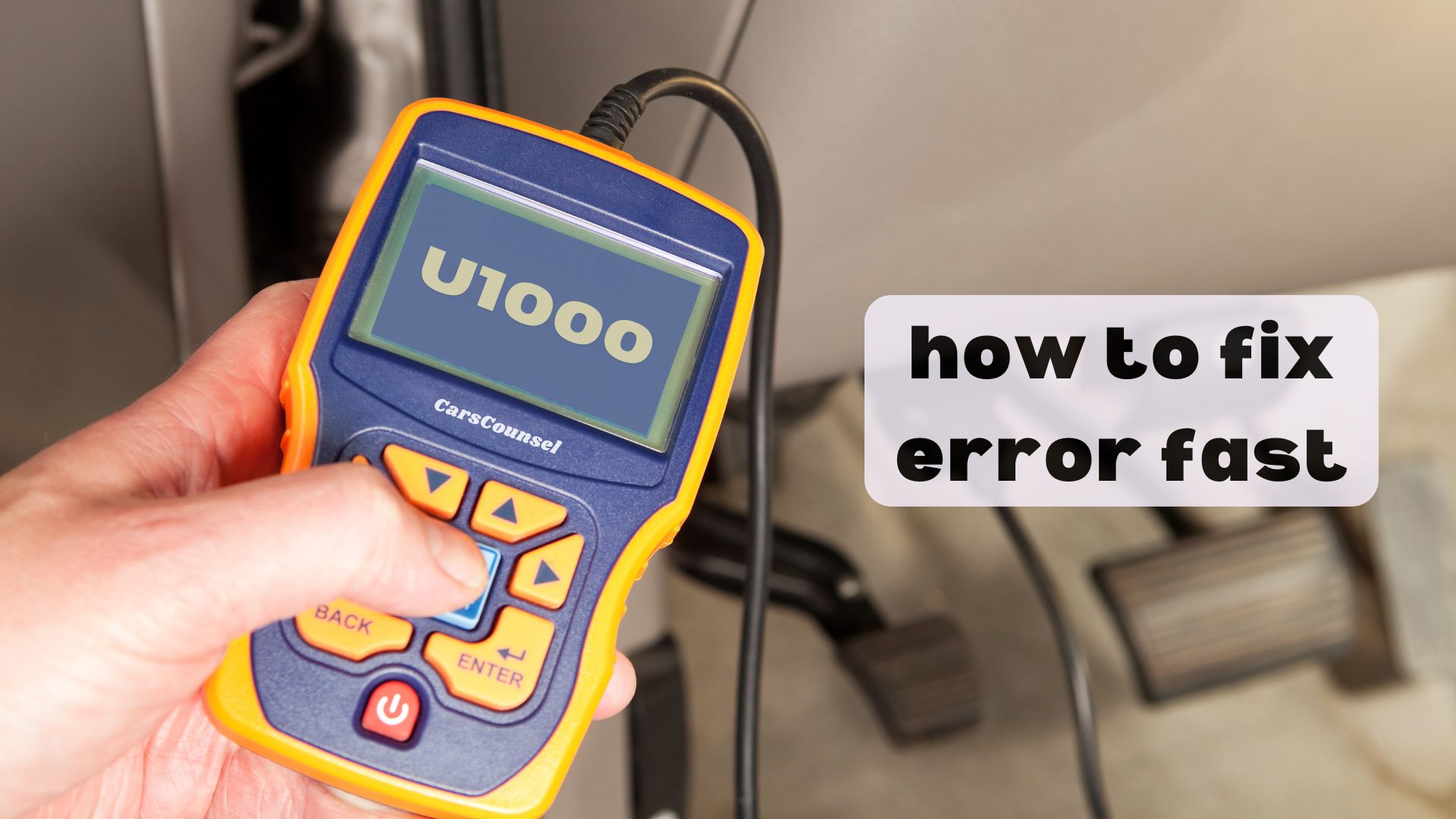
The U1000 code is a manufacturer-specific network communication trouble code. It indicates that a control module detected a failure on the primary data bus. This is one of many network-related trouble codes.
Because this code is manufacturer-specific, its exact definition depends on your vehicle application. The diagnostic path requires verifying the specific network architecture and identifying which module lost communication.
Quick Navigation
Key Takeaways
- The U1000 code indicates a communication failure on the vehicle’s primary data network, such as a CAN bus or Class 2 serial data link.
- Possible causes include damaged network wiring, corroded connectors, low system voltage, or a failed control module pulling down the network.
- Diagnosis requires a scan tool capable of reading network data and a wiring diagram specific to your vehicle’s exact application.
- Repairs involve fixing wiring issues, addressing charging system faults, or replacing a confirmed failed control module.
U1000 Code Description and Implications
The U1000 code is manufacturer-specific, and its exact definition depends on the vehicle application.
Certain GM applications: U1000 typically indicates a Class 2 Serial Data Circuit failure. The powertrain control module cannot communicate with other modules on the Class 2 data link.
Some Nissan and Infiniti applications: U1000 refers to a CAN Communication Circuit fault. The engine control module detects an interruption in the Controller Area Network bus signals.
Common Causes of the U1000 Code
Wiring damage is a frequent cause. Chafed harnesses, broken wires, or corrosion in the network communication connectors can interrupt the data signal.
Low system voltage from a failing battery or alternator can cause control modules to drop off the network, triggering communication codes.
A failed control module can internally short the communication bus, pulling the entire network down and preventing other modules from transmitting data.
Symptoms Associated With U1000
An illuminated Check Engine Light is expected, though other warning lights may also appear depending on which modules lose communication.
You may experience multiple seemingly unrelated system failures. Features like the speedometer, transmission shifting, or anti-lock brakes may stop functioning correctly.
In some applications, the vehicle may enter a reduced-power limp mode or exhibit a no-start condition if the immobilizer or powertrain module loses network data.
Diagnosing the U1000 Trouble Code
Begin by confirming the exact factory definition and network architecture for your specific make and model.
Check the vehicle battery and charging system. Network modules are highly sensitive to voltage drops, and a weak battery can cause widespread communication faults.
Use a capable scan tool to check which modules are communicating and which are offline. This helps isolate the section of the network where the fault exists.
Inspect the network wiring and connectors for physical damage, corrosion, or moisture intrusion. Measure network circuit resistance and check for shorts to ground or voltage.
Repairing the U1000 Issue
If testing reveals damaged wiring or corroded connectors, repair the harness and seal the connections to restore network integrity.
If a weak battery or failing alternator is causing voltage drops, service the charging system and clear the codes to see if communication restores.
If a specific control module is confirmed to be internally shorting the communication bus, follow the manufacturer procedure to replace and program the new module.
Cost Considerations for U1000 Repairs
Cost depends on diagnostic time, component accessibility, required parts, programming requirements, and labor.
Repairing a broken wire or cleaning a corroded connector involves minimal parts but requires diagnostic time to locate the fault.
Replacing and programming a failed control module will increase the overall repair cost due to the price of the module and required software configuration.
Prevention Strategies for Future Occurrences
Keeping battery terminals clean and ensuring the charging system operates correctly can prevent voltage-related network dropouts.
Inspecting exposed wiring harnesses and module connectors for moisture intrusion or physical damage may help prevent intermittent communication faults.
Troubleshooting Tips and Best Practices
Do not replace a control module simply because it appears offline on the scan tool. A broken wire between the module and the network splice pack will cause the same symptom.
Always check for multiple network codes. A single U1000 code often points to a main network trunk failure, while multiple codes might indicate a specific module is disrupting the bus.
Consult manufacturer technical service bulletins, as some applications have known issues with specific network splice connectors or grounding points that require updated repair procedures.
More OBD-II Codes
| U0155 | U0151 | U0141 | U0140 |
| U0126 | U0121 | U1001 | U1017 |
| U1041 | U1064 | U1120 | U1900 |
| U0001 | U0073 | U0100 | U0107 |
| P0600 | P0601 | P0602 | P0603 |
| P0604 | P0605 | P0606 | P0607 |
Frequently Asked Questions
Is the U1000 code generic or manufacturer-specific?
The U1000 code is manufacturer-specific. Its exact definition varies by brand, commonly indicating a Class 2 data link fault on GM vehicles or a CAN bus fault on Nissan and Infiniti models.
Can a bad battery cause a U1000 code?
Yes. Control modules require stable voltage to maintain network communication. A weak battery, poor ground, or failing alternator can cause modules to drop offline and trigger network communication codes.
Will a U1000 code prevent my car from starting?
It can. If the network failure prevents the powertrain control module from communicating with the immobilizer or transmission range sensor, the vehicle may experience a no-start condition.
Can I clear the U1000 code without fixing the problem?
Clearing the code only resets the warning light. If the underlying wiring fault, voltage issue, or failed module remains, the network monitor will detect the fault and turn the light back on.
Does a U1000 code mean I need a new computer?
Not necessarily. While a failed control module can pull down the network, the code is frequently caused by damaged wiring, corroded connectors, or low system voltage. Proper network testing is required first.
What Should You Do About the U1000 Code?
Confirm the exact factory definition and network architecture for your specific vehicle application. Follow the applicable manufacturer diagnostic procedure to verify whether the fault lies in the wiring, system voltage, or a specific control module.
Once testing confirms the root cause, repair or replace the confirmed failed component, then retest the network communication to ensure all modules share data correctly.

