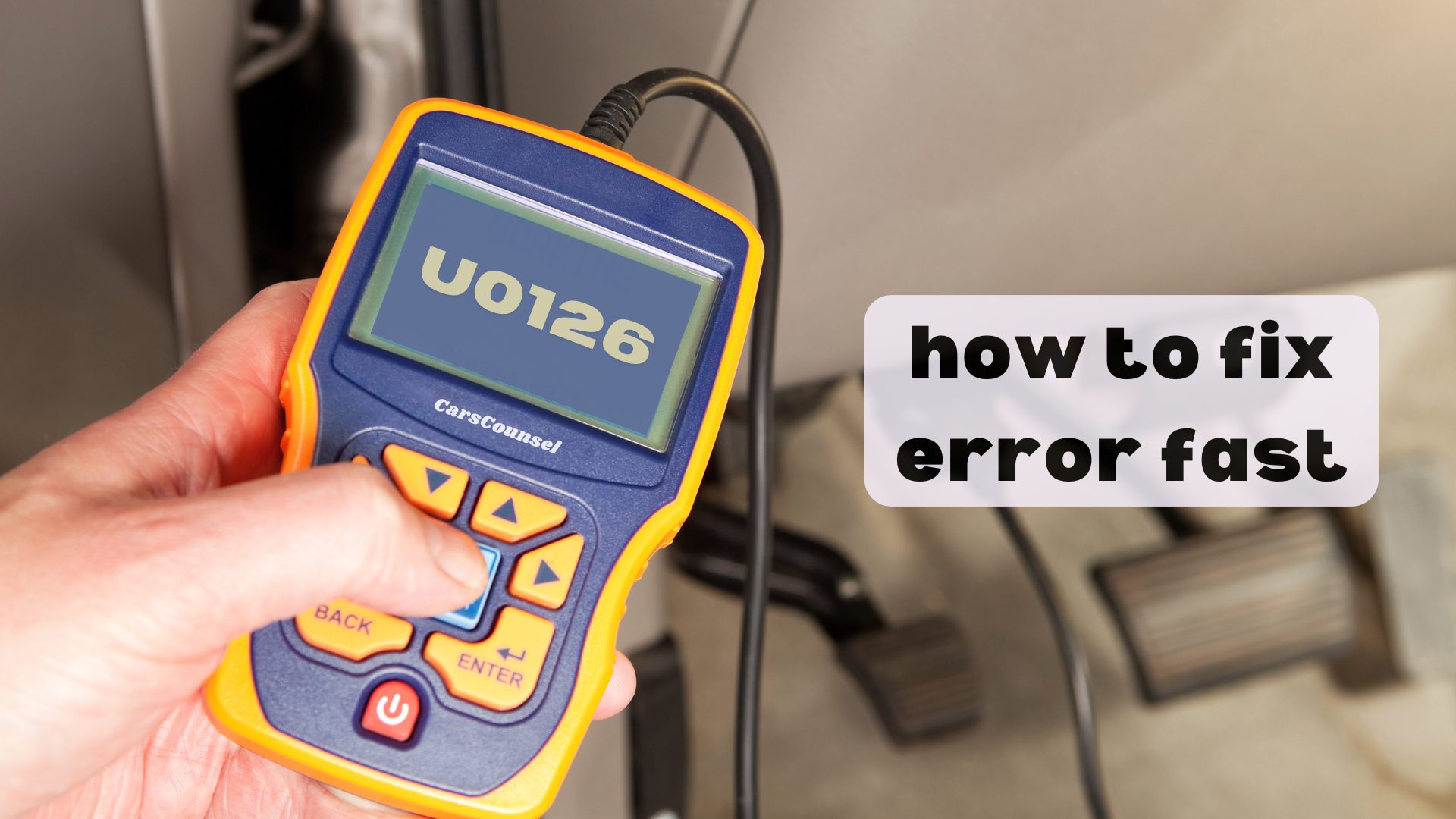
Among OBD-II error codes, U0126 is a generic network code indicating Lost Communication with the Steering Angle Sensor Module. It means a control module stopped receiving data from the steering sensor.
Because this code points to a network communication fault, the exact diagnostic path requires verifying the data bus and module power. The code alone does not prove the steering angle sensor has failed.
Quick Navigation
Key Takeaways
- Condition detected: A control module detected a loss of data messages from the Steering Angle Sensor (SAS) module over the communication network.
- Network and power checks: Diagnosis involves verifying the SAS module power, ground, and communication bus circuits.
- Safety systems affected: This fault can disable Electronic Stability Control (ESC) and related steering-dependent safety features.
- Component testing: The wiring, network topology, and SAS module must be evaluated to isolate the root cause of the communication loss.
U0126 Code Description and Implications
U0126 is a generic SAE definition for Lost Communication with Steering Angle Sensor Module. Modern vehicles use a network communication bus to share data between electronic control units.
The Steering Angle Sensor (SAS) module monitors the position and turning rate of the steering wheel. This data is critical for the Electronic Stability Control (ESC) and electric power steering systems.
When another module on the network stops receiving the expected data messages from the SAS module, it stores U0126. This indicates a network fault, module power loss, or internal module failure.
Common Causes of the U0126 Code
- Loss of module power or ground: A blown fuse or corroded ground connection can prevent the SAS module from powering up and transmitting on the network.
- Damaged communication bus wiring: Chafed, broken, or shorted wires in the high-speed or low-speed CAN bus circuits can disrupt data flow.
- Corroded network connectors: Moisture intrusion at the SAS module connector or network gateway can interrupt the communication signals.
- Failed Steering Angle Sensor module: The internal circuitry of the SAS module may fail, preventing it from broadcasting data to the network.
- Network gateway issues: A fault in the central gateway module can prevent messages from routing to the rest of the vehicle.
Symptoms Associated With U0126
Possible symptoms include:
- Illuminated Check Engine Light, ABS light, or Traction Control warning light.
- Electronic Stability Control (ESC) and traction control systems becoming disabled.
- Loss of power steering assist or altered steering feel on vehicles with electric power steering.
- Steering wheel angle reading zero or erratic on a diagnostic scan tool.
Diagnosing the U0126 Trouble Code
Diagnosing a network communication code requires a scan tool capable of reading module communication status, a digital multimeter, and the vehicle’s specific network topology diagrams. The first step is to verify the exact factory definition.
A professional diagnostic workflow includes:
- Check for module communication: Use a scan tool to verify if the SAS module can be accessed directly. If it cannot communicate, check its power and ground circuits.
- Inspect fuses and grounds: Verify all fuses supplying the SAS module and check the module ground points for corrosion or looseness.
- Test the communication bus: Measure the voltage on the CAN High and CAN Low circuits at the SAS module connector to verify network integrity.
- Check for related codes: Look for other U-codes that might indicate a broader network failure rather than an isolated SAS module fault.
Repairing the U0126 Issue
Repairs must follow confirmed diagnosis. Never replace the Steering Angle Sensor module based solely on the presence of a U0126 code.
- Power and ground repair: If a blown fuse or poor ground is found, repair the circuit and address the root cause of the overload.
- Wiring repair: Repair any chafed or broken communication bus wires using proper splicing techniques and shielding.
- Module replacement: If power, ground, and network circuits are verified, the SAS module may require replacement and subsequent calibration or programming.
- Clear and retest: Clear the codes and verify the scan tool can read live steering angle data while turning the wheel.
Cost Considerations for U0126 Repairs
The cost to resolve a U0126 code depends heavily on the root cause, diagnostic time, and component accessibility.
Cost depends on diagnostic time, component accessibility, required parts, programming requirements, and labor.
Prevention Strategies for Future Occurrences
While internal module failures are not always predictable, you can protect the network circuits from common environmental damage.
- Protect wiring harnesses: Ensure wiring near the steering column is securely routed and not pinched by the column tilt or adjustment mechanisms.
- Keep connectors dry: Verify that interior trim panels and weather seals are intact to prevent moisture from reaching the steering column modules.
Troubleshooting Tips and Best Practices
- Do not assume the sensor is dead: A U-code may point to a simple blown fuse or lost ground rather than a failed module. Always verify module power and ground first.
- Check for TSBs: Some manufacturers issue Technical Service Bulletins for updated SAS module software or revised wiring harnesses to address chronic communication faults.
- Verify battery health: Low system voltage can cause modules to drop off the communication network. Ensure the vehicle battery and charging system are operating correctly.
More OBD-II Codes
| U0100 | U0101 | U0107 | U0109 |
| U010C | U0121 | U0140 | U0141 |
| U0151 | U0155 | U1000 | U1001 |
| U0001 | U0073 | U1017 | U1041 |
| U1064 | U1120 | U1900 | U2013 |
| C0035 | C0040 | C0057 | C0276 |
Frequently Asked Questions
Can a blown fuse cause a U0126 code?
Yes. The Steering Angle Sensor module requires dedicated power and ground to operate. If the specific fuse for the SAS module or its network gateway blows, the module will shut down and stop transmitting data, triggering a lost communication code.
Is it safe to drive with a U0126 code?
You can drive the vehicle to a repair facility, but safety systems like Electronic Stability Control and traction control will be disabled. Additionally, electric power steering assist may be reduced or altered, requiring more steering effort.
Will replacing the Steering Angle Sensor fix a U0126 code?
It will fix the issue if the internal module circuitry has failed. However, if the root cause is a blown fuse, broken network wire, or poor ground, replacing the sensor will not resolve the communication fault. Proper diagnosis is required.
Does U0126 mean my ECM needs to be replaced?
No. U0126 indicates a loss of communication with the Steering Angle Sensor module. The root cause is usually a power loss, wiring issue, or failed SAS module. The ECM should only be considered if it is the specific module failing to broadcast.
Can a weak battery trigger a U0126 code?
Yes. Modern vehicle networks are highly sensitive to voltage drops. A weak battery or failing alternator can cause system voltage to drop below the threshold required for the SAS module to operate, causing it to temporarily drop off the network.
What Should You Do About the U0126 Code?
Because the U0126 code indicates a loss of communication with the Steering Angle Sensor module, it requires verifying the module power, ground, and network circuits before replacing components. Confirm the exact factory definition for your vehicle.
Inspect the fuses, check the wiring harness for damage, and test the relevant system and components. Follow the manufacturer’s diagnostic procedure to isolate the faulty component, repair the confirmed root cause, and verify the repair.

