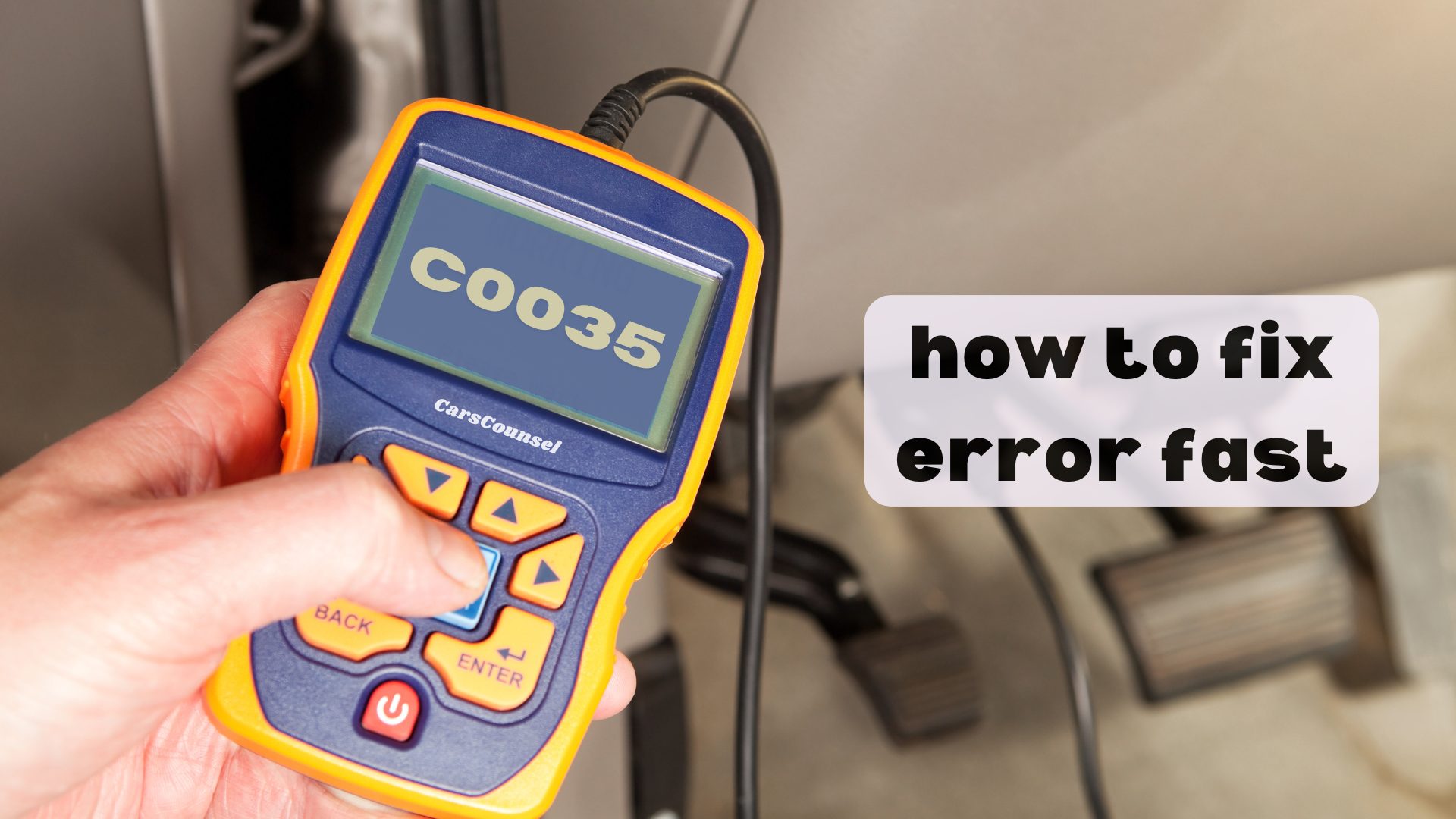
Among OBD2 codes, C0035 is a generic chassis definition indicating a Left Front Wheel Speed Sensor Circuit fault. It means the anti-lock braking system module detected an electrical or signal issue with the left front wheel speed sensor.
Because this code points to a circuit or signal performance issue, the exact diagnostic path depends on your vehicle’s ABS architecture. Testing the sensor, wiring, and tone ring is required to identify the root cause.
Quick Navigation
Key Takeaways
- Circuit or signal fault: The ABS module detected an open, short, or erratic signal from the left front wheel speed sensor.
- Electrical and mechanical checks: Diagnosis involves inspecting the sensor wiring, measuring resistance, and checking the tone ring for damage.
- Drivability impacts: A faulty wheel speed signal can disable the ABS and traction control systems, illuminating warning lights on the dashboard.
- Related codes: C0035 may appear alongside other wheel speed sensor codes, helping pinpoint if the issue is isolated or system-wide.
C0035 Code Description and Implications
The C0035 code is a generic SAE definition for Left Front Wheel Speed Sensor Circuit. The ABS module relies on wheel speed sensors to monitor the rotational speed of each wheel, enabling anti-lock braking and traction control.
When the ABS module detects an open circuit, a short to ground or voltage, or an erratic signal from the left front sensor, it stores C0035. This code indicates an electrical or signal pathway fault, not necessarily a failed sensor.
Common Causes of the C0035 Code
- Damaged or chafed wiring: The sensor harness routes near the wheel well and suspension, making it vulnerable to debris, heat, and physical damage.
- Corroded or loose connectors: Moisture intrusion at the sensor connector or the ABS module harness can interrupt the signal.
- Faulty wheel speed sensor: The internal magnetic or Hall-effect element may degrade, producing a weak or inconsistent signal.
- Damaged tone ring: The reluctor ring on the wheel bearing or CV axle can become cracked, corroded, or clogged with debris.
- Excessive air gap: If the sensor is loose or the wheel bearing has excessive play, the distance between the sensor and tone ring may exceed specifications.
Symptoms Associated With C0035
Possible symptoms include:
- Illuminated ABS, Traction Control, or Check Engine warning lights.
- Loss of anti-lock braking function during hard stops.
- Disabled traction or stability control systems.
- Erratic speedometer readings on vehicles that use the ABS sensors for vehicle speed data.
- False ABS activation at low speeds due to erratic signal dropouts.
Diagnosing the C0035 Trouble Code
Diagnosing a wheel speed sensor circuit code requires a digital multimeter, a scan tool capable of reading ABS live data, and the vehicle’s specific wiring diagrams. The first step is to verify the exact factory definition for your specific make and model.
A professional diagnostic workflow includes:
- Scan for related codes: Check for additional wheel speed or ABS module codes.
- Visual inspection: Inspect the left front sensor wiring from the wheel well to the chassis harness for chafing, cuts, or corrosion.
- Measure sensor resistance: Disconnect the sensor and measure the resistance across its terminals. Compare the reading to the manufacturer’s specification.
- Check the tone ring: Rotate the wheel and inspect the tone ring for missing teeth, severe rust, or debris.
- Monitor live data: Use a scan tool to view live wheel speed data while driving at low speeds to see if the left front reading drops out or differs from the other wheels.
Repairing the C0035 Issue
Repairs must follow confirmed diagnosis. Never replace the ABS module or wheel bearing assembly based solely on the presence of a C0035 code.
- Wiring repair: If the harness is damaged, repair the wires using solder and heat shrink tubing, or replace the pigtail connector.
- Sensor replacement: If the sensor fails the resistance test or produces a weak signal, replace it with a component meeting the correct vehicle specification.
- Tone ring service: If the tone ring is damaged, it must be replaced, which may require replacing the wheel bearing or CV axle assembly.
- Connector service: Clean corroded terminals and apply dielectric grease to prevent future moisture intrusion.
Cost Considerations for C0035 Repairs
The cost to resolve a C0035 code depends heavily on the root cause, diagnostic time, and component accessibility.
If the issue is a broken wire, the repair primarily involves electrical supplies and labor. If the sensor requires replacement, the price includes the part and standard labor. Replacing a damaged tone ring integrated into a wheel bearing hub involves higher parts and labor costs.
Prevention Strategies for Future Occurrences
While internal sensor failures are not always predictable, you can protect the ABS wiring from common environmental and mechanical damage.
- Protect the wiring harness: Ensure the sensor wiring is securely clipped to the suspension components to prevent it from rubbing against the tire or hot brake components.
- Maintain clean connectors: Apply dielectric grease to the sensor connector to repel moisture and prevent terminal corrosion.
- Address wheel bearing noise: A failing wheel bearing can cause excessive play, altering the sensor air gap and eventually damaging the tone ring.
Troubleshooting Tips and Best Practices
- Do not assume the sensor is dead: A circuit code often points to a broken wire in the harness rather than a failed sensor. Always test the wiring continuity and inspect the tone ring before replacing components.
- Check for TSBs: Some manufacturers issue Technical Service Bulletins for updated sensor designs or revised wiring harnesses to address chronic chafing issues.
- Verify wheel bearing health: Check the left front wheel bearing for play or roughness. A worn bearing can change the air gap between the sensor and the tone ring.
- Inspect for debris: Metallic debris stuck to the magnetic tip of an active sensor can distort the signal and trigger a circuit fault.
More OBD-II Codes
| P0011 | P0014 | P0017 | P0036 |
| P0087 | P0100 | C0040 | C0045 |
| C0057 | C0276 | C0329 | C1095 |
| C1205 | C1210 | C1211 | C1235 |
| P0500 | P0501 | U0121 | U0140 |
| P0300 | P0420 | P0171 | P0455 |
Frequently Asked Questions
Can a bad wheel bearing cause a C0035 code?
Yes. A worn wheel bearing can introduce excessive play, altering the air gap between the wheel speed sensor and the tone ring. This inconsistent gap can cause signal dropouts, triggering a circuit or performance fault code.
Is it safe to drive with a C0035 code?
It depends on the symptoms. While the base hydraulic brakes will still function, the anti-lock braking and traction control systems will be disabled. Seek diagnosis promptly to restore these critical safety features, especially in slippery conditions.
Will clearing the code fix the ABS light?
Clearing the code will temporarily turn off the ABS light, but it does not repair the underlying electrical or mechanical fault. The light will return as soon as the ABS module runs its self-check and detects the circuit issue again.
Does C0035 mean the ABS module is broken?
No. C0035 indicates a circuit fault specific to the left front wheel speed sensor. The root cause is frequently a damaged wire, corroded connector, or failed sensor. The ABS module itself is rarely the direct cause of this specific code.
Can dirt or debris trigger a C0035 code?
Yes. Metallic debris stuck to the magnetic tip of an active wheel speed sensor can distort the magnetic field. This interference can cause erratic signal readings, prompting the ABS module to register a circuit or performance fault.
What Should You Do About the C0035 Code?
Because the C0035 code indicates an electrical or signal fault in the left front wheel speed sensor circuit, it requires systematic diagnosis rather than trial-and-error parts replacement. Confirm the exact factory definition and wiring layout for your specific vehicle application.
Inspect the sensor harness for physical damage, and check the connectors for corrosion. Measure the sensor resistance and verify the condition of the tone ring. Follow the manufacturer’s diagnostic procedure to isolate the faulty component, repair the confirmed root cause, and verify the repair.

