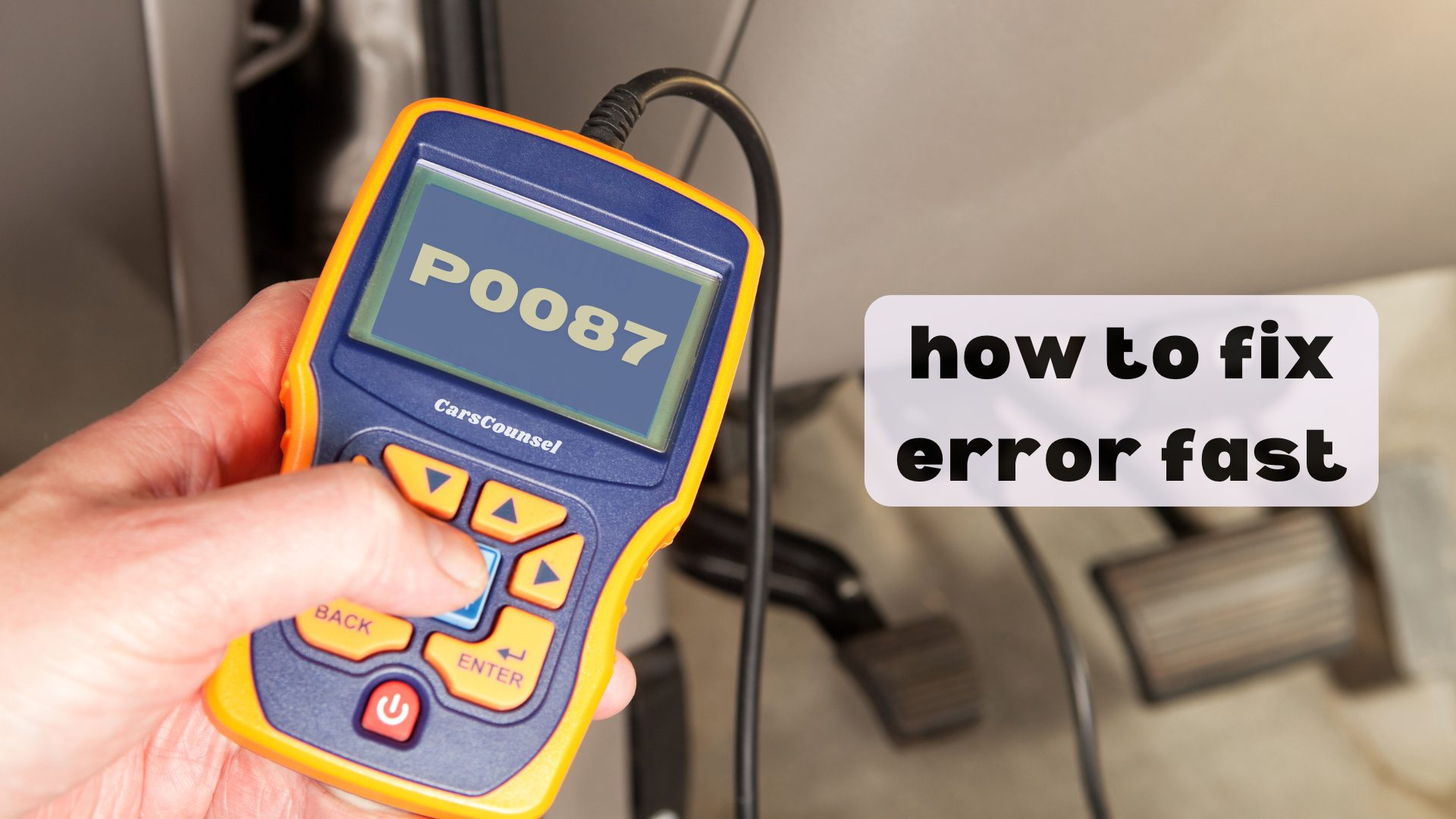
The P0087 code is a generic OBD-II code indicating “Fuel Rail/System Pressure – Too Low.” It primarily applies to vehicles with high-pressure fuel systems, such as Gasoline Direct Injection (GDI) and Common Rail Diesel engines.
This code does not automatically mean the high-pressure fuel pump has failed. Possible causes include a clogged fuel filter, a weak supply pump, or a faulty sensor. Exact diagnosis requires verifying fuel pressures against manufacturer specifications.
Quick Navigation
Key Takeaways
- P0087 indicates the actual fuel rail pressure is below the manufacturer’s commanded threshold.
- High-pressure systems in GDI and Diesel engines require specialized diagnostic procedures and safety precautions.
- Possible causes range from a restricted fuel filter to a failing high-pressure pump or sensor circuit fault.
- Diagnosis requires comparing live data fuel pressure readings with the low-pressure supply side and manufacturer specifications.
P0087 Code Description and Implications
The P0087 code stands for “Fuel Rail/System Pressure – Too Low.” Modern direct injection and diesel engines use a high-pressure fuel pump to deliver fuel to the injectors.
The powertrain control module monitors the fuel rail pressure sensor to ensure actual pressure matches the commanded pressure. If the pressure drops below the minimum threshold, it stores this code.
Because this is a generic code, the exact diagnostic procedure, pressure specifications, and component locations vary by manufacturer and engine design.
When your vehicle’s system shows a P0087 code, it indicates a problem with the high-pressure fuel delivery network.
Common Causes of the P0087 Code
Multiple conditions can trigger low fuel rail pressure. The underlying cause must be confirmed through testing rather than assuming a single component has failed.
- Restricted fuel filter or lines: A clogged filter or pinched line starves the high-pressure pump of adequate fuel volume.
- Failing low-pressure fuel pump: A weak in-tank supply pump cannot provide the necessary inlet pressure to the high-pressure pump.
- Failing high-pressure fuel pump: Internal wear or a faulty volume control valve prevents the pump from generating required rail pressure.
- Faulty fuel rail pressure sensor: A defective sensor or damaged wiring can send an inaccurate low-pressure signal to the control module.
- Fuel system leaks: A leaking injector, fuel line, or pressure relief valve can bleed off high-pressure fuel.
Symptoms Associated With P0087
When fuel rail pressure drops below the required threshold, the engine cannot deliver the correct amount of fuel for combustion. Symptoms depend on how severe the pressure drop is.
- Illuminated Check Engine Light: The MIL will turn on once the fault is detected and confirmed over consecutive drive cycles.
- Extended cranking or no-start: The engine may crank for a long time before starting, or fail to start entirely due to insufficient fuel pressure.
- Lack of power or limp mode: The control module may limit engine output to protect the catalytic converter and engine components.
- Engine stalling or misfires: Inconsistent fuel delivery can cause rough idling, hesitation, or sudden stalling while driving.
Diagnosing the P0087 Trouble Code
Proper diagnosis begins by verifying the exact vehicle application and checking the low-pressure supply side first. High-pressure fuel systems operate at extremely dangerous pressures and require strict safety precautions.
- Verify the code and check for TSBs: Use a scan tool to confirm P0087 and check for related codes. Look for manufacturer technical service bulletins regarding known pump or sensor issues.
- Inspect for leaks: Visually inspect the fuel lines, injectors, and high-pressure pump for any signs of external fuel leaks.
- Test the low-pressure supply: Connect a mechanical fuel pressure gauge to the low-pressure side to verify the in-tank pump is delivering adequate volume and pressure to the high-pressure pump.
- Monitor live data: Use a scan tool to compare the commanded fuel rail pressure with the actual fuel rail pressure while cranking and driving.
Repairing the P0087 Issue
Repairs must follow confirmed diagnostic testing. The exact repair path depends on whether the fault is in the low-pressure supply, the high-pressure generation, or the sensor circuit.
- Fuel filter replacement: If the filter is restricted, replace it and retest the system pressures.
- Low-pressure pump service: If the in-tank pump fails to meet supply specifications, replace the low-pressure fuel pump assembly.
- High-pressure pump replacement: If the low-pressure supply is adequate but rail pressure remains low, the high-pressure fuel pump or its internal regulator may require replacement.
- Sensor or wiring repair: If the actual mechanical pressure is normal but the scan tool reads low, replace the fuel rail pressure sensor or repair the circuit.
Cost Considerations for P0087 Repairs
Repair costs vary based on the root cause, vehicle make, and labor accessibility. Exact pricing depends on your local shop rates and parts availability.
- Fuel filter service: Replacing an inline or in-tank filter is the least expensive repair option.
- Low-pressure pump replacement: Costs increase if the fuel tank must be dropped or the bed removed to access the pump module.
- High-pressure pump replacement: These components are expensive, and labor times vary depending on engine bay accessibility and required fuel system bleeding procedures.
Prevention Strategies for Future Occurrences
While electrical faults cannot always be prevented, maintaining the fuel system’s cleanliness can reduce the risk of mechanical pump failures and restrictions.
- Use quality fuel: Top-tier detergents help prevent varnish and carbon buildup that can restrict filters and damage precision pump components.
- Follow filter service intervals: Replace the fuel filter according to the manufacturer’s schedule to ensure adequate flow to the high-pressure pump.
- Address supply issues early: If you notice extended cranking or hesitation, diagnose the low-pressure supply system before it starves and damages the high-pressure pump.
Troubleshooting Tips and Best Practices
- Respect high-pressure hazards: Never crack open a high-pressure fuel line while the system is pressurized. Diesel and GDI fuel can penetrate skin and cause severe injury.
- Do not use standard gauges on the rail: Standard mechanical fuel pressure gauges are not rated for the extreme pressures of GDI or Common Rail systems and can rupture.
- Check for related codes: Codes like P0088 (Too High) or P0090 (Volume Regulator Circuit) provide more specific electrical clues than the general P0087 code.
- Verify aftermarket modifications: Performance tunes or modified fuel systems can alter pressure targets and cause false codes if not calibrated correctly.
More OBD-II Codes
| P0068 | P0060 | P0050 | P0036 |
| P0031 | P0030 | P0100 | P0101 |
| P0107 | P0108 | P0111 | P0112 |
| P0171 | P0172 | P0174 | P0299 |
| P0300 | P0420 | P0430 | P0135 |
| P0170 | P0173 | P0301 | P0302 |
Frequently Asked Questions
Is it safe to drive with a P0087 code?
Driving with this code is not recommended. Low fuel pressure can cause severe misfires, stalling in traffic, and lack of power during acceleration. Continued operation can also damage the high-pressure fuel pump and catalytic converter.
Can a bad fuel filter cause a P0087 code?
Yes. A severely restricted fuel filter limits the volume of fuel reaching the high-pressure pump. If the pump cannot draw enough fuel to meet the commanded rail pressure, the control module will store the P0087 code.
Will disconnecting the battery clear the P0087 code?
Disconnecting the battery may temporarily reset the check engine light, but it does not repair the underlying mechanical or electrical fault. The code will return once the monitor runs again, and you may lose important freeze-frame data.
How much does it cost to fix low fuel rail pressure?
Costs vary based on the root cause. A simple fuel filter replacement costs less, while replacing a high-pressure fuel pump or an in-tank low-pressure pump requires significant labor and increases the total repair cost.
Can a faulty fuel rail pressure sensor cause P0087?
Yes. If the sensor fails internally or the wiring is damaged, it may send a false low-pressure signal to the control module. Diagnosis requires comparing the sensor’s electrical data with a verified mechanical pressure reading.
What Should You Do About the P0087 Code?
Confirm the exact factory definition and diagnostic procedure for your specific vehicle application. Begin by inspecting the fuel system for leaks, then verify the low-pressure supply before condemning the high-pressure components.
Do not replace the high-pressure fuel pump or injectors without verified diagnostic evidence. Follow the manufacturer’s pinpoint tests to isolate the fault to the supply side, the high-pressure pump, or the sensor circuit before authorizing repairs.

