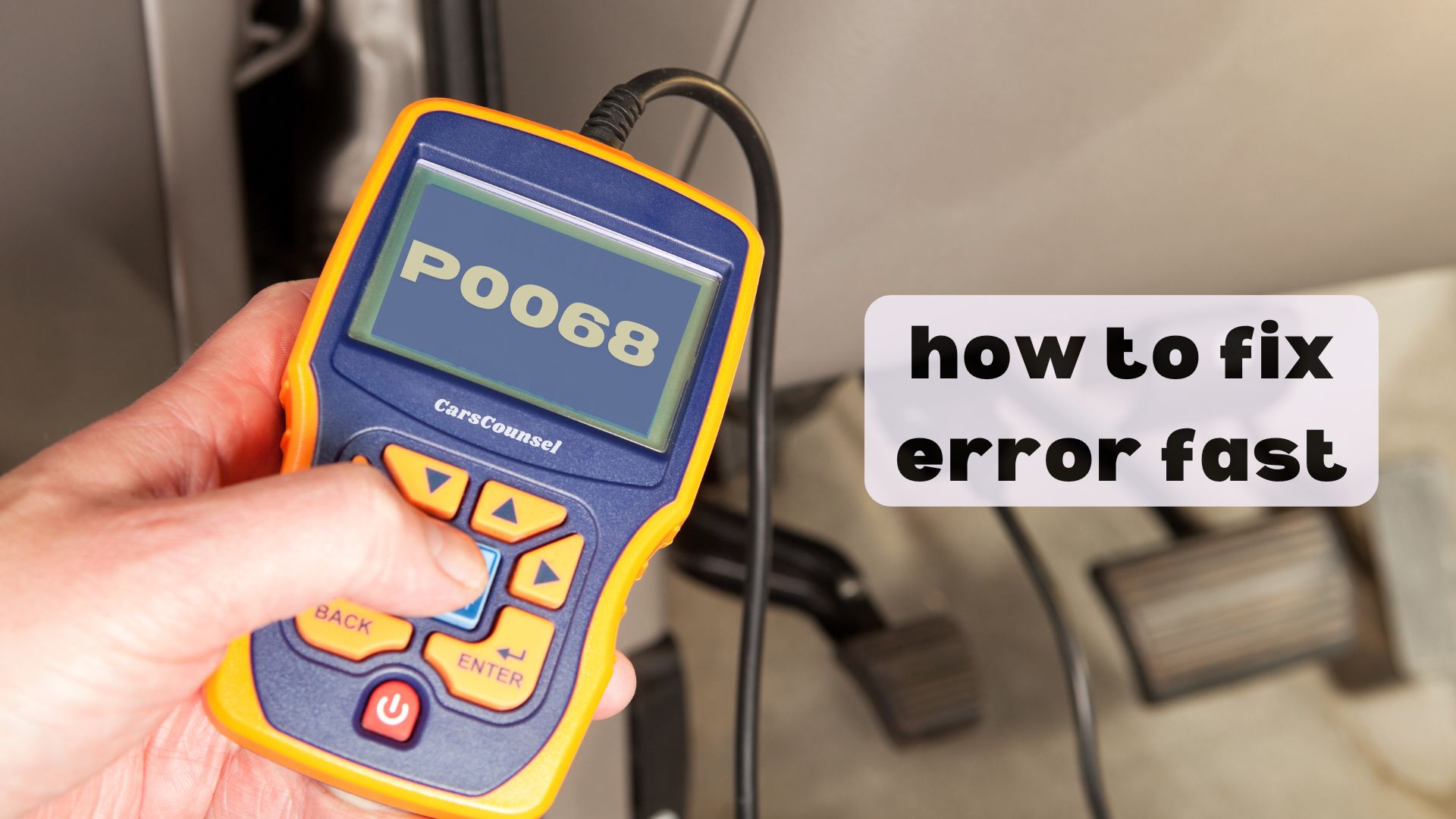
The P0068 code is a generic OBD-II powertrain code indicating a correlation error between the Manifold Absolute Pressure (MAP), Mass Air Flow (MAF), and Throttle Position (TP) sensors. Because it is generic, this standardized definition applies across all compliant vehicle manufacturers.
This code identifies a detected rationality condition where the sensor signals do not match expected values, not necessarily a failed sensor. Proper diagnosis requires verifying the exact application and testing the relevant intake and sensor circuits.
Quick Navigation
Key Takeaways
- The P0068 code indicates a generic correlation error between the MAP, MAF, and Throttle Position sensor readings.
- Possible causes include large vacuum leaks, restricted air intake, or faulty MAP, MAF, or TP sensors.
- Symptoms typically include an illuminated Check Engine Light, rough idle, lack of power, and decreased fuel efficiency.
- Diagnosis involves inspecting the intake tract for leaks and testing the sensor circuits and live data.
- Repairs vary by application and may involve fixing vacuum leaks, cleaning sensors, or replacing confirmed failed components.
P0068 Code Description and Implications
P0068 is a generic OBD-II code. Its standardized definition applies across all compliant vehicle manufacturers.
The code indicates that the Powertrain Control Module (PCM) has detected an illogical relationship between the signals from the Manifold Absolute Pressure (MAP) sensor, Mass Air Flow (MAF) sensor, and Throttle Position (TP) sensor.
The PCM uses a calculated model of expected airflow based on throttle angle and engine speed. When the actual airflow measured by the MAF or MAP sensors deviates significantly from this expected model, the PCM sets this correlation code.
This rationality fault code means the PCM cannot accurately calculate engine load, potentially affecting fuel delivery, ignition timing, and transmission shifting.
Common Causes of the P0068 Code
Several conditions can trigger this generic correlation code. Identifying the exact cause requires mechanical and electrical testing.
- Unmetered air entering the engine due to a large vacuum leak in the intake manifold or disconnected hoses.
- A restricted or severely clogged air filter limiting airflow to the MAF sensor.
- Contamination or failure of the Mass Air Flow (MAF) sensor element.
- Failure or signal dropout in the Manifold Absolute Pressure (MAP) sensor.
- Faulty Throttle Position (TP) sensor or electronic throttle body providing incorrect angle data.
- Wiring harness damage, poor electrical connections, or corrosion in the sensor circuits.
Symptoms Associated With P0068
Because this code involves critical engine load calculations, symptoms typically affect drivability and engine performance.
- Illuminated Check Engine Light.
- Rough or unstable idle as the PCM struggles to maintain target air-fuel ratios.
- Lack of power or hesitation during acceleration due to incorrect fuel mapping.
- Engine stalling when coming to a stop or during throttle transitions.
- Decreased fuel economy resulting from suboptimal fuel delivery.
Diagnosing the P0068 Trouble Code
Diagnosis must begin by verifying the integrity of the air intake system before testing electrical circuits.
- Visually inspect the entire air intake tract from the air filter box to the throttle body for loose clamps, torn ducts, or disconnected vacuum hoses.
- Check the air filter for severe restriction or contamination.
- Use a scan tool to monitor live data for the MAF, MAP, and TP sensors at idle and during engine revving to identify which sensor is reading illogically.
- Perform a smoke test on the intake system to locate hidden vacuum leaks introducing unmetered air.
- Use a digital multimeter to verify the reference voltage, ground, and signal circuits for the suspect sensor according to manufacturer specifications.
Repairing the P0068 Issue
Repairs depend entirely on the confirmed root cause of the correlation error.
- If a vacuum leak is found, replace the cracked hoses, damaged intake gaskets, or loose clamps to eliminate unmetered air.
- If the air filter is clogged, replace it with a component meeting the correct vehicle specification.
- If the MAF sensor is contaminated, carefully clean it using a dedicated MAF sensor cleaner; replace it if cleaning fails to resolve the data mismatch.
- If the MAP or TP sensor fails electrical or functional testing, replace the confirmed failed component.
- If wiring damage is found, repair the harness and secure the connections.
Cost Considerations for P0068 Repairs
Cost depends on diagnostic time, component accessibility, required parts, programming requirements, and labor.
Repairing a vacuum leak or replacing an air filter is generally less expensive than diagnosing and replacing an integrated electronic throttle body assembly.
Prevention Strategies for Future Occurrences
While electrical failures are not always preventable, some practices can reduce the risk of intake and sensor issues.
- Replacing the engine air filter at the manufacturer-recommended intervals prevents severe restrictions and debris from reaching the MAF sensor.
- Inspecting exposed intake ducts and vacuum hoses can help identify developing cracks or brittle rubber before a major leak occurs.
- Using proper cleaning techniques around the intake tract prevents debris from contaminating sensitive sensor elements.
Troubleshooting Tips and Best Practices
Always consult the exact manufacturer service information for your vehicle’s wiring diagram and expected live data values.
- Do not assume a sensor is faulty simply because the code mentions it; a simple vacuum leak is frequently the actual cause of a correlation code.
- Check for related misfire or fuel trim codes that may indicate a broader intake leak or mechanical engine issue.
- Verify technical service bulletins for your specific make and model, as some manufacturers issue updated PCM software calibrations to adjust correlation thresholds.
More OBD-II Codes
| P0060 | P0050 | P0036 | P0031 |
| P0030 | P0017 | P0100 | P0101 |
| P0107 | P0108 | P0111 | P0112 |
| P0113 | P0117 | P0118 | P0121 |
| P0171 | P0174 | P0300 | P0420 |
| P0440 | P0455 | P0700 | P0000 |
Frequently Asked Questions
Is the P0068 code generic or manufacturer-specific?
Yes. P0068 is a generic OBD-II code. Its standardized definition, indicating a MAP/MAF to throttle position correlation error, applies across all compliant vehicle manufacturers.
Can I drive my car with a P0068 code?
You can drive the vehicle, but you may experience rough idling, hesitation, or stalling. The PCM will likely default to conservative fuel and timing maps, reducing power and fuel economy.
Will a vacuum leak cause a P0068 code?
Yes. A large vacuum leak introduces unmetered air into the engine, causing the actual airflow to exceed the PCM’s calculated expectation based on the throttle position, triggering the correlation code.
Can a dirty air filter trigger the P0068 code?
Yes. A severely restricted air filter can choke the engine, causing the MAF and MAP sensors to read significantly lower airflow than the PCM expects for the current throttle angle.
Will a P0068 code cause an emissions test failure?
Yes. Any code that illuminates the Check Engine Light will typically cause an automatic failure during an OBD-II emissions inspection until the underlying issue is diagnosed and repaired.
What Should You Do About the P0068 Code?
Confirm the physical condition of the air intake system and vacuum hoses for your specific vehicle application. Follow the applicable manufacturer diagnostic procedure to test the relevant sensor circuits and monitor live data.
Repair or replace the confirmed failed component or fix the identified mechanical leak, then retest the system to ensure proper engine management operation.

