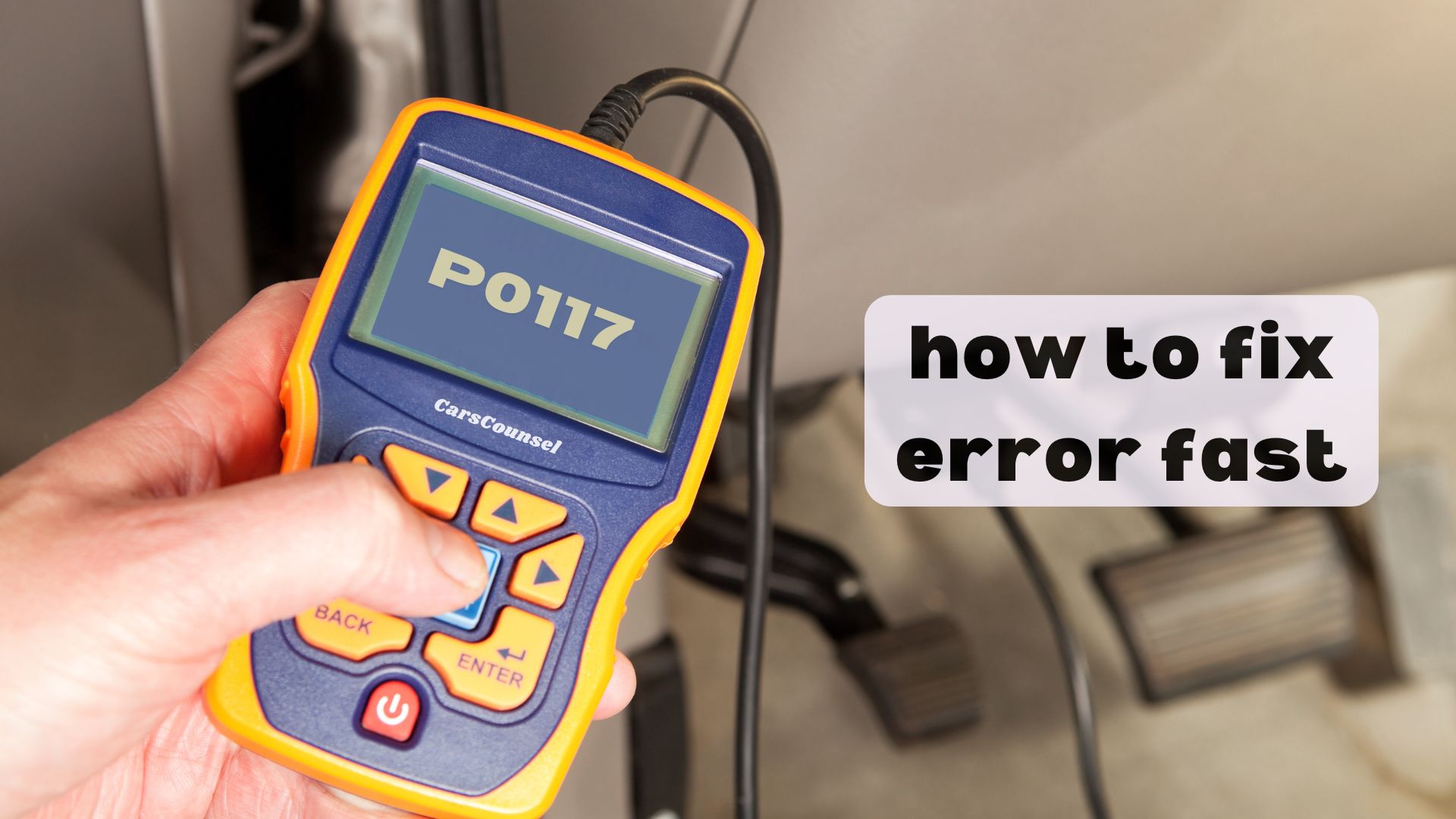
The P0117 diagnostic trouble code indicates that the powertrain control module has detected a low voltage condition in the Engine Coolant Temperature (ECT) sensor 1 circuit. This generic code applies to all OBD-II equipped vehicles, though exact sensor locations vary.
A low voltage signal typically corresponds to an abnormally high temperature reading. This condition does not automatically prove the sensor has failed, as wiring shorts or connector issues can also trigger the code. Proper testing is required to identify the root cause.
Quick Navigation
Key Takeaways
- P0117 is a generic code indicating the control module detected an unexpectedly low voltage in the primary engine coolant temperature sensor circuit.
- Possible causes include a short to ground in the signal wire, a failed sensor element, or corroded connectors.
- Symptoms often include an illuminated Check Engine Light, continuous cooling fan operation, poor fuel economy, and erratic temperature gauge readings.
- Diagnosis requires comparing live data sensor readings against actual engine temperatures and testing circuit continuity.
- Repairs depend on the confirmed fault and may involve wiring repair, connector service, or sensor replacement.
P0117 Code Description and Implications
The P0117 code indicates that the powertrain control module (PCM) has detected a voltage signal on the primary engine coolant temperature (ECT) sensor circuit that is below the normal minimum operating range.
Most ECT sensors are negative temperature coefficient (NTC) thermistors. As engine coolant temperature increases, the sensor’s internal resistance drops, allowing more voltage to pass to ground and lowering the signal voltage returning to the PCM.
A “circuit low” condition generally means the PCM is seeing a voltage near zero. The control module interprets this extremely low voltage as an impossibly high engine temperature.
This false high-temperature reading can cause the PCM to enrich the fuel mixture, alter ignition timing, and command the radiator cooling fans to run continuously as a failsafe measure.
Common Causes of the P0117 Code
Because P0117 is an electrical circuit code, the root cause usually involves the wiring, connectors, or the sensor itself.
- Short to ground: The sensor signal wire may be rubbing against the engine block or chassis, feeding the signal directly to ground and dropping the voltage to zero.
- Failed sensor element: An internal short within the ECT sensor can cause its resistance to drop to near zero ohms regardless of actual coolant temperature.
- Corroded or damaged connectors: Moisture intrusion or pushed-out pins at the sensor connector can cause the signal and ground circuits to short together.
- Low coolant level: If the sensor is exposed to steam or air pockets instead of liquid coolant, it may read erratically, though this more commonly triggers range or performance codes.
- PCM issues: Rarely, an internal fault in the control module’s analog-to-digital converter may misread a normal signal as low.
Symptoms Associated With P0117
When the PCM detects a critical sensor fault, it alters engine operation to protect the drivetrain and prevent potential overheating.
- Illuminated Check Engine Light: The malfunction indicator lamp will typically turn on immediately upon detecting the circuit fault.
- Continuous cooling fan operation: The PCM may command the radiator fans to run at high speed constantly to prevent a perceived overheating condition.
- Poor fuel economy: The false high-temperature reading can cause the engine to run excessively rich or disrupt closed-loop fuel control.
- Erratic temperature gauge: The dashboard temperature gauge may instantly peg at the maximum hot position or fluctuate wildly.
- Hard starting: The engine may crank longer than normal or stall immediately after starting due to incorrect fuel mapping.
Diagnosing the P0117 Trouble Code
Accurate diagnosis begins by verifying the exact vehicle application and reviewing manufacturer-specific service information.
- Check live data: Use a scan tool to observe the ECT sensor reading on a cold engine. Compare it to the intake air temperature sensor; both should read close to ambient temperature before starting.
- Visual inspection: Examine the wiring harness from the sensor to the PCM. Look for chafing, melted insulation near exhaust components, or corrosion at the connectors.
- Test the sensor: Disconnect the sensor and measure its resistance across the terminals using a digital multimeter. Compare the reading to the manufacturer’s temperature-resistance chart.
- Check circuit continuity: If the sensor tests correctly, test the signal wire for a short to ground between the sensor connector and the PCM.
- Verify reference voltage: With the sensor disconnected and the key on, verify that the PCM is supplying the proper reference voltage to the signal circuit.
Repairing the P0117 Issue
Repairs must follow the confirmed root cause identified during diagnosis.
- Wiring and connector repair: If a short to ground or corroded connector is found, repair or replace the affected harness section and clean any compromised terminals.
- Sensor replacement: If the wiring and PCM circuits test correctly but the sensor resistance remains out of specification, replace the engine coolant temperature sensor.
- System bleeding: After replacing the sensor or opening the cooling system, properly bleed the cooling system to remove air pockets that could affect future temperature readings.
Cost Considerations for P0117 Repairs
The cost to resolve a P0117 code depends heavily on the underlying fault and the vehicle’s design.
If the issue is limited to a damaged wire or a corroded connector, the repair may primarily involve diagnostic time and minor materials.
If the engine coolant temperature sensor requires replacement, parts costs are generally moderate. Labor time varies based on sensor accessibility, whether coolant must be drained, and if specialized bleeding procedures are required.
Prevention Strategies for Future Occurrences
While electronic sensor failures cannot always be predicted, you can reduce the risk of circuit-related faults.
- Maintain proper coolant levels and use the correct coolant mixture to prevent corrosion and internal sensor degradation.
- Ensure that the cooling system is properly bled after any service to prevent air pockets from exposing the sensor to steam.
- Inspect exposed wiring looms near the engine block and exhaust manifold for signs of rubbing or heat damage during routine service.
Troubleshooting Tips and Best Practices
- Do not ignore the cooling fans: If your radiator fans run constantly after a cold start, the PCM has likely detected a critical temperature sensor fault and entered a failsafe mode.
- Avoid parts swapping: Replacing the sensor without verifying the reference and ground circuits can result in a misdiagnosis if the wiring is actually shorted to ground.
- Check technical service bulletins: Some manufacturers have published TSBs regarding specific wiring harness routing issues or updated sensor part numbers that address false P0117 codes on certain applications.
- Understand dual-sensor systems: Some vehicles use one ECT sensor for the PCM and a separate sensor for the dashboard gauge. Verify which circuit is setting the code before replacing components.
More OBD-II Codes
| P0100 | P0101 | P0107 | P0108 |
| P0112 | P0113 | P0118 | P0121 |
| P0122 | P0123 | P0131 | P0132 |
| P0111 | P0480 | P0481 | P0171 |
| P0172 | P0174 | P0130 | P0133 |
| P0300 | P0420 | P0440 | P0455 |
Frequently Asked Questions
Is P0117 a generic or manufacturer-specific code?
P0117 is a generic SAE code. Its core definition applies across all OBD-II compliant vehicles, though the exact sensor location and diagnostic steps vary by manufacturer.
Can low coolant cause a P0117 code?
Low coolant can cause erratic temperature readings, but it more commonly triggers range or performance codes. P0117 specifically indicates an electrical low voltage condition, usually pointing to a short circuit or failed sensor.
Will disconnecting the battery clear the P0117 code?
Disconnecting the battery might temporarily clear the code. However, it does not repair the underlying electrical fault, and the code will likely return once the PCM runs its self-tests again.
Does P0117 affect the transmission?
Yes. The PCM uses engine coolant temperature data to regulate transmission line pressure and torque converter clutch lockup. A false high-temperature reading can cause harsh or delayed shifting.
Can I drive with a P0117 code?
Driving is not recommended. The PCM may enrich the fuel mixture or lock the transmission in a single gear to protect the engine from perceived overheating, leading to poor drivability and potential catalyst damage.
What Should You Do About the P0117 Code?
When a P0117 code appears, confirm the exact factory definition and system layout for your specific vehicle. Because this code involves critical engine temperature monitoring, driving with an active fault may result in poor fuel economy, continuous fan operation, or unpredictable transmission behavior.
Follow the applicable manufacturer diagnostic procedure to test the relevant system and components. Once the root cause is confirmed, complete the necessary electrical repairs or component replacements, and properly bleed the cooling system before returning the vehicle to normal service.

