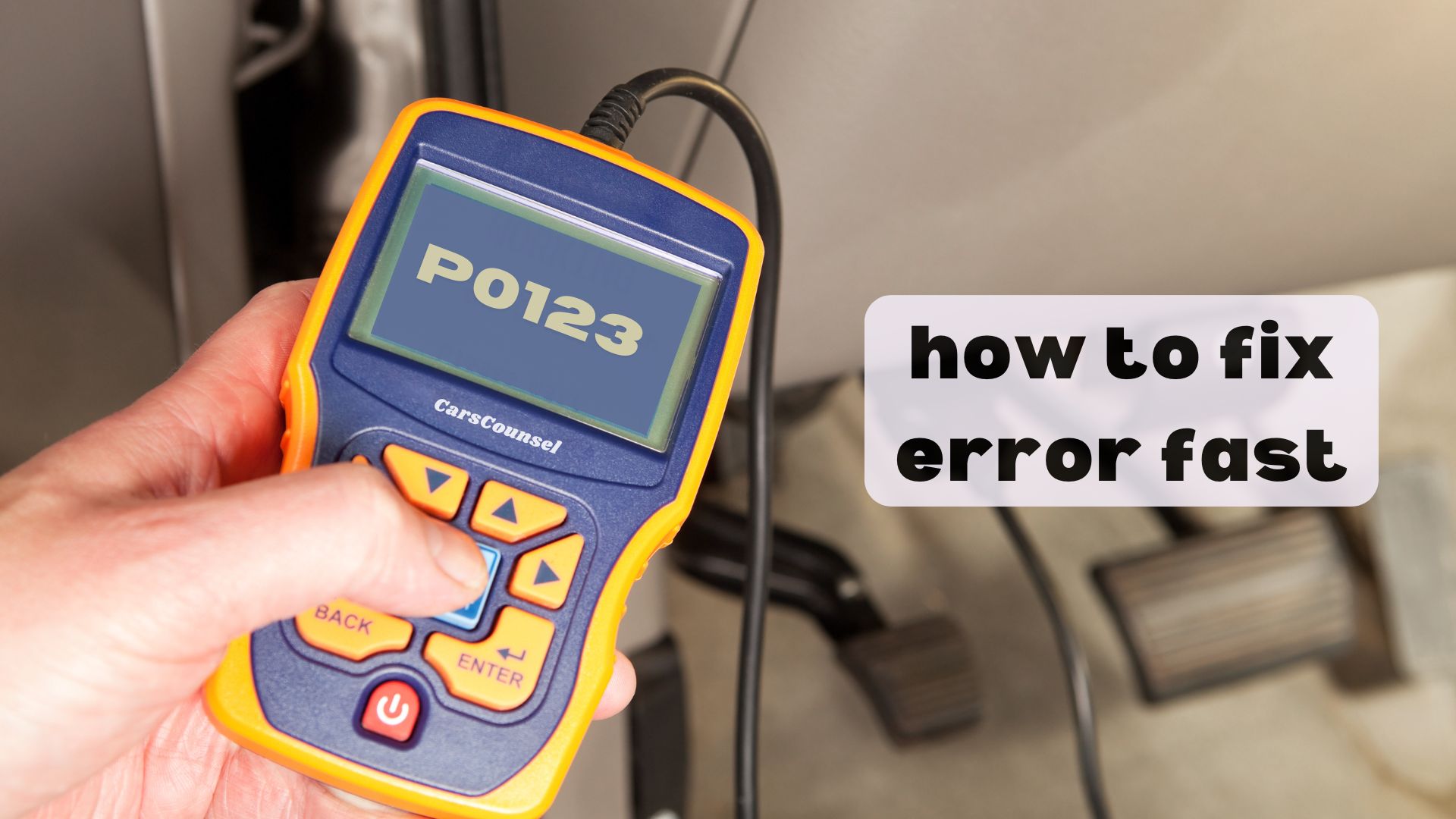
The P0123 diagnostic trouble code indicates that the powertrain control module has detected a high voltage condition in the throttle or accelerator pedal position sensor “A” circuit. This generic code applies to most OBD-II vehicles, though the exact sensor location varies by application.
A high circuit reading does not automatically prove the sensor has failed. The issue could stem from a short to voltage, an open ground, or wiring damage. Proper electrical testing is required to identify the root cause before replacing any components.
Quick Navigation
Key Takeaways
- P0123 is a generic code indicating the control module detected an unexpectedly high voltage in the primary throttle or pedal position sensor circuit.
- Possible causes include a short to power, an open sensor ground, damaged wiring, or a failed sensor element.
- Symptoms often include an illuminated Check Engine Light, reduced engine power, limp-mode activation, or poor drivability.
- Diagnosis requires verifying the exact sensor type and measuring circuit voltages against manufacturer specifications.
- Repairs depend on the confirmed fault and may involve wiring repair, connector service, or sensor replacement followed by an adaptation procedure.
P0123 Code Description and Implications
The P0123 code indicates that the powertrain control module (PCM) has detected a voltage signal on the primary throttle or accelerator pedal position sensor circuit that exceeds the normal maximum operating range.
Throttle body applications: On vehicles with a mechanical throttle cable, the sensor is typically mounted on the throttle body. The PCM monitors the resistance or Hall-effect signal as the throttle plate opens.
Drive-by-wire applications: On vehicles with electronic throttle control, the sensor is often located on the accelerator pedal assembly or directly on the electronic throttle body. These systems usually use dual redundant tracks for safety.
A “circuit high” condition generally means the PCM is seeing a voltage near or at the reference voltage when the sensor should be reporting a lower value. This disrupts fuel delivery, ignition timing, and transmission shift scheduling.
Common Causes of the P0123 Code
Because P0123 is an electrical circuit code, the root cause usually involves the wiring, connectors, or the sensor itself.
- Short to voltage: The sensor signal wire may be rubbing against another circuit or a power source, feeding excessive voltage back to the PCM.
- Open ground circuit: If the sensor loses its dedicated ground path, the signal circuit can float high, triggering the code.
- Corroded or damaged connectors: Moisture intrusion or pushed-out pins at the sensor or PCM connectors can interrupt the circuit.
- Failed sensor element: An internal failure within the throttle position or pedal position sensor can cause it to output an incorrect high voltage.
- PCM issues: Rarely, an internal fault in the control module’s analog-to-digital converter may misread a normal signal as high.
Symptoms Associated With P0123
When the PCM detects a critical sensor fault, it may alter engine operation to protect the drivetrain.
- Illuminated Check Engine Light: The malfunction indicator lamp will typically turn on immediately.
- Reduced engine power: Many drive-by-wire applications will enter a limp mode, severely limiting throttle response and vehicle speed.
- Poor drivability: You may experience rough idling, hesitation, stalling, or unexpected surging.
- Transmission shifting issues: The PCM uses throttle position data to schedule shifts; a missing or erratic signal can cause harsh or delayed shifts.
Diagnosing the P0123 Trouble Code
Accurate diagnosis begins by confirming the exact vehicle application and reviewing manufacturer-specific service information.
- Check for related codes: Look for codes like P0122 (Circuit Low) or P0223 (Sensor B Circuit High), which can help isolate the affected circuit.
- Visual inspection: Examine the wiring harness from the sensor to the PCM. Look for chafing, melted insulation, or corrosion at the connectors.
- Verify reference and ground: Using a digital multimeter, confirm that the sensor is receiving the proper reference voltage and has a clean, dedicated ground.
- Monitor live data: Use a scan tool to observe the sensor voltage or percentage while slowly depressing the accelerator or opening the throttle. The reading should change smoothly without sudden dropouts or spikes to maximum voltage.
- Perform circuit testing: If the live data shows a constant high reading, test the signal wire for a short to power or an open circuit between the sensor and the PCM.
Repairing the P0123 Issue
Repairs must follow the confirmed root cause identified during diagnosis.
- Wiring and connector repair: If a short to voltage or an open ground is found, repair or replace the affected harness section and clean any corroded terminals.
- Sensor replacement: If the wiring and PCM circuits test correctly but the sensor output remains out of specification, replace the throttle position or accelerator pedal position sensor.
- Adaptation procedures: On many modern electronic throttle systems, installing a new sensor or cleaning the throttle body requires a PCM idle relearn or throttle adaptation procedure using a capable scan tool.
Cost Considerations for P0123 Repairs
The cost to resolve a P0123 code depends heavily on the underlying fault and the vehicle’s design.
If the issue is limited to a damaged wire or a corroded connector, the repair may primarily involve diagnostic time and minor materials.
If a throttle position sensor or an entire electronic throttle body assembly requires replacement, parts costs will be higher. Labor time also varies based on sensor accessibility and whether a PCM software update or adaptation procedure is required.
Prevention Strategies for Future Occurrences
While electronic sensor failures cannot always be predicted, you can reduce the risk of circuit-related faults.
- Keep the engine bay reasonably clean to prevent excessive moisture and corrosive debris from accumulating around electrical connectors.
- Ensure that any aftermarket accessories are wired correctly and do not interfere with the factory engine wiring harness.
- Inspect exposed wiring looms near the throttle body or firewall for signs of rubbing or heat damage during routine service.
Troubleshooting Tips and Best Practices
- Do not ignore limp mode: If your vehicle enters a reduced-power state, avoid driving long distances or in heavy traffic until the system is diagnosed.
- Avoid parts swapping: Replacing the sensor without verifying the reference and ground circuits can result in a misdiagnosis if the wiring is actually at fault.
- Check technical service bulletins: Some manufacturers have published TSBs regarding specific wiring harness routing issues or software updates that address false P0123 codes on certain applications.
- Understand dual-track systems: Many drive-by-wire pedals use two sensors that operate inversely. A fault in one track will set a code and disable the electronic throttle, even if the other track is functioning.
More OBD-II Codes
| P0122 | P0121 | P0118 | P0117 |
| P0113 | P0112 | P0130 | P0131 |
| P0132 | P0133 | P0135 | P0136 |
| P0220 | P0222 | P0223 | P0504 |
| P0505 | P0101 | P0171 | P0174 |
| P0300 | P0420 | P0430 | P0440 |
Frequently Asked Questions
Is P0123 a generic or manufacturer-specific code?
P0123 is a generic SAE code. Its core definition applies across all OBD-II compliant vehicles, though the exact sensor design and diagnostic steps vary by manufacturer.
Can a bad battery cause a P0123 code?
While severe voltage spikes from a failing alternator or battery could theoretically disrupt sensor signals, P0123 specifically points to the throttle or pedal position sensor circuit. The circuit should be tested directly before blaming the battery.
Will disconnecting the battery clear the P0123 code?
Disconnecting the battery might temporarily clear the code and reset the monitor. However, it does not repair the underlying electrical fault, and the code will likely return once the PCM runs its self-tests again.
Does P0123 affect the transmission?
Yes. The PCM relies on accurate throttle position data to determine engine load and schedule transmission shifts. A high circuit fault can cause harsh, delayed, or erratic shifting.
Can I clean the throttle position sensor to fix P0123?
Cleaning the throttle body plate may resolve idle issues, but it will not fix a P0123 electrical circuit fault. If the sensor’s internal electronics or external wiring are damaged, cleaning will not restore the proper voltage signal.
What Should You Do About the P0123 Code?
When a P0123 code appears, confirm the exact factory definition and system layout for your specific vehicle. Because this code involves critical throttle and pedal monitoring, driving with an active fault may result in reduced power or unpredictable vehicle behavior.
Follow the applicable manufacturer diagnostic procedure to test the relevant system and components. Once the root cause is confirmed, complete the necessary electrical repairs or component replacements, and perform any required adaptation procedures before returning the vehicle to normal service.

