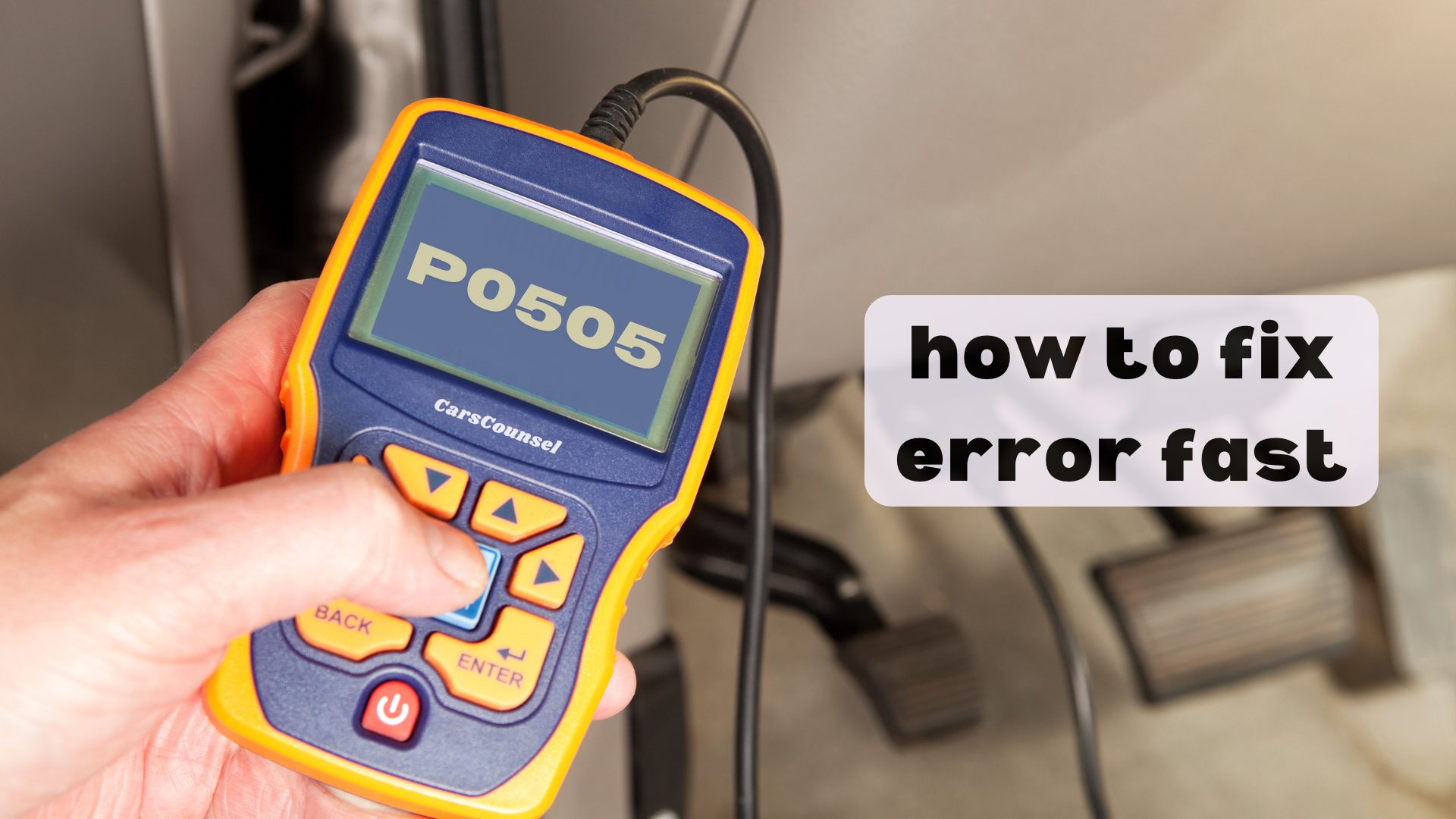
P0505 is a generic OBD-II powertrain code indicating an “Idle Control System Malfunction.” The powertrain control module (PCM) has detected that the actual engine idle speed deviates from the target idle speed or cannot be properly regulated.
Because modern and older vehicles manage idle speed differently, the exact monitored component depends on your specific application. The code identifies a performance condition and does not automatically prove that a specific idle air control valve or throttle body has failed.
Quick Navigation
Key Takeaways
- P0505 indicates the PCM cannot maintain the target engine idle speed under current operating conditions.
- The code flags a system performance issue, which does not automatically confirm a failed idle control component.
- Unmetered air from vacuum leaks is a frequent cause across both older and newer engine designs.
- Diagnosis requires verifying the specific idle control architecture before testing electrical circuits or replacing parts.
P0505 Code Description and Implications
The P0505 code stands for “Idle Control System Malfunction.” The PCM continuously monitors engine RPM when the throttle plate is closed or the accelerator pedal is released.
If the actual idle speed falls outside the expected range, or if the PCM commands an idle adjustment but the engine RPM does not respond accordingly, the code is stored.
On older vehicles, a dedicated Idle Air Control (IAC) valve bypasses the throttle plate to manage idle air. On newer drive-by-wire applications, the electronic throttle body itself regulates idle speed.
Common Causes of the P0505 Code
Several conditions can prevent the PCM from regulating idle speed correctly. The root cause depends on the vehicle’s specific intake architecture.
- Vacuum leaks: Unmetered air entering the intake manifold bypasses the idle control system, leaning out the mixture and raising idle speed.
- Carbon buildup: Accumulation on the IAC valve pintle or the electronic throttle body plate restricts airflow and prevents precise idle adjustments.
- Faulty idle control component: The IAC motor, electronic throttle body motor, or internal position sensors may fail to respond to PCM commands.
- Wiring and connector issues: Corroded pins, chafed wires, or poor grounds in the idle control circuit can interrupt communication.
- Faulty throttle position sensor (TPS): Incorrect pedal or throttle plate position data can confuse the PCM’s idle logic.
Symptoms Associated With P0505
Symptoms directly relate to the engine’s inability to maintain a stable idle.
- Illuminated Check Engine Light: The MIL activates once the PCM confirms the idle control fault.
- Erratic or fluctuating idle: The engine RPM may surge, dip, or hunt up and down while stopped.
- Stalling: The engine may shut off when coming to a stop or when the throttle is released.
- High idle speed: A severe vacuum leak can cause the engine to idle significantly faster than normal.
- Illuminated reduced power warning: On some electronic throttle applications, the PCM may limit engine power if it cannot verify throttle plate control.
Diagnosing the P0505 Trouble Code
Accurate diagnosis requires identifying whether the vehicle uses a dedicated IAC valve or an electronic throttle body.
- Inspect for vacuum leaks: Visually check all intake hoses, PCV lines, and brake booster lines for cracks or disconnections. A smoke test is the most reliable method to locate small unmetered air leaks.
- Check for carbon buildup: Inspect the throttle body bore and plate, or the IAC valve passages, for heavy carbon deposits that restrict airflow.
- Review live data: Use a scan tool to monitor desired versus actual idle RPM, throttle position, and IAC step counts or duty cycle.
- Test the idle control circuit: If no vacuum leaks or carbon buildup are found, verify the reference voltage, ground, and control circuits to the IAC valve or electronic throttle body according to manufacturer specifications.
Repairing the P0505 Issue
Repairs must address the specific root cause identified during diagnosis.
- Vacuum leak repair: Replace cracked hoses, damaged intake gaskets, or faulty PCV components to eliminate unmetered air.
- Cleaning: If carbon buildup is restricting airflow, clean the throttle body or IAC valve passages using an appropriate throttle body cleaner.
- Component replacement: If electrical testing confirms the IAC valve or electronic throttle body motor has failed, replace the confirmed faulty component.
- Wiring repair: Repair any damaged wiring or corroded connectors in the idle control circuit.
- Idle relearn procedure: After cleaning or replacing components, many vehicles require a specific PCM idle relearn procedure to recalibrate the baseline airflow.
Cost Considerations for P0505 Repairs
Repair costs for a P0505 code vary based on the underlying cause and the vehicle’s design.
- Vacuum hose or gasket replacement: Generally inexpensive, primarily involving labor to access the leak.
- Throttle body or IAC cleaning: Very low cost if performed during routine maintenance or as a standalone service.
- IAC valve replacement: The part is relatively affordable, and labor is usually minimal if the valve is easily accessible.
- Electronic throttle body replacement: More expensive, as the entire throttle body assembly must be replaced and subsequently calibrated to the PCM.
Prevention Strategies for Future Occurrences
While electrical failures cannot always be prevented, maintaining a clean intake system reduces the likelihood of airflow restrictions.
- Use quality fuel and additives: Periodic use of fuel system cleaners can help minimize carbon deposits on the throttle plate and intake valves.
- Replace air filters regularly: A clean air filter prevents excessive dirt from entering the intake tract and accumulating on idle control components.
- Inspect intake plumbing: Periodically check rubber intake hoses and vacuum lines for signs of dry rot, cracking, or oil contamination.
Troubleshooting Tips and Best Practices
When addressing a P0505 code, avoid common diagnostic shortcuts that lead to unnecessary parts replacement.
- Do not ignore vacuum leaks: Replacing an IAC valve or throttle body will not fix an idle problem caused by unmetered air from a cracked intake boot.
- Perform the idle relearn: Failing to perform the manufacturer-specific idle relearn procedure after cleaning or replacing components often results in the code returning immediately.
- Check related systems: A failing mass airflow (MAF) sensor or oxygen sensor can sometimes cause secondary idle issues. Review all OBD2 Codes stored in the PCM.
- Avoid forcing the throttle plate: On electronic throttle bodies, manually pushing the throttle plate open while the key is on can damage the internal gears or confuse the position sensors.
More OBD-II Codes
| P0504 | P0502 | P0501 | P0500 |
| P0481 | P0480 | P0506 | P0511 |
| P0513 | P0520 | P0521 | P0522 |
| P0101 | P0121 | P2101 | P0171 |
| P0174 | P0300 | P0420 | P0430 |
| P0700 | P0301 | P0302 | P0304 |
Frequently Asked Questions
Is P0505 a generic or manufacturer-specific code?
P0505 is a generic OBD-II code. Its basic definition regarding idle control system malfunction is standardized across all vehicle manufacturers, though the specific idle control hardware varies by application.
Can a vacuum leak cause the P0505 code?
Yes. Unmetered air entering the intake manifold through a cracked hose or bad gasket bypasses the idle control system. This leaning effect often prevents the PCM from maintaining the correct target idle speed.
Will cleaning the throttle body fix a P0505 code?
Cleaning the throttle body or IAC valve passages will resolve the code if heavy carbon buildup was physically restricting airflow. If the internal motor or electrical circuit has failed, cleaning will not fix the issue.
Is it safe to drive with a P0505 code?
Driving is not recommended if the engine is stalling at stops or idling erratically, as this can be a safety hazard. If the idle is slightly high but stable, the vehicle may be driven cautiously to a repair facility.
Does my car have an Idle Air Control (IAC) valve?
Older vehicles typically use a dedicated IAC valve mounted on the throttle body. Newer drive-by-wire vehicles use an electronic throttle body to control idle speed and do not have a separate IAC valve.
What Should You Do About the P0505 Code?
When the P0505 code appears, your first step should be to inspect the intake tract and vacuum lines for obvious leaks or disconnected hoses. Do not ignore stalling or erratic idle behavior, as it can create unsafe driving conditions.
Confirm the exact idle control architecture for your specific vehicle application. Have a qualified technician perform a smoke test for vacuum leaks and verify live data before replacing any idle control components or the throttle body.

