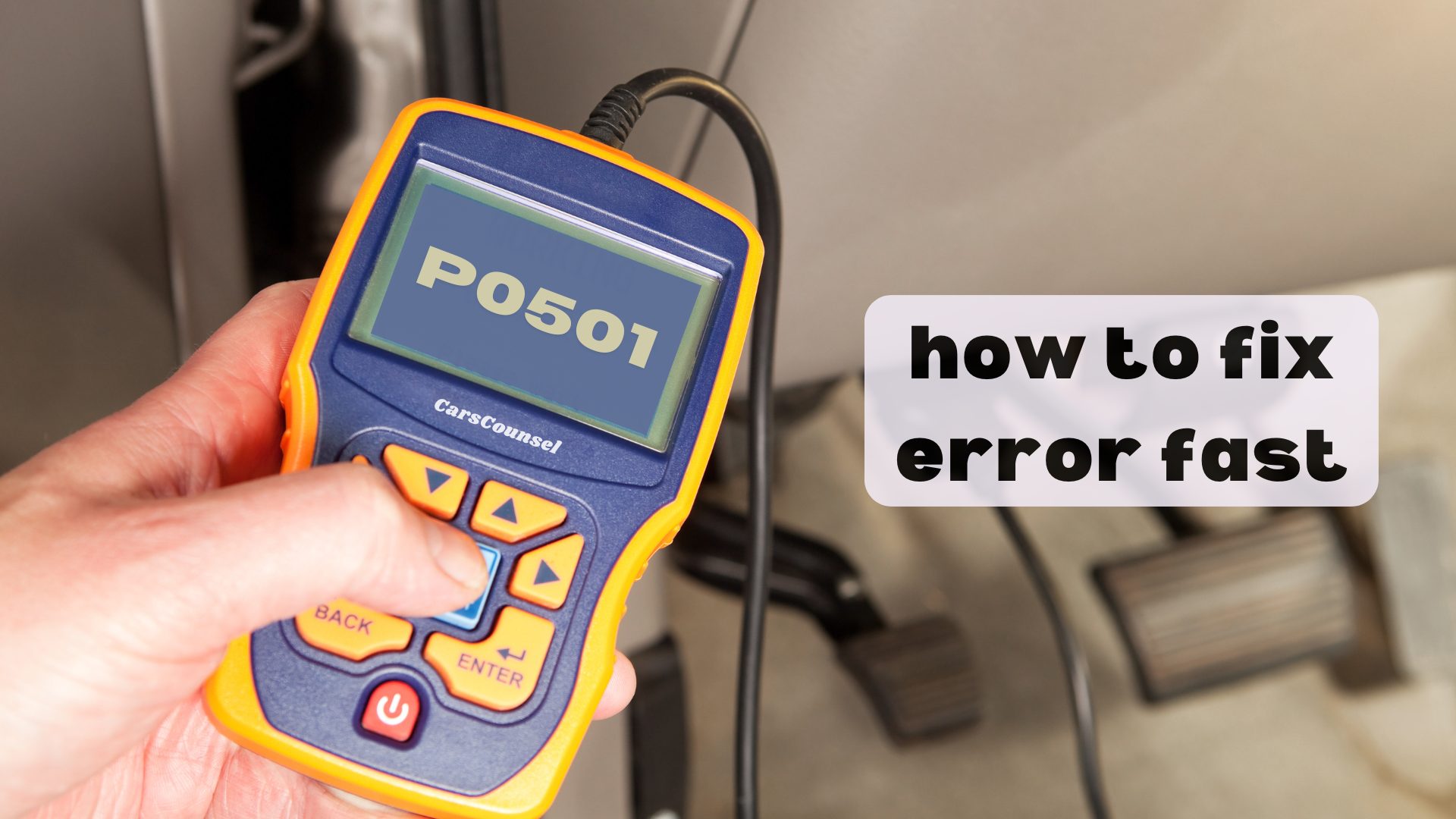
Among OBD2 codes, P0501 is a generic powertrain definition indicating Vehicle Speed Sensor “A” Range/Performance. It means the control module detected an erratic or implausible speed signal from the primary vehicle speed sensor.
Because this code points to a signal performance issue rather than a simple electrical open or short, the exact diagnostic path depends on your vehicle’s sensor design. Testing the sensor output, wiring, and reluctor ring is required to identify the root cause.
Quick Navigation
Key Takeaways
- Performance fault detected: The control module identified that the vehicle speed sensor signal is erratic, intermittent, or does not match other vehicle speed inputs.
- Physical and electrical checks required: Diagnosis involves inspecting the sensor for metallic debris, testing the wiring, and verifying the condition of the reluctor ring.
- Drivability impacts: A faulty speed signal can cause an inoperative speedometer, harsh transmission shifts, and disabled cruise control or anti-lock braking features.
- Related codes: P0501 often appears alongside wheel speed sensor codes or transmission output speed sensor codes, which help pinpoint the exact failing component.
P0501 Code Description and Implications
The P0501 code is a generic SAE definition for Vehicle Speed Sensor “A” Range/Performance. The vehicle speed sensor (VSS) measures the rotational speed of the transmission output shaft or differential and sends this data to the powertrain control module (PCM).
The PCM uses this data for speedometer operation, transmission shift scheduling, cruise control, and torque converter clutch lockup. When the PCM detects that the VSS signal is erratic, drops out intermittently, or contradicts other speed sensors, it stores P0501.
This code indicates a performance or rationality fault, meaning the sensor is generating a signal, but the signal quality or value is implausible. It does not automatically prove the sensor has failed internally.
Common Causes of the P0501 Code
- Metallic debris on the sensor: Magnetic VSS tips can attract metal shavings from the differential or transmission, disrupting the signal.
- Damaged reluctor ring: Chipped, cracked, or worn teeth on the reluctor ring can cause an erratic signal as the sensor reads the passing teeth.
- Wiring or connector issues: Chafed wires, poor grounds, or corroded connector pins can introduce electrical noise or intermittent signal dropouts.
- Faulty vehicle speed sensor: The internal Hall-effect or magnetic pickup coil may be degrading, producing a weak or inconsistent signal.
- Incorrect sensor installation: An improper air gap between the sensor tip and the reluctor ring can cause signal loss or distortion.
Symptoms Associated With P0501
Possible symptoms include:
- Illuminated Check Engine Light (MIL).
- Speedometer fluctuating erratically, dropping to zero, or failing to register speed.
- Harsh, delayed, or incorrect transmission gear shifts.
- Cruise control failing to engage or unexpectedly disengaging.
- Illuminated ABS or traction control warning lights if the systems rely on the same speed data.
- Torque converter clutch failing to lock up, reducing highway fuel economy.
Diagnosing the P0501 Trouble Code
Diagnosing a range/performance code requires a digital multimeter, an oscilloscope if available, and the vehicle’s specific wiring diagrams. The first step is to verify the exact factory definition and sensor location for your specific make and model.
A standard diagnostic workflow includes:
- Scan for related codes: Check for ABS wheel speed codes or transmission output speed codes to see if the issue is isolated to one sensor.
- Visual inspection: Remove the VSS and inspect the magnetic tip for accumulated metallic debris. Clean the tip and reinstall to see if the signal improves.
- Inspect the reluctor ring: If accessible, check the reluctor ring teeth for damage, missing chunks, or excessive corrosion.
- Test the sensor and wiring: Measure the sensor resistance or output voltage while spinning the drive wheels. Compare the readings to the manufacturer’s specifications.
- Check circuit integrity: Verify the signal, ground, and reference voltage circuits for intermittent opens or shorts while wiggling the harness.
Repairing the P0501 Issue
Repairs must follow confirmed diagnosis. Never replace the PCM or transmission based solely on a P0501 code.
- Sensor cleaning: If metallic debris is found on the magnetic tip, clean the sensor and investigate the source of the excessive metal wear.
- Wiring repair: If testing confirms chafed or broken wires, repair the harness using proper automotive soldering and heat shrink tubing.
- Sensor replacement: If the sensor fails the manufacturer’s resistance or output test, replace the VSS and verify the correct air gap during installation.
- Reluctor ring replacement: If the reluctor ring is physically damaged, it must be replaced, which may require differential or transmission disassembly.
Cost Considerations for P0501 Repairs
The cost to resolve a P0501 code depends on the root cause, diagnostic time, and component accessibility.
If the issue is simply metallic debris on the sensor tip, the repair primarily involves minimal labor for removal and cleaning. If the sensor or wiring requires replacement, the price includes the part and standard labor. Replacing a damaged internal reluctor ring requires significant labor for drivetrain disassembly.
Prevention Strategies for Future Occurrences
While internal sensor failures are not always predictable, you can protect the speed sensor circuit from common environmental and mechanical issues.
- Address drivetrain noises: Unusual whining or grinding from the differential or transmission may indicate excessive metal wear, which can coat the magnetic VSS tip.
- Protect the wiring harness: Ensure the VSS wiring is securely routed away from hot exhaust components and moving drivetrain parts to prevent chafing.
- Maintain clean connectors: Apply dielectric grease to the VSS connector to prevent moisture intrusion and terminal corrosion.
Troubleshooting Tips and Best Practices
- Do not assume the sensor is dead: A range/performance code often means the sensor is working but reading a damaged reluctor ring or picking up debris.
- Compare live data: Use a scan tool to compare the VSS reading against the ABS wheel speed sensors while driving at low speeds to identify which sensor is dropping out.
- Check for TSBs: Some manufacturers issue Technical Service Bulletins for updated VSS part numbers or revised PCM software to address false P0501 codes.
- Verify the air gap: On applications where the sensor is adjustable or uses a spacer, an incorrect air gap will cause a weak signal and trigger a performance code.
More OBD-II Codes
| P0456 | P0462 | P0463 | P0480 |
| P0481 | P0500 | P0502 | P0504 |
| P0505 | P0506 | P0520 | P0521 |
| P0715 | P0717 | P0720 | P0722 |
| P0731 | P0732 | P0600 | P0700 |
| P0300 | P0420 | P0171 | P0440 |
Frequently Asked Questions
Can a bad ABS wheel speed sensor cause a P0501 code?
Usually, no. P0501 monitors the primary Vehicle Speed Sensor on the transmission or differential. However, some vehicles compare VSS data against ABS wheel speed sensors to verify rationality. A severe ABS fault could theoretically affect this comparison logic and contribute to the code.
Is it safe to drive with a P0501 code?
It depends on the symptoms. If your speedometer is inoperative, you risk speeding unknowingly. If the transmission is shifting harshly or cruise control is disabled, driving may be unpredictable. Seek diagnosis promptly to restore proper speedometer and transmission operation.
Will cleaning the speed sensor fix a P0501 code?
It might. Magnetic vehicle speed sensors can attract metallic shavings from the differential or transmission fluid. If debris is disrupting the signal, removing the sensor and carefully cleaning the magnetic tip may restore a clean signal and clear the code.
Does P0501 mean my transmission is failing?
No. P0501 indicates a performance issue with the speed sensor signal. The root cause is frequently metallic debris on the sensor, damaged wiring, or a faulty sensor. Internal transmission failure is only indicated if severe mechanical damage to the reluctor ring is confirmed.
Can a broken speedometer cause a P0501 code?
The relationship is reversed. A P0501 code means the control module detects an erratic speed signal, which directly causes the speedometer to stop working or fluctuate. The code is the cause of the speedometer failure, not the result of it.
What Should You Do About the P0501 Code?
Because the P0501 code indicates a signal performance or rationality issue with the primary vehicle speed sensor, it requires systematic diagnosis rather than trial-and-error parts replacement. Confirm the exact factory definition and sensor location for your specific vehicle application.
Inspect the sensor for metallic debris, and check the wiring harness for damage. Test the sensor output and verify the condition of the reluctor ring. Follow the manufacturer’s diagnostic procedure to isolate the faulty component, repair the confirmed root cause, and verify the repair.

