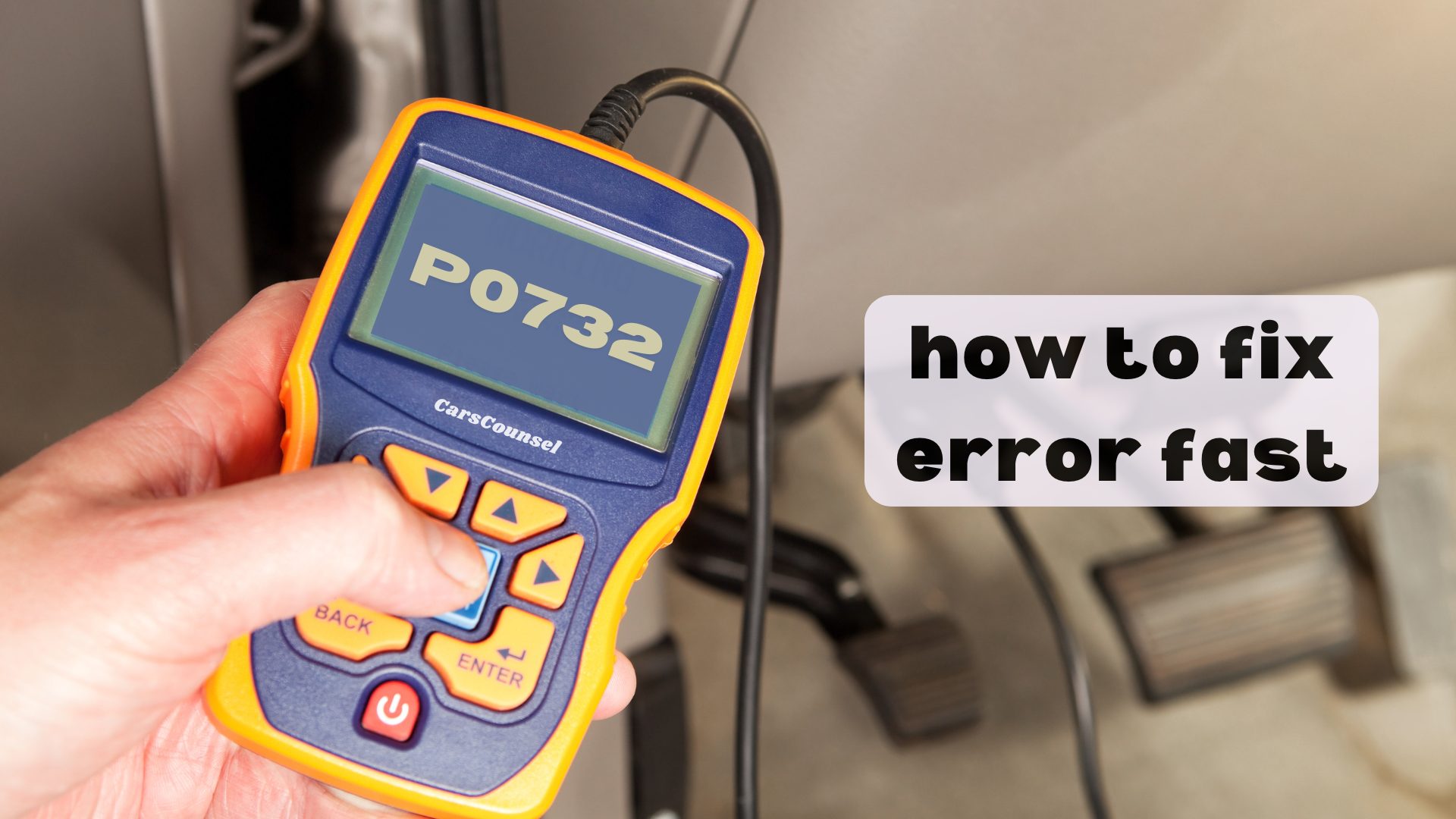
The P0732 code is a generic OBD-II powertrain code indicating a “Gear 2 Incorrect Ratio” fault among various OBD2 Codes. It means the control module detected an unexpected mathematical relationship between the transmission input and output speeds.
This code does not automatically mean the transmission has failed internally. Possible causes include low fluid, faulty speed sensors, or shift solenoid issues. Exact diagnosis requires verifying hydraulic pressure and electronic sensor data.
Quick Navigation
Key Takeaways
- P0732 indicates the calculated gear ratio for second gear does not match the manufacturer’s specification.
- Possible causes include low or degraded transmission fluid, faulty speed sensors, or internal clutch slippage.
- Diagnosis requires comparing live data from the input and output shaft speed sensors.
- Repairs may involve fluid service, solenoid replacement, or internal transmission repair.
P0732 Code Description and Implications
The P0732 code stands for “Gear 2 Incorrect Ratio.” The powertrain control module (PCM) or transmission control module (TCM) monitors the rotational speed of the transmission input shaft and output shaft.
By comparing these two speeds, the module calculates the actual gear ratio. If the calculated ratio while in second gear deviates beyond the calibrated threshold, it stores this generic code.
Because this is a generic code, the exact sensor names and ratio thresholds vary by manufacturer and transmission design.
Common Causes of the P0732 Code
Low or degraded transmission fluid: Insufficient fluid level or broken-down fluid prevents the hydraulic pressure needed to fully apply the second gear clutches or bands.
Faulty speed sensors: A failing input shaft speed sensor or output shaft speed sensor can send erroneous RPM data to the control module.
Shift solenoid or valve body issues: A stuck solenoid or restricted valve body passage may prevent the correct hydraulic circuit from engaging second gear.
Internal mechanical wear: Worn clutch packs, damaged bands, or broken seals inside the transmission can cause physical slippage in second gear.
Symptoms Associated With P0732
Illuminated Check Engine Light: The MIL will turn on once the incorrect ratio condition is detected and confirmed over consecutive drive cycles.
Transmission slipping: The engine RPM may flare or surge when the transmission attempts to shift into or hold second gear under load.
Harsh or delayed shifts: The vehicle may experience abrupt gear changes or hesitate before engaging second gear.
Limp mode activation: Some vehicles may restrict gear selection to prevent further mechanical damage to the transmission.
Diagnosing the P0732 Trouble Code
Verify fluid level and condition: Check the transmission dipstick for proper fluid level and inspect for burnt smells or dark coloration indicating internal wear.
Scan for related codes: Check for input or output speed sensor codes that may point to an electrical fault rather than mechanical slippage.
Monitor live data: Use a scan tool to observe the input and output shaft speed sensors while driving to verify if the speeds correlate correctly.
Perform hydraulic tests: If sensors are functioning correctly, measure line pressure to determine if the hydraulic system is failing to apply the second gear clutches.
Repairing the P0732 Issue
Fluid service: If the fluid is low or degraded, perform a transmission fluid and filter service to restore proper hydraulic pressure.
Sensor or solenoid replacement: Replace any confirmed faulty speed sensors or shift solenoids according to manufacturer pinpoint tests.
Internal transmission repair: If hydraulic pressure is adequate but mechanical slippage is confirmed, the transmission may require a rebuild to address worn clutches.
Cost Considerations for P0732 Repairs
Fluid service: A standard fluid and filter change involves standard maintenance costs compared to internal repairs.
Sensor replacement: Costs depend on whether the sensors are externally mounted or require transmission pan removal for access.
Internal repair: Rebuilding or replacing a transmission involves significant parts costs and specialized labor for removal and reinstallation.
Prevention Strategies for Future Occurrences
Maintain fluid levels: Regularly check and service the transmission fluid according to the manufacturer’s specific maintenance schedule for your vehicle.
Address leaks promptly: Repair any transmission cooler line or pan gasket leaks to prevent low fluid conditions that lead to clutch slippage.
Troubleshooting Tips and Best Practices
Do not ignore slipping: Continuing to drive with a slipping transmission generates excessive heat, which rapidly destroys the remaining clutch material and the fluid.
Check for aftermarket tuning: Modified shift points or increased engine torque from aftermarket tunes can overpower stock transmission clutches, triggering ratio codes.
Verify tire sizes: Mismatched tire sizes or incorrect final drive ratios from uncalibrated modifications can confuse output speed calculations on certain platforms.
Use exact specifications: Always refer to the factory service manual for the correct gear ratio specifications and pressure test port locations.
More OBD-II Codes
| P0725 | P0723 | P0722 | P0721 |
| P0720 | P0717 | P0733 | P0734 |
| P0735 | P0736 | P0740 | P0741 |
| P0715 | P0730 | P0711 | P0713 |
| P0700 | P0743 | P0744 | P0750 |
| P0751 | P0753 | P0755 | P0760 |
Frequently Asked Questions
Is it safe to drive with a P0732 code?
No. An incorrect gear ratio often indicates internal transmission slippage. Continuing to drive can generate excessive heat and cause catastrophic mechanical failure, requiring a complete transmission replacement.
Can low transmission fluid cause a P0732 code?
Yes. Low or degraded transmission fluid prevents the hydraulic pressure needed to fully apply the second gear clutches, causing them to slip and triggering the incorrect ratio fault.
Will disconnecting the battery clear the P0732 code?
Disconnecting the battery may temporarily reset the module, but it will not repair low fluid, a failing sensor, or worn internal clutches. The code will return once the monitor runs.
How much does it cost to fix a P0732 code?
Costs vary widely. A fluid service or external sensor replacement is relatively inexpensive, while diagnosing and repairing internal clutch slippage or replacing the transmission requires significant labor and parts.
Can a bad speed sensor cause a P0732 code?
Yes. If the input or output shaft speed sensor sends erratic data, the control module may calculate an incorrect gear ratio even if the mechanical transmission components are functioning perfectly.
What Should You Do About the P0732 Code?
Confirm the exact factory definition and diagnostic procedure for your specific vehicle application. Begin by verifying the transmission fluid level and condition, then monitor the input and output speed sensor data.
Do not replace the transmission without verified diagnostic evidence. Follow the manufacturer’s pinpoint tests to isolate the fault to the fluid, sensors, or internal mechanical hardware before authorizing repairs.

