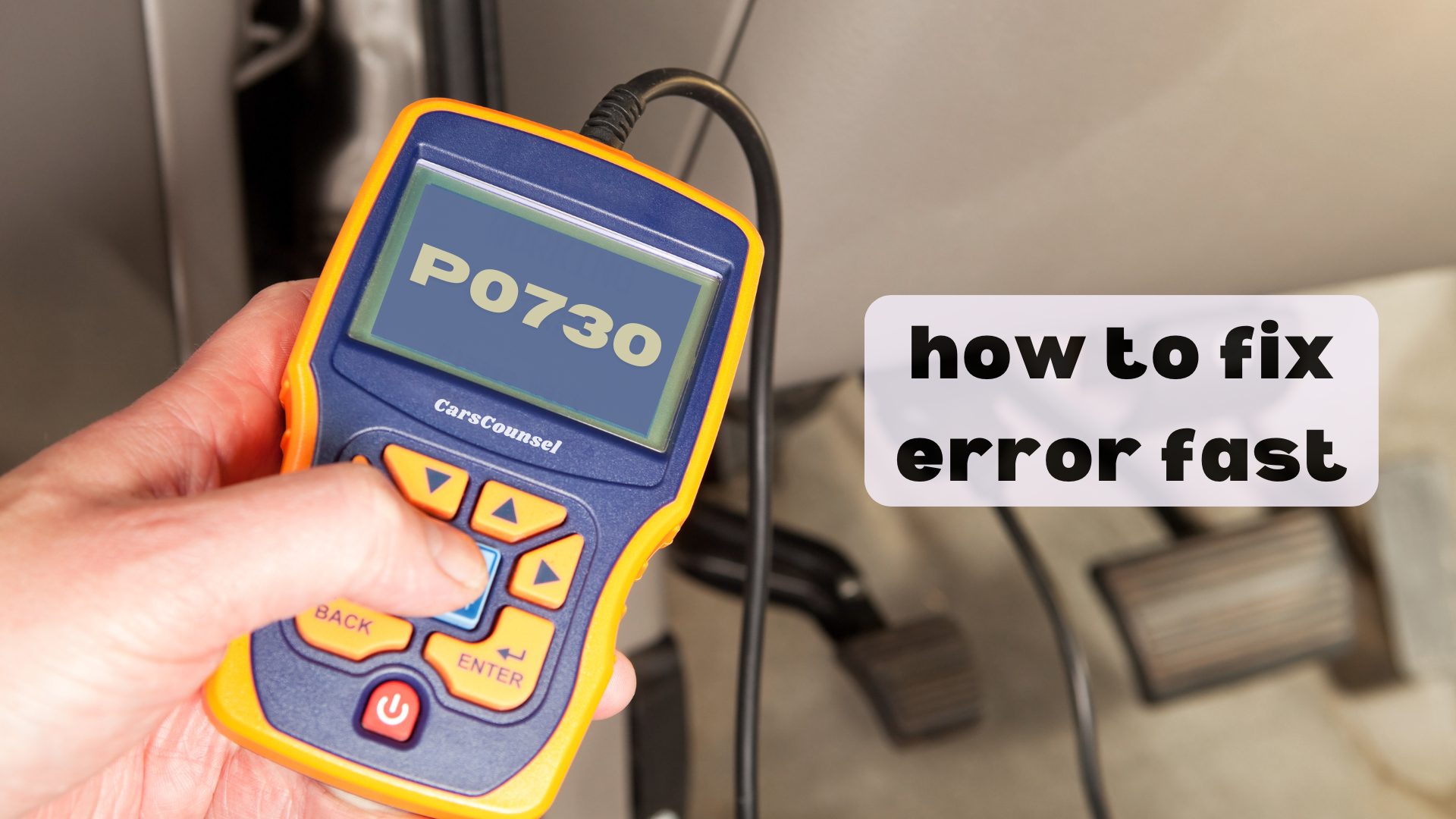
The P0730 code is a generic OBD-II powertrain code indicating an “Incorrect Gear Ratio.” The powertrain or transmission control module has detected that the actual transmission gear ratio does not match the expected ratio for the commanded gear.
This code identifies a performance or mechanical condition and does not automatically prove a specific sensor or solenoid has failed. Proper diagnosis requires comparing live speed data and verifying hydraulic pressure before replacing internal transmission components.
Quick Navigation
Key Takeaways
- P0730 indicates the control module detected an incorrect gear ratio or cannot identify the current transmission gear.
- The code flags a performance or mechanical condition, which does not automatically confirm a failed sensor or solenoid.
- Low or degraded transmission fluid is a primary cause to verify before authorizing internal mechanical repairs.
- Diagnosis requires comparing live input and output speed data against commanded gear states during a road test.
P0730 Code Description and Implications
The P0730 code stands for “Incorrect Gear Ratio.” The powertrain control module (PCM) or transmission control module (TCM) monitors the input shaft speed and output shaft speed sensors.
By comparing these two speeds, the module calculates the current gear ratio. When the transmission is commanded into a specific gear, the module expects a corresponding mathematical ratio.
If the actual ratio deviates from the expected value, or if the module cannot determine which gear the transmission is in, it stores the P0730 code.
Common Causes of the P0730 Code
Several hydraulic, mechanical, and electrical conditions can cause an incorrect gear ratio.
- Low or contaminated transmission fluid: Insufficient fluid volume or degraded fluid prevents the hydraulic system from building the pressure required to hold clutches and bands.
- Internal mechanical wear: Worn clutch packs, broken bands, or damaged planetary gearsets cause the transmission to slip internally under load.
- Shift solenoid or valve body issues: A stuck shift valve or failed solenoid can prevent the correct hydraulic circuit from pressurizing.
- Faulty speed sensors: While usually setting their own circuit codes, erratic signals from the input or output speed sensors can confuse the module’s ratio calculations.
- Wiring and connector issues: Damaged harnesses or poor grounds in the transmission control circuit can interrupt solenoid operation.
Symptoms Associated With P0730
Because P0730 relates to transmission gear engagement, symptoms directly affect vehicle drivability.
- Illuminated Check Engine Light: The MIL will activate once the module confirms the gear ratio fault over consecutive drive cycles.
- Transmission slipping: The engine RPM may flare or surge during acceleration without a corresponding increase in vehicle speed.
- Harsh or delayed shifting: The transmission may bang into gear, hesitate, or fail to shift at the correct speeds.
- Limp mode: The module may lock the transmission in a single gear to prevent further mechanical damage.
Diagnosing the P0730 Trouble Code
Accurate diagnosis requires verifying hydraulic health and comparing live data.
- Verify fluid level and condition: Check the dipstick to ensure the fluid is at the correct level. Inspect the fluid for a burnt smell or metallic debris, which indicates internal wear.
- Scan for additional codes: Check for related codes, such as specific gear ratio codes (P0731-P0736), speed sensor codes, or shift solenoid codes.
- Road test with live data: Use a scan tool to monitor the input speed, output speed, and commanded gear. Verify if the actual ratio matches the commanded gear during acceleration.
- Perform pressure tests: If the fluid is clean and full but slipping persists, connect a transmission pressure gauge to verify line pressure and clutch apply pressures.
Repairing the P0730 Issue
Repairs must address the specific root cause identified during diagnosis.
- Fluid and filter service: If the fluid is low or slightly degraded, a fluid and filter change may restore hydraulic pressure.
- Solenoid or valve body replacement: If pressure tests or electrical tests confirm a stuck valve or failed solenoid, replace the affected component.
- Internal transmission repair: If the fluid contains heavy metallic debris or clutches are burnt, the transmission requires a rebuild or replacement.
- Wiring repair: Repair any damaged wiring or corroded connectors in the transmission control circuit.
Cost Considerations for P0730 Repairs
Repair costs for a P0730 code vary significantly based on the underlying cause.
- Fluid and filter service: Routine maintenance is the least expensive path if low or degraded fluid is the sole cause.
- Solenoid or valve body replacement: Moderate cost, depending on whether the component is externally mounted or requires pan removal.
- Internal transmission rebuild: If internal clutches or hard parts are damaged, the repair involves substantial labor and parts, making it the most expensive scenario.
Prevention Strategies for Future Occurrences
Maintaining the hydraulic health of the transmission reduces the likelihood of ratio faults.
- Follow strict fluid service intervals: Regular fluid and filter changes prevent sludge buildup that can clog valve body passages and starve clutch packs.
- Address leaks promptly: Repairing transmission fluid leaks prevents low fluid levels that lead to immediate clutch slippage and burning.
- Avoid severe overheating: Ensure the transmission cooler is functioning properly, as excessive heat rapidly degrades fluid and damages internal seals.
Troubleshooting Tips and Best Practices
When addressing a P0730 code, avoid common diagnostic shortcuts.
- Never ignore slipping: If the engine RPM flares during acceleration, stop driving immediately. Continued slipping will rapidly destroy the clutch packs and contaminate the entire hydraulic system.
- Check for Technical Service Bulletins (TSBs): Some manufacturers issue revised valve bodies or software updates for specific models prone to false gear ratio codes.
- Review related faults: If multiple transmission codes are present, review other OBD2 Codes to identify a potential shared ground or module issue.
More OBD-II Codes
| P0722 | P0721 | P0717 | P0715 |
| P0714 | P0713 | P0731 | P0732 |
| P0733 | P0734 | P0735 | P0736 |
| P0700 | P0740 | P0741 | P0743 |
| P0500 | P0505 | P0520 | P0606 |
| P1516 | P1800 | P2004 | U0073 |
Frequently Asked Questions
Is P0730 a generic or manufacturer-specific code?
P0730 is a generic OBD-II code. Its basic definition regarding an incorrect gear ratio is standardized across all vehicle manufacturers, though specific diagnostic steps and pressure specifications vary by application.
Can I drive my car with a P0730 code?
Driving is not recommended if the transmission is slipping or locked in limp mode. Continued driving with internal slippage will rapidly destroy the clutch packs and require a complete transmission replacement.
Will a transmission fluid change fix the P0730 code?
A fluid change will only help if low fluid volume or minor degradation was causing a temporary hydraulic pressure drop. If the clutches are already burnt or hard parts are broken, a fluid change will not resolve the issue.
Does P0730 mean my transmission needs to be rebuilt?
Not necessarily. While internal mechanical wear is a possible cause, the code can also be triggered by a simple shift solenoid failure, a stuck valve body, or low fluid levels. Proper diagnosis is required before authorizing a rebuild.
Can a bad speed sensor cause the P0730 code?
Yes. If the input or output speed sensor provides an erratic signal, the control module may calculate an impossible gear ratio. However, this usually triggers a dedicated speed sensor circuit code alongside the ratio code.
What Should You Do About the P0730 Code?
When the P0730 code appears, your first step should be to verify the transmission fluid level and condition. Do not ignore slipping or harsh shifting, as these symptoms indicate active mechanical distress.
Confirm the exact factory definition and diagnostic procedure for your specific vehicle application. Have a qualified technician perform a road test with live data and hydraulic pressure tests before authorizing major internal transmission repairs.

