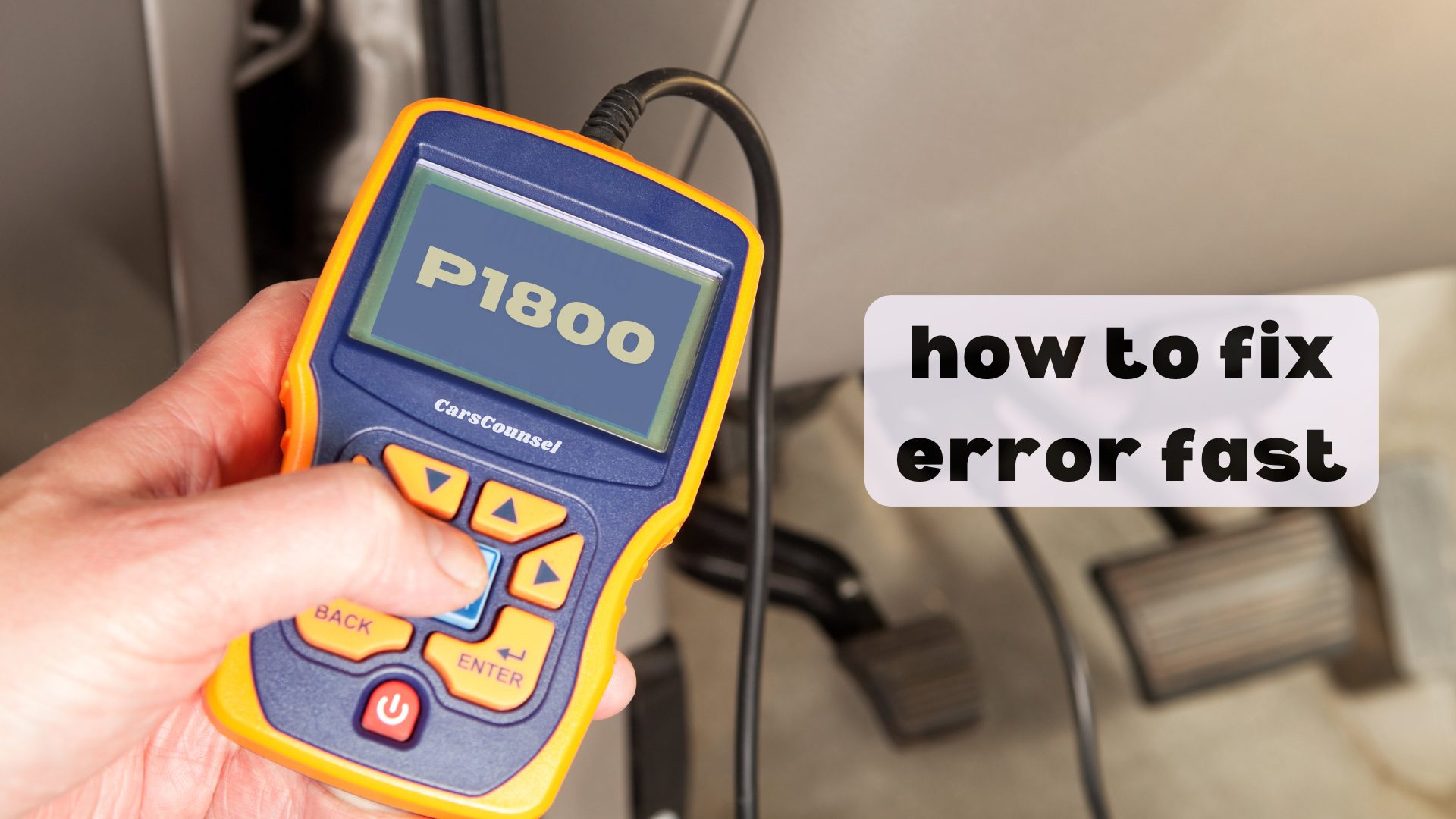
The P1800 code is a manufacturer-specific powertrain code. Its exact definition depends on the vehicle application, but it is most strongly verified on Nissan and Infiniti vehicles as a Variable Induction Air Control System (VIAS) fault among various OBD2 Codes.
This code does not automatically mean the VIAS solenoid has failed. Possible causes include broken vacuum lines, wiring faults, or a failed actuator. Exact diagnosis requires verifying your vehicle’s factory definition.
Quick Navigation
Key Takeaways
- P1800 is a manufacturer-specific code, primarily indicating a VIAS control solenoid valve circuit malfunction on Nissan and Infiniti applications.
- The VIAS system optimizes intake airflow, and a circuit fault can trigger the Check Engine Light.
- Possible causes include a failed solenoid, damaged wiring, or disconnected vacuum hoses.
- Diagnosis requires testing the solenoid circuit and inspecting the vacuum actuator before replacing components.
P1800 Code Description and Implications
The P1800 code is manufacturer-specific, meaning its exact definition varies by automaker.
On Nissan and Infiniti applications, P1800 indicates a Variable Induction Air Control System (VIAS) Control Solenoid Valve Circuit Malfunction.
The VIAS system optimizes engine breathing by altering intake airflow paths at different RPMs to improve torque and efficiency.
The engine control module monitors the electrical circuit of the vacuum solenoid that actuates the intake manifold power valve.
If the module detects an open circuit, a short to ground, or a short to voltage in the solenoid control circuit, it stores this code.
Common Causes of the P1800 Code
Multiple conditions can trigger this circuit malfunction. The underlying cause must be confirmed through testing rather than assuming a single component has failed.
Possible causes include an internally failed VIAS control solenoid valve that no longer responds to electrical signals.
Damaged wiring, corroded connectors, or chafed harnesses in the solenoid control circuit can interrupt the signal from the ECM.
Because the system relies on engine vacuum, severely cracked or disconnected vacuum lines can cause secondary actuation failures, though the code specifically targets the electrical circuit.
Symptoms Associated With P1800
Symptoms depend on whether the intake manifold power valve is stuck open or closed due to the electrical fault.
- Illuminated Check Engine Light: The MIL will turn on once the circuit fault is detected and confirmed over consecutive drive cycles.
- Lack of high-RPM power: If the valve fails to switch to the high-speed airflow configuration, the engine may feel sluggish during hard acceleration.
- Reduced fuel economy: Improper intake tuning can slightly decrease overall combustion efficiency under certain driving conditions.
- No noticeable symptoms: In some applications, the driver may notice no drivability issues other than the illuminated warning lamp.
Diagnosing the P1800 Trouble Code
Proper diagnosis begins by verifying the exact vehicle application and inspecting the most accessible components first.
- Verify the code and check for TSBs: Confirm the exact factory definition for your vehicle and check for technical service bulletins regarding known wiring or solenoid issues.
- Inspect vacuum lines: Before electrical testing, visually inspect all vacuum hoses connected to the VIAS solenoid and the intake manifold actuator for cracks, leaks, or disconnections.
- Test the solenoid circuit: Measure the solenoid’s internal resistance and compare it to the manufacturer’s specification. Check the wiring harness for continuity, shorts to ground, and shorts to voltage.
- Command the solenoid: Use a scan tool with bidirectional controls or apply direct battery voltage to verify the solenoid clicks and successfully holds vacuum.
Repairing the P1800 Issue
Repairs must follow confirmed diagnostic testing. The exact repair path depends on whether the fault is electrical, pneumatic, or mechanical.
- Wiring repair: Repair or replace any damaged wiring, corroded pins, or loose connectors in the solenoid control circuit.
- Vacuum line replacement: Replace any brittle, cracked, or disconnected vacuum hoses using the correct diameter and material specifications.
- Solenoid replacement: If electrical testing confirms the solenoid is internally open or shorted, replace the VIAS control solenoid valve.
Cost Considerations for P1800 Repairs
Repair costs vary significantly based on the root cause, vehicle make, and labor accessibility.
- Vacuum line replacement: Replacing degraded rubber hoses is generally the least expensive repair option.
- Wiring repair: Costs depend on the time required to trace and repair the damaged circuit harness.
- Solenoid replacement: The VIAS solenoid is typically accessible on the intake manifold, keeping labor times relatively low compared to internal engine repairs.
Prevention Strategies for Future Occurrences
While electrical faults cannot always be prevented, maintaining the engine bay can reduce the risk of vacuum and circuit failures.
- Inspect vacuum hoses: Periodically check rubber vacuum lines for dry rot, cracking, or hardening, especially near hot exhaust components.
- Protect wiring harnesses: Ensure the solenoid wiring is secured away from sharp edges and excessive heat sources to prevent insulation melt-through.
Troubleshooting Tips and Best Practices
- Do not ignore vacuum leaks: A cracked vacuum line can cause the actuator diaphragm to fail to move, even if the electrical solenoid is working perfectly.
- Check for related codes: Codes like P1801 or intake manifold runner codes may provide more specific clues about mechanical binding versus electrical faults.
- Verify aftermarket modifications: Cold air intakes or aftermarket engine covers can sometimes pinch vacuum lines or alter sensor readings if not installed correctly.
- Use exact specifications: Always refer to the factory service manual for the correct solenoid resistance values and vacuum routing diagrams for your specific vehicle.
More OBD-II Codes
| P1775 | P1777 | P1778 | P1783 |
| P1788 | P1790 | P1807 | P1808 |
| P1809 | P1810 | P1811 | P1815 |
| P1100 | P1101 | P1144 | P1145 |
| P2004 | P1516 | P0705 | P0720 |
| P0740 | P0505 | P0520 | P0087 |
Frequently Asked Questions
Is P1800 a generic OBD-II code?
No. P1800 is a manufacturer-specific code. Its exact definition depends on the automaker, but it is most commonly associated with the Variable Induction Air Control System on Nissan and Infiniti vehicles.
Can I drive with a P1800 code?
Driving is usually safe for short distances, as this code primarily affects intake airflow optimization. However, you may experience reduced high-RPM power, and the vehicle should be diagnosed promptly.
Will a vacuum leak cause a P1800 code?
P1800 specifically monitors the electrical circuit of the VIAS solenoid. However, a vacuum leak will prevent the system from functioning mechanically, which may trigger additional performance or airflow codes.
How much does it cost to fix a P1800 code?
Costs vary widely. Replacing a cracked vacuum hose is inexpensive, while diagnosing and replacing a failed VIAS solenoid or repairing a damaged engine harness requires more labor and parts.
Can a bad VIAS solenoid cause a rough idle?
Usually, no. The VIAS system typically operates at higher RPMs to improve top-end power. A failed solenoid is more likely to cause a lack of acceleration power rather than a rough idle.
What Should You Do About the P1800 Code?
Confirm the exact factory definition for your specific vehicle application. Begin by inspecting the vacuum lines and actuator diaphragm, then verify the solenoid’s electrical circuit.
Do not replace the intake manifold or engine control module without verified diagnostic evidence. Follow the manufacturer’s pinpoint tests to isolate the fault before authorizing repairs.

