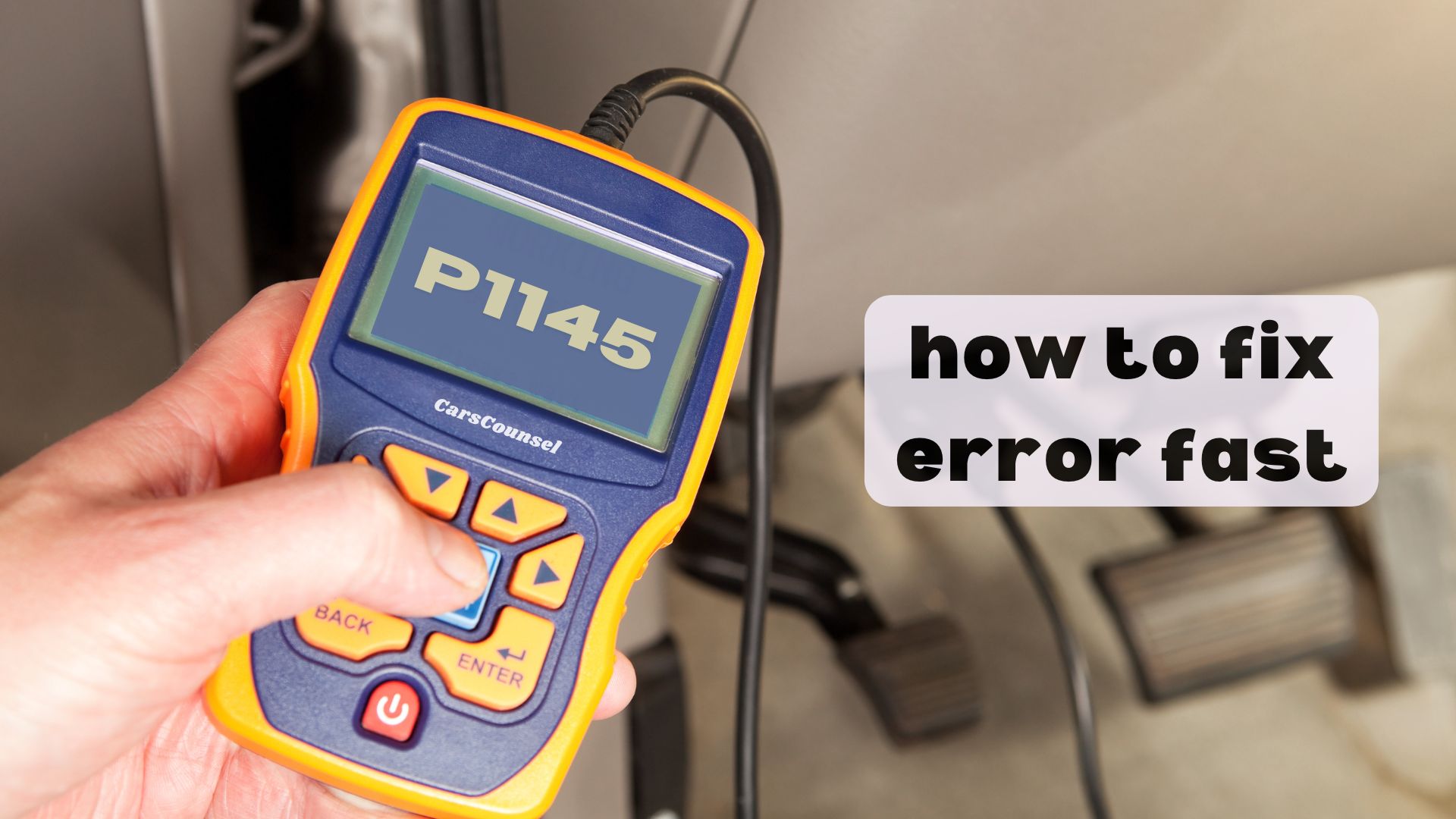
P1145 is a manufacturer-specific diagnostic trouble code, meaning its exact definition depends entirely on the vehicle make and engine application. One automaker might use it to flag an intake valve timing control fault, while another uses it for a mass airflow sensor circuit issue.
Diagnosing this code requires verifying the exact factory definition for your specific vehicle before testing any components. The presence of P1145 indicates a detected fault condition, but it does not automatically prove that a specific sensor or solenoid has failed.
Quick Navigation
Key Takeaways
- P1145 is a manufacturer-specific code, so its exact meaning varies by automaker, model, and engine.
- On Nissan and Infiniti applications, it indicates an intake valve timing control performance or position sensor fault on Bank 2.
- On Volkswagen and Audi applications, it points to a mass airflow (MAF) sensor circuit short to positive.
- On certain GM applications, it may indicate a heated oxygen sensor cross-counts performance issue.
- Accurate diagnosis requires checking the factory service information for your exact vehicle before replacing any parts.
P1145 Code Description and Implications
Nissan and Infiniti applications: On verified Nissan and Infiniti platforms, P1145 indicates an intake valve timing control performance or position sensor circuit fault on Bank 2. The engine control module monitors the variable valve timing system to ensure the camshaft position matches the target angle.
Volkswagen and Audi applications: On these platforms, P1145 indicates a mass airflow (MAF) sensor circuit short to positive. The control module detects that the MAF sensor signal voltage is reading at or near battery voltage, indicating an electrical short in the circuit.
GM applications: On certain General Motors vehicles, this code is defined as a heated oxygen sensor (HO2S) cross-counts performance issue for Bank 1 Sensor 3. This points to a slow-switching or degraded downstream oxygen sensor failing to monitor catalyst efficiency properly.
Common Causes of the P1145 Code
Intake valve timing faults (Nissan/Infiniti): Possible causes include a failing intake valve timing control solenoid, a defective camshaft position sensor, or low engine oil preventing the hydraulic phaser from operating. Wiring issues or a stretched timing chain can also trigger this code.
MAF sensor faults (VW/Audi): Issues often stem from a failed mass airflow sensor, damaged wiring or connectors at the sensor harness, or a short to battery positive in the signal circuit. Debris in the intake tract can also damage the sensor element.
Oxygen sensor faults (GM): A degraded downstream oxygen sensor, contaminated sensor element, or an exhaust leak near the sensor can cause the cross-counts monitor to fail. Wiring harness damage or poor electrical grounds can also interrupt the sensor signal.
Symptoms Associated With P1145
Symptoms vary widely based on the monitored system. On applications with an intake valve timing fault, you may notice reduced engine power, rough idling, or hesitation during acceleration as the variable valve timing system defaults to a locked or base position.
When the code involves a mass airflow sensor short, the engine may run excessively rich or lean, producing black smoke, stalling, or severe drivability issues. Oxygen sensor faults often produce no immediate drivability symptoms, though the vehicle may fail an emissions test.
In all cases, a warning light on your dashboard will illuminate to alert you to the detected condition. Some applications may store the code without immediate drivability symptoms if the fault is intermittent or only monitored during specific drive cycles.
Diagnosing the P1145 Trouble Code
Diagnosis must begin by confirming the exact factory definition for your vehicle’s make, model, year, and engine. Using a generic repair path for a manufacturer-specific code often leads to incorrect part replacement and wasted diagnostic time.
For intake valve timing applications: A technician will check the engine oil level and condition first, as low oil pressure prevents the timing actuator from functioning. They will then test the solenoid and position sensor circuits for opens, shorts, and proper resistance.
For MAF sensor applications: Diagnosis involves inspecting the MAF sensor wiring harness for chafing or shorts to positive voltage. The technician will also test the sensor output against known-good live data parameters to verify the signal rationality.
For oxygen sensor applications: Diagnosis involves reviewing live data to monitor the sensor switching rate and checking the exhaust system for leaks that could skew the sensor readings and prevent the monitor from completing successfully.
Repairing the P1145 Issue
Repairs must follow confirmed diagnostic testing. If low or degraded engine oil is confirmed on a Nissan/Infiniti application, performing an oil and filter change and clearing the code may resolve the issue if the mechanical components remain undamaged.
If the intake valve timing solenoid or position sensor fails electrical testing, replacing the confirmed faulty component is the appropriate repair path. For MAF sensor faults, replacing the failed sensor or repairing a shorted wiring harness will resolve the circuit malfunction.
For oxygen sensor faults, replacing the degraded downstream sensor or repairing an exhaust leak will restore proper monitor operation. Always follow the exact OEM service procedure for your specific application to ensure the repair is completed correctly.
Cost Considerations for P1145 Repairs
Repair costs depend entirely on the underlying cause and the specific vehicle application. An oil change or repairing a damaged wire is relatively inexpensive, while replacing a mass airflow sensor or internal variable valve timing components involves higher parts and labor costs.
Electrical diagnostics require specialized time to trace wiring faults or analyze live data streams, which affects labor costs. Component accessibility, required programming, and local labor rates will also determine the final estimate. Exact pricing requires a confirmed diagnosis from a qualified technician.
Prevention Strategies for Future Occurrences
Because P1145 can represent different systems depending on the manufacturer, prevention strategies must be tied to the specific failure mechanism identified during the diagnostic process.
For applications prone to intake valve timing faults, adhering to severe-service maintenance schedules and using the correct viscosity of high-quality engine oil is critical. The variable valve timing system relies entirely on clean oil at the correct pressure to actuate the camshaft phasers.
For MAF sensor applications, ensuring the air intake tract is sealed and replacing the air filter at recommended intervals can help prevent debris or oil contamination from damaging the sensitive sensor elements over time.
Troubleshooting Tips and Best Practices
Never assume that a code mentioning intake valve timing automatically means the camshaft phaser or solenoid has failed. On many Nissan and Infiniti applications, simply low engine oil or the wrong oil viscosity can prevent the system from operating and trigger the code.
Always check for related technical service bulletins (TSBs) or software updates for your exact vehicle. On some applications, an ECM recalibration is required to address false rationality codes or updated sensor correlation thresholds that affect how the monitor operates.
When testing electrical circuits, use a digital multimeter to verify continuity and resistance against the exact manufacturer specifications for your engine. Guessing or using universal voltage thresholds can lead to misdiagnosis and unnecessary component replacement.
More OBD-II Codes
| P1144 | P1143 | P1142 | P1141 |
| P1140 | P1139 | P1146 | P1147 |
| P1148 | P1149 | P1150 | P1151 |
| P0011 | P0014 | P0100 | P0101 |
| P0130 | P0136 | P0171 | P0174 |
| P0300 | P0420 | P0440 | P0455 |
Frequently Asked Questions
Is the P1145 code generic or manufacturer-specific?
No. P1145 is a manufacturer-specific code. Its exact definition depends entirely on the vehicle make and engine, meaning it can indicate a variable valve timing fault on one brand and a mass airflow sensor issue on another.
Can I drive my car with a P1145 code?
Driving with an active variable valve timing fault or mass airflow short can cause stalling or reduced power. If the vehicle struggles to accelerate or lacks power under load, it should be diagnosed promptly to prevent further damage or stranding.
Will replacing the VVT solenoid automatically fix P1145?
Not necessarily. While a failing solenoid is a possible cause on certain applications, the code could also stem from low engine oil, damaged wiring, or an entirely different system like a mass airflow sensor circuit or oxygen sensor fault.
Does P1145 always mean the intake valve timing is wrong?
No. While some manufacturers use P1145 for an intake valve timing control fault, others use it for mass airflow sensor shorts or oxygen sensor cross-counts issues. Proper diagnostic testing is required before replacing any variable valve timing components.
Can low engine oil cause an intake valve timing P1145 code?
Yes. On applications where P1145 indicates an intake valve timing fault, low or degraded engine oil can prevent the hydraulic camshaft phaser from actuating properly. The control module interprets this lack of mechanical movement as an electrical or performance fault.
What Should You Do About the P1145 Code?
Because P1145 is a manufacturer-specific code, your first step must be to confirm the exact factory definition for your specific vehicle application. Do not assume the code points to a variable valve timing solenoid or a mass airflow sensor unless your manufacturer’s service information explicitly states it.
Once the monitored system is verified, follow the applicable OEM diagnostic procedure to test the relevant system and components. Accurate electrical and mechanical testing is required to identify the root cause before attempting any repairs.

