P1142 is a manufacturer-specific diagnostic trouble code, meaning its exact definition depends entirely on the vehicle make and engine application. One automaker might use it to flag a load calculation fault, while another uses it for a fuel restriction condition.
Diagnosing this code requires verifying the exact factory definition for your specific vehicle before testing any components. The presence of P1142 indicates a detected fault condition, but it does not automatically prove that a specific sensor or module has failed.
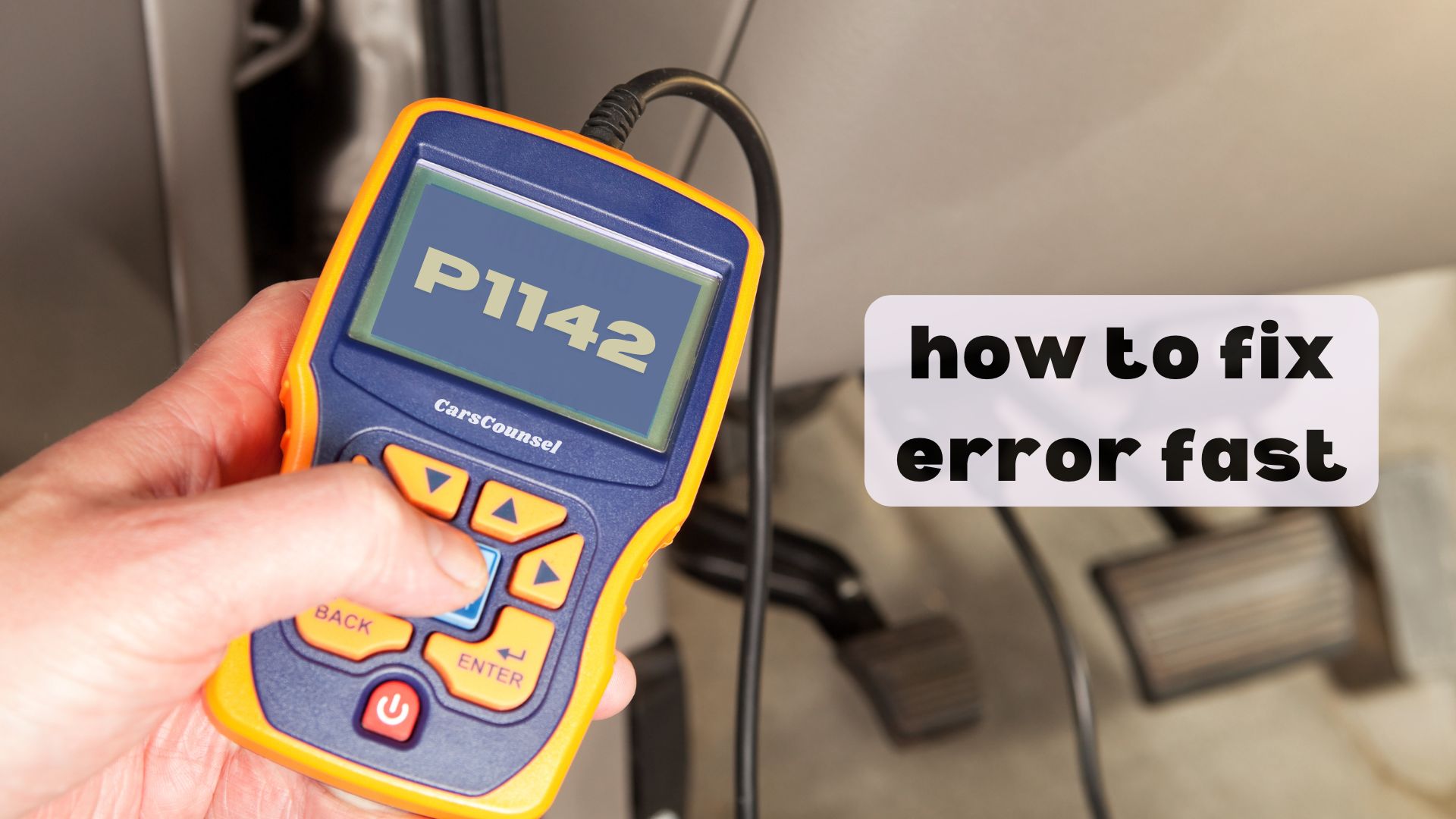
Quick Navigation
Key Takeaways
- P1142 is a manufacturer-specific code, so its exact meaning varies by automaker, model, and engine.
- On Volkswagen and Audi applications, it indicates a load calculation cross-check lower limit exceeded fault.
- On Ford and Nissan applications, it typically points to a fuel restriction condition in the delivery system.
- On certain GM and Mazda applications, it may indicate a downstream oxygen sensor heater circuit malfunction.
- Accurate diagnosis requires checking the factory service information for your exact vehicle before replacing any parts.
P1142 Code Description and Implications
Volkswagen and Audi applications: On verified Volkswagen and Audi platforms, P1142 indicates a load calculation cross-check lower limit exceeded fault. The engine control module calculates engine load using parameters like mass airflow. If the calculated load falls below the minimum expected threshold, the code is stored.
Ford, Nissan, and Peugeot/Citroen applications: On these platforms, P1142 typically indicates a fuel restriction condition. The control module monitors fuel delivery and pressure control, detecting a physical or calibrated response outside the expected parameters that suggests a restriction in the fuel system.
GM and Mazda applications: On certain GM and Mazda models, this code is defined as a heated oxygen sensor heater circuit malfunction, typically for Bank 1 Sensor 2. The module detects an electrical fault preventing the downstream sensor from reaching operating temperature.
Common Causes of the P1142 Code
Load calculation faults (VW/Audi): Possible causes include a failing mass airflow sensor, unmetered air entering the intake system through a vacuum leak, or a restricted air filter. A defective manifold absolute pressure sensor can also skew the load calculations.
Fuel restriction faults (Ford/Nissan): Issues often stem from a severely clogged fuel filter, a failing fuel pump, or restricted fuel injectors. Debris in the fuel tank or a pinched fuel line can also trigger this condition.
Oxygen sensor heater faults (GM/Mazda): A failed downstream oxygen sensor heater element, damaged wiring or connectors at the sensor harness, or a blown heater circuit fuse can interrupt the circuit and set this code.
Symptoms Associated With P1142
Symptoms vary widely based on the monitored system. On applications with a load calculation fault, you may notice rough idling, engine hesitation, or reduced power as the engine control module defaults to a conservative fuel map.
When the code involves a fuel restriction, you might experience severe power loss under load, stalling, or extended cranking times. Oxygen sensor heater faults typically produce no immediate drivability symptoms, though the vehicle may fail an emissions test.
In all cases, a warning light on your dashboard will typically illuminate to alert you to the detected condition.
Diagnosing the P1142 Trouble Code
Diagnosis must begin by confirming the exact factory definition for your vehicle’s make, model, year, and engine. Using a generic repair path for a manufacturer-specific code often leads to incorrect part replacement.
For load calculation applications: A technician will review live data to compare mass airflow readings at various engine speeds. They will also perform a smoke test on the intake system to check for vacuum leaks that could cause unmetered air to skew the load calculations.
For fuel restriction applications: Diagnosis involves checking fuel pressure and volume at the fuel rail, inspecting the fuel filter for clogs, and verifying the fuel pump operation against manufacturer specifications.
For oxygen sensor applications: Diagnosis involves checking the heater circuit fuse, testing the wiring harness for continuity, and measuring the resistance of the sensor heater element.
Repairing the P1142 Issue
Repairs must follow confirmed diagnostic testing. If a vacuum leak is confirmed on a load calculation application, repairing the damaged intake hose or replacing the faulty gasket is required.
If a mass airflow sensor fails the manufacturer’s electrical or data rationality tests, replacing the confirmed faulty sensor is the appropriate repair path. For fuel restriction faults, replacing a clogged fuel filter or repairing a restricted fuel line will resolve the delivery issue.
For oxygen sensor heater faults, replacing the failed downstream sensor or repairing damaged wiring harnesses will resolve the circuit malfunction. Always follow the exact OEM service procedure for your application.
Cost Considerations for P1142 Repairs
Repair costs depend entirely on the underlying cause and the specific vehicle application. Replacing an air filter or oxygen sensor is generally less labor-intensive than dropping a fuel tank to replace a fuel pump or filter assembly.
Electrical diagnostics require specialized time to trace wiring faults or analyze live data streams, which affects labor costs. Component accessibility, required programming, and local labor rates will also determine the final estimate. Exact pricing requires a confirmed diagnosis from a qualified technician.
Prevention Strategies for Future Occurrences
Because P1142 can represent different systems depending on the manufacturer, prevention strategies must be tied to the specific failure mechanism.
For applications prone to load calculation faults, adhering to severe-service maintenance schedules and replacing the air filter at recommended intervals can help prevent restricted airflow from skewing sensor readings.
For fuel system faults, using high-quality fuel and replacing the fuel filter at manufacturer-specified intervals can help prevent debris from restricting fuel delivery over time.
Troubleshooting Tips and Best Practices
Never assume that a code mentioning a load calculation automatically means the mass airflow sensor has failed. The fault could lie in a simple vacuum leak, a failing MAP sensor, or a restricted exhaust system.
Always check for related technical service bulletins (TSBs) or software updates for your exact vehicle. On some applications, an ECM recalibration is required to address false rationality codes or updated sensor correlation thresholds.
When testing electrical circuits, use a digital multimeter to verify continuity and resistance against the exact manufacturer specifications for your engine. Guessing or using universal voltage thresholds can lead to misdiagnosis.
More OBD-II Codes
| P1141 | P1140 | P1139 | P1138 |
| P1137 | P1136 | P1143 | P1144 |
| P1145 | P1146 | P1147 | P1148 |
| P0101 | P0171 | P0174 | P0420 |
| P0440 | P0455 | P0456 | P0300 |
| P0121 | P0122 | P0135 | P0141 |
Frequently Asked Questions
Is the P1142 code generic or manufacturer-specific?
No. P1142 is a manufacturer-specific code. Its exact definition depends entirely on the vehicle make and engine, meaning it can indicate a load calculation fault on one brand and a fuel restriction on another.
Can I drive my car with a P1142 code?
Driving with an active fuel restriction or severe load calculation fault can cause stalling or reduced power. If the vehicle struggles to accelerate or lacks power under load, it should be diagnosed promptly to prevent stranding.
Will replacing the mass airflow sensor automatically fix P1142?
Not necessarily. While a failing MAF sensor is a possible cause on certain applications, the code could also stem from a vacuum leak, a restricted fuel filter, or an entirely different system like an oxygen sensor heater circuit.
Does P1142 always mean the fuel filter is clogged?
No. While some manufacturers use P1142 for a fuel restriction condition, others use it for engine load calculations or oxygen sensor heater circuits. Proper diagnostic testing is required before replacing any fuel system components.
Can a vacuum leak cause a load calculation P1142 code?
Yes. On applications where P1142 indicates a load calculation fault, unmetered air entering through a vacuum leak can cause the mass airflow readings to fall below the expected minimum threshold, triggering the code.
What Should You Do About the P1142 Code?
Because P1142 is a manufacturer-specific code, your first step must be to confirm the exact factory definition for your specific vehicle application. Do not assume the code points to a mass airflow sensor or a fuel filter unless your manufacturer’s service information explicitly states it.
Once the monitored system is verified, follow the applicable OEM diagnostic procedure to test the relevant system and components. Accurate electrical and mechanical testing is required to identify the root cause before attempting any repairs.

