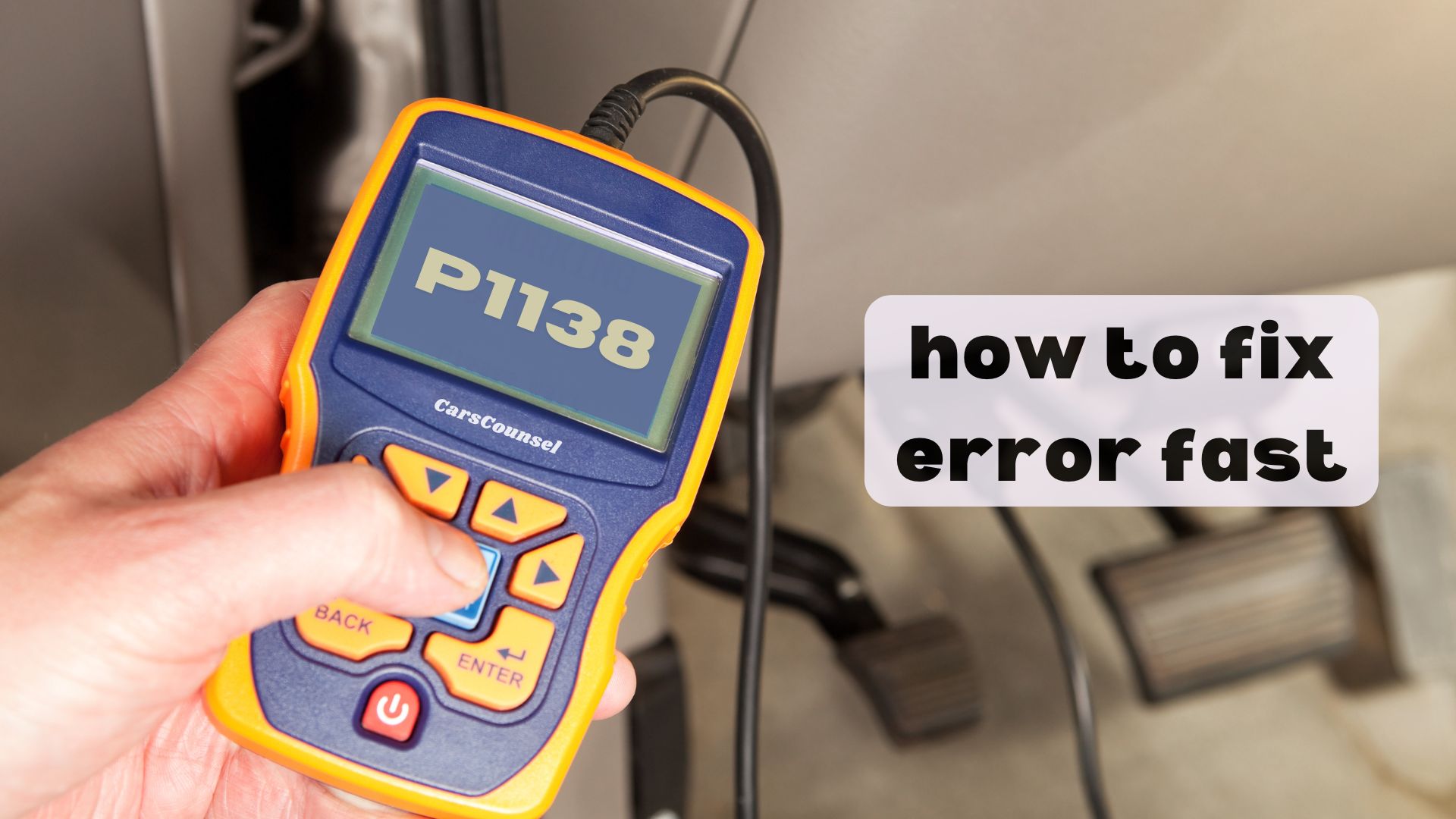
P1138 is a manufacturer-specific diagnostic trouble code. Because it is not standardized, its exact definition depends entirely on the vehicle make and application.
You must verify the exact factory definition for your vehicle before starting repairs. The code indicates a detected condition, but testing is required to identify the root cause.
Quick Navigation
Key Takeaways
- P1138 is a manufacturer-specific code with different meanings for VW/Audi, GM, Nissan, and Ford applications.
- On VW and Audi vehicles, it indicates a long-term fuel trim additive fault where Bank 2 is running too lean at idle.
- On GM applications, it points to a heated oxygen sensor circuit high voltage condition during deceleration fuel cut-off.
- On Nissan vehicles, it identifies a swirl control valve performance issue, while on Ford it indicates a downstream oxygen sensor rich signal.
- Accurate diagnosis requires verifying your exact vehicle application before testing specific sensors or intake components.
P1138 Code Description and Implications
VW and Audi applications: P1138 indicates a Long Term Fuel Trim Additive fault on Bank 2, meaning the system is running too lean at idle. The engine control module detects that it must add excessive fuel to maintain the correct air-fuel ratio.
GM and Chevrolet applications: The code identifies a Heated Oxygen Sensor (HO2S) circuit high voltage condition during deceleration fuel cut-off on Bank 1 Sensor 2.
Nissan applications: P1138 points to a Swirl Control Valve Control System Performance fault. The control module detects that the intake swirl valve is not operating correctly to optimize airflow.
Ford applications: The code signifies a Lack of Downstream Heated Oxygen Sensor Switch where the sensor indicates a rich condition on Bank 1.
Because definitions vary drastically, treating P1138 as a universal oxygen sensor or fuel trim code will lead to incorrect diagnostics. Always consult the service information for your exact make and model.
Common Causes of the P1138 Code
VW and Audi applications: Vacuum leaks are a known cause of lean additive fuel trim faults. A failing mass air flow (MAF) sensor, low fuel pressure, or a faulty fuel pressure regulator can also cause the system to run lean.
GM applications: A failing downstream oxygen sensor or damaged wiring in the sensor circuit can trigger this code. Exhaust leaks near the sensor may also cause incorrect high voltage readings during deceleration.
Nissan applications: Carbon buildup can cause the swirl control valve to stick. A faulty swirl control valve actuator, damaged vacuum lines, or broken intake manifold linkage are also possible causes.
Ford applications: A failing downstream oxygen sensor or a genuinely rich exhaust condition caused by leaking fuel injectors or high fuel pressure can trigger this code.
Symptoms Associated With P1138
Symptoms depend entirely on which system the code monitors on your specific vehicle. The Check Engine Light will illuminate.
VW and Audi applications: You may experience rough idling, hesitation, or poor fuel economy due to the lean condition and fuel trim compensation.
GM applications: Drivability issues may not be noticeable, as the fault occurs during deceleration fuel cut-off, but failed emissions tests are possible.
Nissan applications: The engine may suffer from reduced power, poor acceleration, or decreased fuel efficiency due to improper intake airflow optimization.
Ford applications: You might notice a rich exhaust smell, decreased fuel economy, or rough engine operation if the underlying rich condition affects drivability.
Diagnosing the P1138 Trouble Code
Diagnosis must begin by confirming the exact factory definition for your vehicle. Using the wrong diagnostic path will waste time and lead to unnecessary part replacements.
For VW and Audi fuel trim faults: Inspect the intake tract and vacuum hoses for unmetered air leaks. Use a scan tool to monitor fuel trim data at idle and check the MAF sensor readings against specifications.
For GM oxygen sensor faults: Monitor the Bank 1 Sensor 2 voltage during deceleration. Inspect the sensor wiring for shorts to voltage or damage, and check for exhaust leaks upstream of the sensor.
For Nissan swirl control faults: Inspect the swirl control valve actuator and linkage for carbon buildup or mechanical binding. Test the vacuum supply and actuator solenoid operation.
For Ford oxygen sensor faults: Verify if the exhaust is genuinely rich using live fuel trim data. If the fuel system is normal, test the downstream oxygen sensor circuit for proper switching and signal accuracy.
Repairing the P1138 Issue
Repairs must follow confirmed diagnostic testing. Never replace components based solely on the presence of the code.
VW and Audi applications: Repair any confirmed vacuum leaks. If testing confirms a faulty MAF sensor or fuel pressure regulator, replace the confirmed failed component and clear the fuel trim adaptations.
GM applications: Repair any damaged wiring or exhaust leaks. If the sensor circuit tests correctly but the sensor fails to switch properly during deceleration, replace the downstream oxygen sensor.
Nissan applications: Clean the swirl control valve and intake manifold if carbon buildup is the cause. If the valve or actuator is mechanically or electrically failed, replace the assembly.
Ford applications: Address any underlying fuel delivery issues causing a rich condition. If the fuel system is normal and the sensor fails testing, replace the downstream oxygen sensor.
Cost Considerations for P1138 Repairs
Repair costs vary significantly based on the underlying cause and the vehicle application. Repairing a vacuum leak or cleaning a swirl control valve is generally less expensive.
Replacing an oxygen sensor or MAF sensor involves moderate parts and labor costs. However, replacing a complete intake manifold or swirl control valve assembly on a Nissan can require extensive labor, increasing the total expense.
Prevention Strategies for Future Occurrences
Preventative measures depend on the specific failure mechanism associated with your vehicle. Some electronic failures cannot be reliably prevented.
Nissan applications: Using high-quality fuel and occasional intake system cleaning may help reduce carbon buildup on the swirl control valves.
All applications: Inspect exposed vacuum hoses and wiring harnesses for signs of heat damage or brittleness. Address engine misfires or rich running conditions promptly to prevent contamination of oxygen sensors.
Troubleshooting Tips and Best Practices
Do not assume P1138 is universally an oxygen sensor issue. Always check for accompanying diagnostic trouble codes, as they provide vital context for the repair.
On VW and Audi vehicles, P1138 may appear alongside P1136 (Bank 1 lean), indicating a common issue like a massive vacuum leak or failing fuel pump. Always clear adaptations after repairing fuel trim faults.
More OBD-II Codes
| P1137 | P1136 | P1135 | P1134 |
| P1133 | P1132 | P1139 | P1140 |
| P1141 | P1142 | P1143 | P1144 |
| P0171 | P0174 | P0138 | P0140 |
| P0172 | P0173 | P0130 | P0131 |
| P0132 | P0133 | P0134 | P0135 |
Frequently Asked Questions
Is P1138 a generic OBD-II code?
No. P1138 is a manufacturer-specific code. Its exact definition depends entirely on the vehicle make, such as VW, GM, Nissan, or Ford.
Can a vacuum leak cause a P1138 code?
On VW and Audi applications, yes. P1138 indicates a lean fuel trim condition at idle, which is frequently caused by unmetered air entering the engine through a vacuum leak.
Will P1138 affect my vehicle’s drivability?
It depends on the application. A Nissan may suffer from poor acceleration due to swirl valve issues, while a GM vehicle might run normally since the fault occurs during deceleration.
Is it safe to drive with a P1138 code?
If the vehicle is running severely lean or rich, or experiencing power loss, driving is not recommended. Professional diagnosis is advised to prevent potential catalyst or engine damage.
Do I need to replace the intake manifold for a Nissan P1138?
Not always. The swirl control valve or actuator may be serviceable or cleanable. However, if the internal manifold linkage is broken, manifold replacement may be required.
What Should You Do About the P1138 Code?
Confirm the exact factory definition for your specific vehicle make and model. Follow the applicable manufacturer diagnostic procedure to test the relevant system and components. Do not replace parts without confirmed testing.

