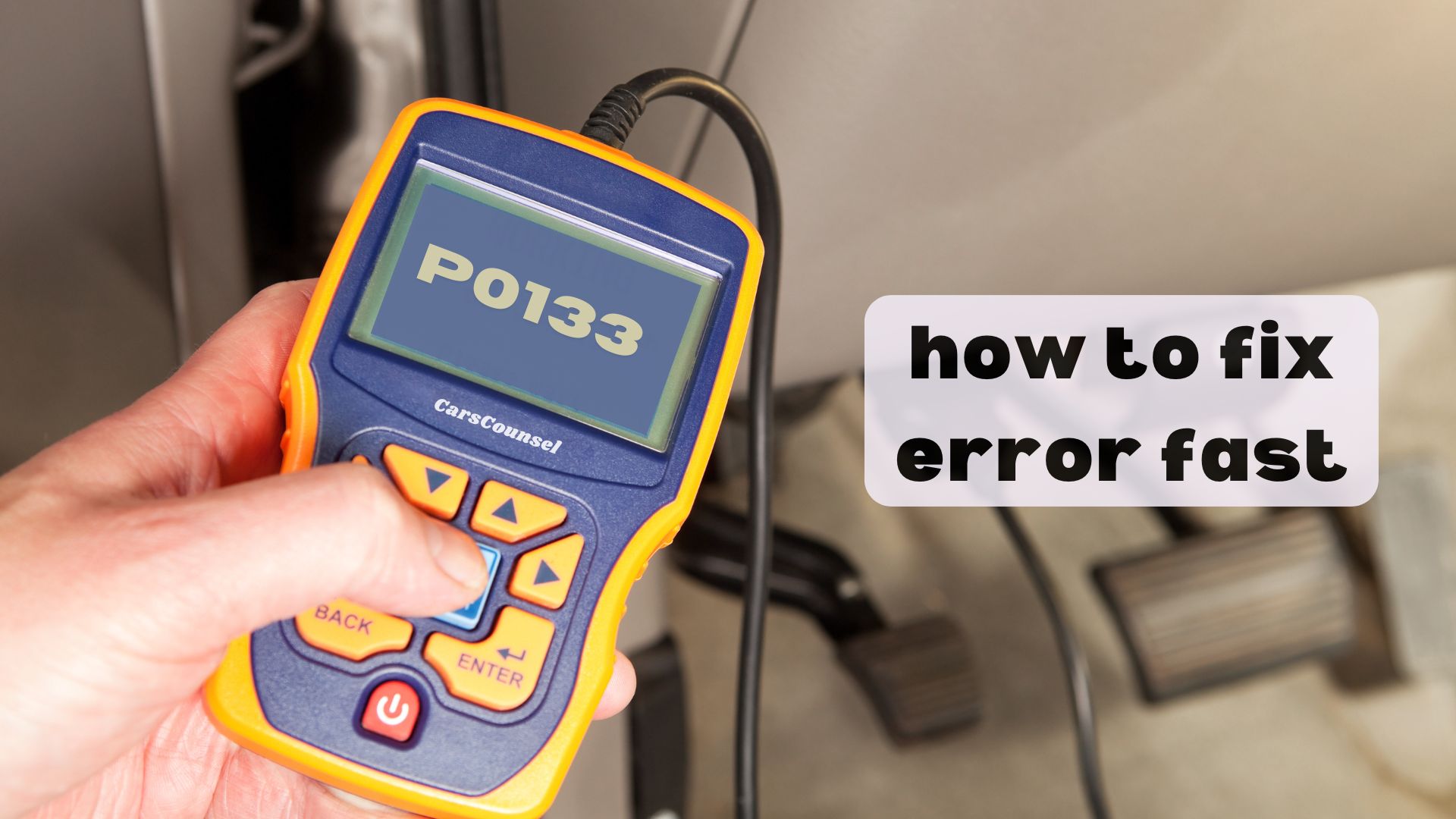
P0133 is a generic OBD-II powertrain code indicating an O2 Sensor Circuit Slow Response condition for Bank 1 Sensor 1. The powertrain control module detects that the upstream oxygen sensor is not switching between rich and lean voltages quickly enough.
Because this code identifies a slow response condition, it does not automatically prove the oxygen sensor itself has failed. Accurate diagnosis requires evaluating the sensor’s switching frequency, checking for exhaust leaks, and verifying the fuel system operation.
Quick Navigation
Key Takeaways
- P0133 indicates that the Bank 1 Sensor 1 (upstream) oxygen sensor is reacting too slowly to changes in the exhaust oxygen content.
- Possible causes include an aging or contaminated oxygen sensor, exhaust leaks upstream of the sensor, or underlying fuel delivery issues.
- Symptoms typically include an illuminated Check Engine Light and potentially decreased fuel efficiency, though drivability issues are often minimal.
- Diagnosis involves monitoring live data to measure the sensor’s cross-count frequency and inspecting the exhaust system for unmetered air leaks.
- Repairs require fixing the confirmed root cause, which may involve repairing exhaust leaks or replacing the Bank 1 Sensor 1 oxygen sensor.
P0133 Code Description and Implications
P0133 is a generic diagnostic trouble code that applies to all OBD-II equipped vehicles. It indicates that the powertrain control module (PCM) has detected a slow response from the Bank 1 Sensor 1 oxygen sensor.
Bank 1 refers to the engine bank containing cylinder 1. Sensor 1 refers to the upstream oxygen sensor, located before the catalytic converter. Its primary function is to monitor exhaust oxygen content to help the PCM adjust the air-fuel mixture.
A healthy upstream sensor rapidly switches its voltage signal between rich (high voltage) and lean (low voltage) as the PCM adjusts fuel trims. When the PCM detects that this switching frequency falls below a specific threshold, it sets the P0133 code.
Common Causes of the P0133 Code
Possible causes for a slow response condition include an aging or contaminated oxygen sensor element that can no longer react quickly to changes in exhaust gas oxygen content.
Exhaust leaks upstream of or near the sensor can introduce false air, confusing the sensor and causing delayed or erratic switching behavior.
Underlying fuel system issues, such as a lazy mass airflow sensor, leaking fuel injectors, or restricted fuel delivery, can cause the actual air-fuel mixture to change too slowly for the sensor to track.
Damaged wiring or poor electrical connections at the sensor harness can also degrade the signal quality.
Symptoms Associated With P0133
Because the upstream oxygen sensor directly influences fuel trims, a slow sensor can cause the engine to run slightly rich or lean, though the PCM may compensate using long-term fuel trims.
The most common symptom is an illuminated Check Engine Light. You may also notice a slight decrease in fuel efficiency over time.
Severe drivability issues like rough idling or stalling are rare unless the slow response is caused by a significant underlying mechanical or fuel system problem.
Diagnosing the P0133 Trouble Code
Diagnosis begins by using a scan tool to view the live data for the Bank 1 Sensor 1 oxygen sensor. Observe the voltage switching frequency (cross-counts) with the engine fully warmed up and running in closed-loop mode.
If the cross-counts are abnormally low, the sensor is responding slowly. Next, visually inspect the exhaust manifold and piping near the sensor for any signs of exhaust leaks.
Check for related codes that might indicate fuel system or airflow issues, such as MAF sensor codes or fuel trim codes.
If the exhaust system is sealed and the fuel system is operating correctly, the oxygen sensor itself is likely contaminated or degraded.
Repairing the P0133 Issue
If an exhaust leak is found upstream of the sensor, repair the leak and re-evaluate the sensor’s switching frequency.
If related fuel or airflow issues are confirmed, repair those underlying conditions before condemning the oxygen sensor.
If the wiring and exhaust system are intact and the sensor still fails the cross-count test, replace the Bank 1 Sensor 1 oxygen sensor with a component meeting the correct vehicle specification.
After completing the repair, clear the diagnostic trouble codes and perform a test drive to verify the sensor responds correctly and fuel trims stabilize.
Cost Considerations for P0133 Repairs
Repair costs depend heavily on diagnostic time, component accessibility, and whether an exhaust leak or underlying fuel issue is the actual root cause.
Replacing an upstream oxygen sensor involves standard parts costs and moderate labor, though labor increases if the sensor is seized in the exhaust manifold.
Repairing an exhaust leak or diagnosing a complex fuel delivery issue may require additional labor time.
Prevention Strategies for Future Occurrences
Inspect the exhaust system periodically for signs of rust, corrosion, or physical damage that could lead to leaks near the oxygen sensors.
Address any underlying engine performance issues, such as misfires or excessive oil consumption, promptly, as these conditions can contaminate and degrade the oxygen sensor element prematurely.
Troubleshooting Tips and Best Practices
Do not assume a P0133 code means the oxygen sensor is the only problem. A slow response can be a symptom of a lazy mass airflow sensor or a restricted fuel filter causing the actual air-fuel mixture to change slowly.
Do not ignore an exhaust leak. Unmetered air entering the exhaust stream near the upstream sensor will cause erratic fuel trims and prevent the sensor from reading the exhaust gases accurately.
Always verify the exact physical location of Bank 1 Sensor 1 for your specific vehicle, as exhaust layouts and engine configurations vary significantly between different manufacturers.
More OBD-II Codes
| P0123 | P0122 | P0121 | P0118 |
| P0117 | P0113 | P0137 | P0138 |
| P0140 | P0141 | P0150 | P0155 |
| P0171 | P0174 | P0172 | P0170 |
| P0130 | P0136 | P0420 | P0430 |
| P0300 | P0301 | P0302 | P0303 |
Frequently Asked Questions
Is P0133 a generic OBD-II code?
Yes. P0133 is a generic SAE code, meaning its definition as an O2 Sensor Circuit Slow Response fault for Bank 1 Sensor 1 applies universally across all OBD-II compliant vehicle makes and models.
Can I drive with a P0133 code?
Yes, you can generally drive the vehicle. Because a slow upstream sensor primarily affects fuel trim optimization rather than causing severe misfires, it rarely causes immediate drivability issues or engine damage, though fuel efficiency may decrease.
Will a P0133 code cause my car to fail emissions?
Yes. The powertrain control module uses the upstream sensor to maintain the correct air-fuel mixture. A slow sensor can cause the engine to run outside optimal emissions parameters, potentially leading to an emissions test failure.
Does P0133 mean my catalytic converter is bad?
No. P0133 indicates a slow response from the upstream oxygen sensor circuit. A failed catalytic converter typically triggers a catalyst efficiency code, such as P0420, which is monitored by the downstream sensor.
Can an exhaust leak cause P0133?
Yes. An exhaust leak upstream of or near the Bank 1 Sensor 1 oxygen sensor can introduce false air into the exhaust stream. This confuses the sensor, causing delayed or erratic switching behavior and triggering the code.
What Should You Do About the P0133 Code?
Confirm the exact factory definition for your vehicle, then follow the applicable manufacturer diagnostic procedure. Inspect the relevant system and components for electrical faults, exhaust leaks, or fuel delivery issues, and repair or replace the confirmed failed parts to restore proper operation.

