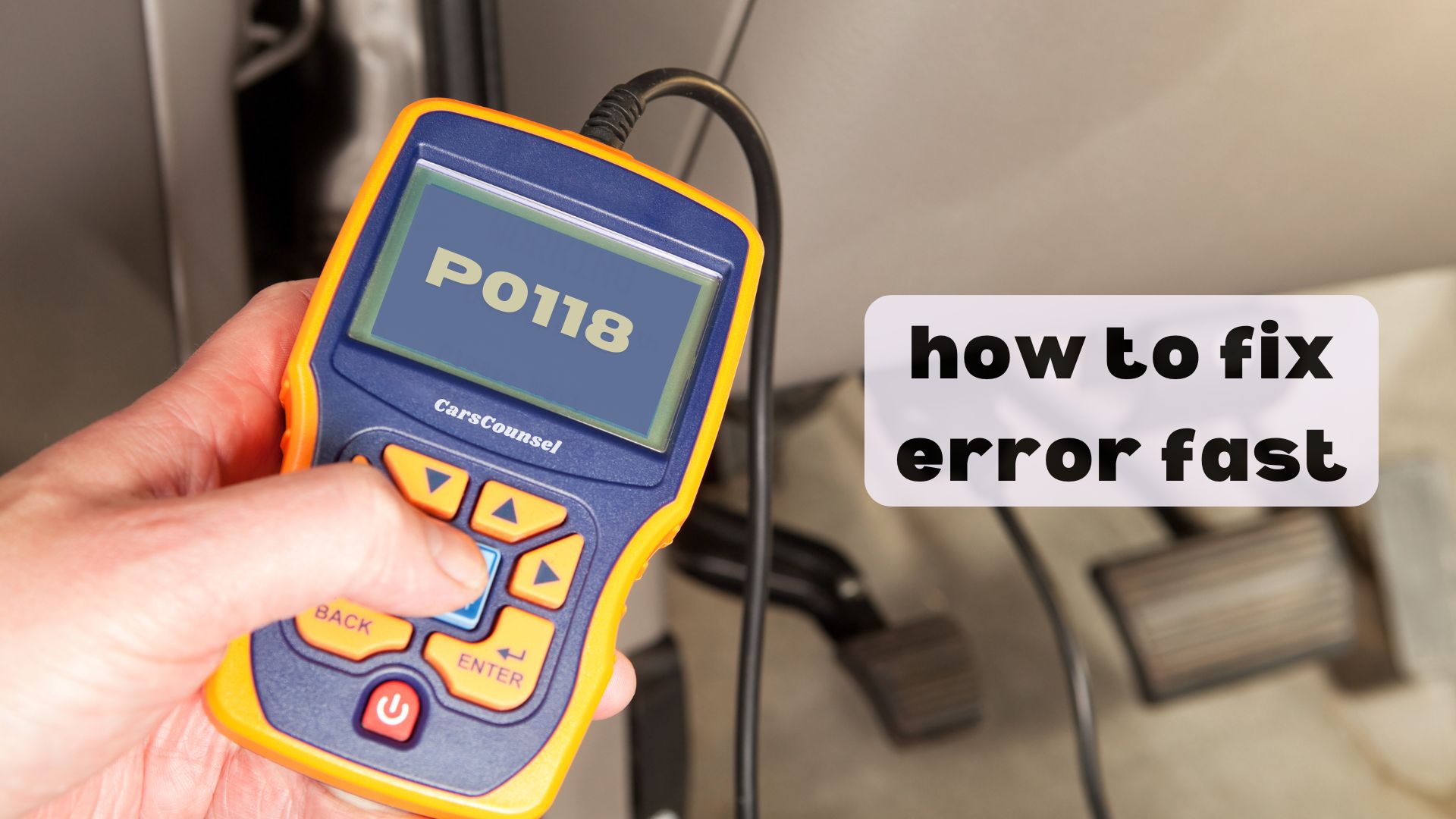
P0118 is a generic OBD-II powertrain code indicating an Engine Coolant Temperature (ECT) Sensor 1 Circuit High Input condition. The powertrain control module detects a voltage signal from the primary coolant temperature sensor that exceeds the maximum expected threshold.
Because this code identifies an electrical circuit fault, it does not automatically prove the ECT sensor itself has failed. Accurate diagnosis requires testing the sensor resistance and the signal and ground circuits to isolate the root cause.
Quick Navigation
Key Takeaways
- P0118 indicates a high voltage condition or open circuit in the signal circuit for the primary Engine Coolant Temperature (ECT) sensor.
- Possible causes include damaged wiring, corroded connectors, an internally open ECT sensor, or a poor ground connection.
- Symptoms typically include an illuminated Check Engine Light, continuous cooling fan operation, hard starting, and poor fuel economy.
- Diagnosis involves comparing live sensor data to ambient temperatures, inspecting the harness, and testing the sensor resistance with a multimeter.
- Repairs require fixing the confirmed electrical fault, which may involve wiring repairs or replacing the ECT sensor.
P0118 Code Description and Implications
P0118 is a generic diagnostic trouble code that applies to all OBD-II equipped vehicles. It indicates that the powertrain control module (PCM) has detected a high voltage condition in the circuit for Engine Coolant Temperature (ECT) Sensor 1.
Most ECT sensors are negative temperature coefficient (NTC) thermistors. As coolant temperature increases, sensor resistance decreases, and the signal voltage drops.
When the PCM reads a signal voltage near the 5-volt reference maximum, it interprets this as an extremely cold temperature or an open circuit. This code strictly monitors the electrical circuit, not the actual mechanical temperature of the coolant.
Common Causes of the P0118 Code
Possible causes for a circuit high condition include an open circuit in the ECT sensor signal wire, often caused by a broken wire or chafed insulation.
An open or high-resistance ground circuit for the ECT sensor can also cause the signal voltage to max out.
Damaged, corroded, or loose electrical connectors at the sensor harness can interrupt the circuit.
An internal electrical failure of the ECT sensor, causing it to open internally, is another possibility.
Symptoms Associated With P0118
Because the PCM relies on the ECT sensor for fuel enrichment and cooling fan control, a high voltage fault will trigger fail-safe strategies.
The most common symptom is an illuminated Check Engine Light. The PCM may also command the engine cooling fans to run continuously at high speed to prevent potential overheating.
Other symptoms include hard starting when the engine is warm, poor fuel economy, and an inaccurate temperature gauge on the instrument cluster.
Diagnosing the P0118 Trouble Code
Diagnosis begins by using a scan tool to view the live data for the ECT sensor. Compare the displayed coolant temperature to the intake air temperature or ambient air temperature on a cold engine.
If the ECT reading shows an implausibly low temperature, such as -40 degrees, the circuit is open.
Visually inspect the wiring harness and connector at the ECT sensor for physical damage, corrosion, or loose pins.
Use a digital multimeter to measure the electrical resistance across the sensor terminals and compare it to the manufacturer specifications. Check the reference and ground circuits for continuity.
Repairing the P0118 Issue
If testing confirms damaged wiring or an open circuit in the harness, repair or replace the affected wiring sections and secure the harness away from hot or sharp components.
If the ECT sensor fails the electrical resistance test or shows an internal open, replace the sensor with a component meeting the correct vehicle specification.
After completing the electrical repair, clear the diagnostic trouble codes, refill the cooling system if coolant was lost, and verify the live data reads correctly as the engine warms up.
Cost Considerations for P0118 Repairs
Repair costs depend heavily on diagnostic time, component accessibility, and whether the sensor is easily accessible on the engine block or cylinder head.
Wiring repairs are generally less expensive but require precise diagnostic time to locate the exact point of the open circuit.
Replacing an ECT sensor involves standard parts costs and moderate labor, though labor increases if the sensor is buried under intake components or requires draining the coolant.
Prevention Strategies for Future Occurrences
Inspect exposed engine wiring harnesses near the ECT sensor and cylinder head for signs of heat damage, chafing against engine components, or rodent activity.
Ensure that the electrical connector at the sensor remains clean and properly sealed to prevent moisture intrusion and corrosion in the circuit.
Troubleshooting Tips and Best Practices
Do not assume a P0118 code means the engine is actually overheating. This code specifically flags an electrical high voltage or open circuit condition, which the PCM interprets as extremely cold, not hot.
Do not ignore continuous cooling fan operation. While it is a fail-safe mode to protect the engine, it places a heavy electrical load on the alternator and battery, which can cause charging system issues over time.
Always verify the exact physical location of ECT Sensor 1 for your specific vehicle, as some engines use multiple coolant temperature sensors for the PCM and the instrument cluster.
More OBD-II Codes
| P0107 | P0108 | P0111 | P0112 |
| P0113 | P0117 | P0121 | P0122 |
| P0123 | P0130 | P0131 | P0132 |
| P0133 | P0135 | P0141 | P0155 |
| P0171 | P0174 | P0300 | P0420 |
| P0430 | P0440 | P0442 | P0455 |
Frequently Asked Questions
Is P0118 a generic OBD-II code?
Yes. P0118 is a generic SAE code, meaning its definition as an Engine Coolant Temperature Sensor 1 Circuit High Input fault applies universally across all OBD-II compliant vehicle makes and models.
Can I drive with a P0118 code?
It is not recommended. The PCM will likely default to a fail-safe mode, running the cooling fans continuously and enriching the fuel mixture, which causes poor fuel economy and places extra load on the charging system.
Will a P0118 code cause my engine to overheat?
No. P0118 indicates an electrical open circuit that the PCM interprets as extremely cold. However, because the cooling fans will run continuously as a fail-safe, the engine is actually less likely to overheat.
Can low coolant cause a P0118 code?
No. Low coolant or actual overheating typically causes a rationality or performance code, such as P0128. P0118 specifically flags an electrical high voltage or open circuit condition in the sensor wiring.
Does P0118 mean my temperature sensor is bad?
Not necessarily. While a failed sensor is a possible cause, an open circuit in the wiring harness, a corroded connector, or a broken ground wire will also cause the signal voltage to max out and trigger this code.
What Should You Do About the P0118 Code?
Confirm the exact factory definition for your vehicle, then follow the applicable manufacturer diagnostic procedure. Inspect the relevant system and components for electrical faults, and repair or replace the confirmed failed parts to restore proper operation.

