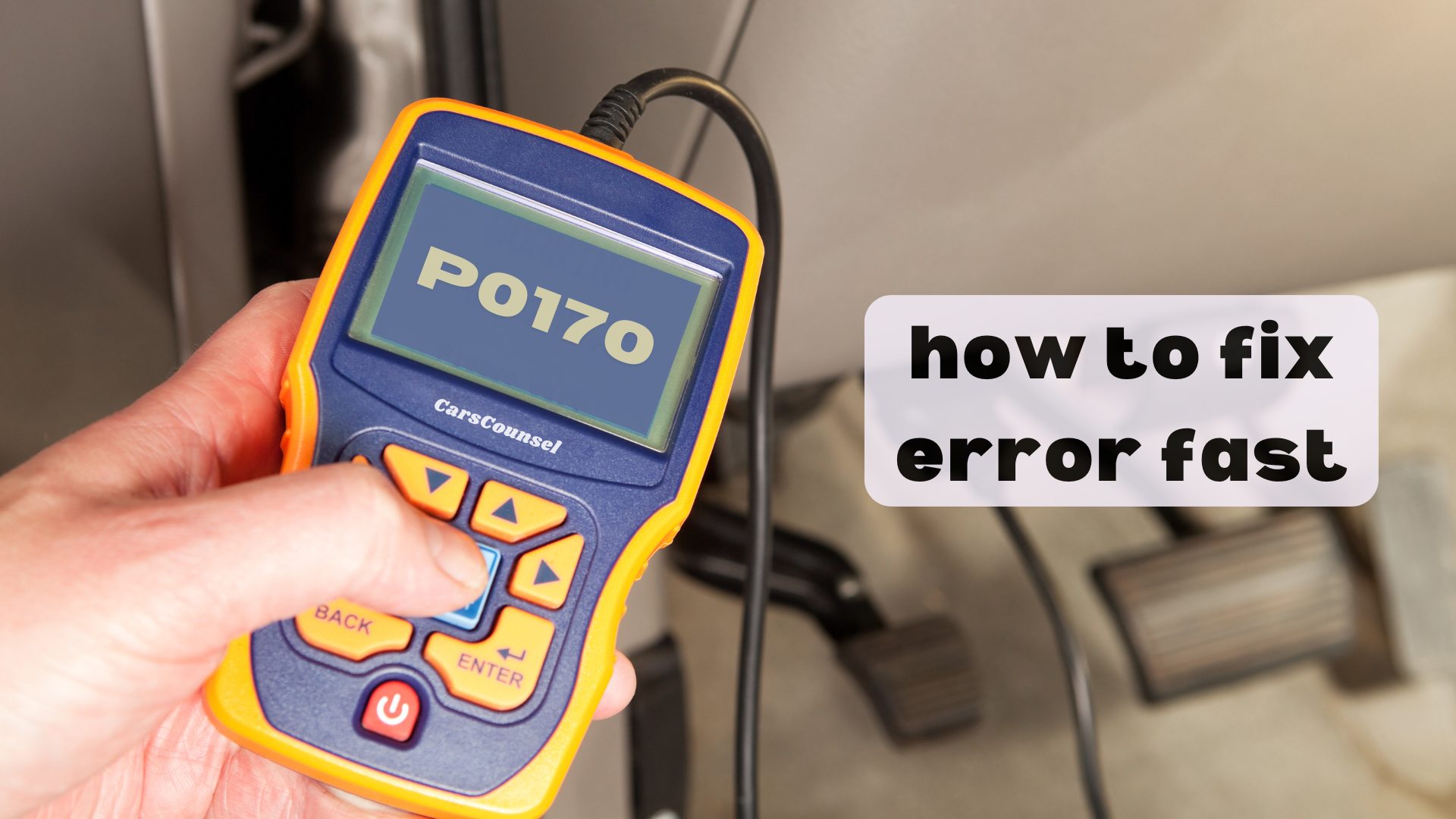
Diagnostic trouble code P0170 is a generic powertrain error code indicating a “Fuel Trim Malfunction (Bank 1).” It signals that the engine control module has detected the fuel trim adaptation for Bank 1 has reached its operational limit.
Because this code does not specify whether the mixture is too rich or too lean, exact vehicle application must be verified. The code identifies a detected fueling condition, but further diagnosis is required to identify the underlying root cause.
Quick Navigation
Key Takeaways
- P0170 indicates a general fuel trim malfunction on Bank 1, meaning the engine computer cannot maintain the target air-fuel ratio.
- Possible causes include vacuum leaks, mass airflow sensor issues, oxygen sensor faults, or fuel delivery problems.
- Common symptoms involve an illuminated Check Engine Light, rough idling, hesitation, and decreased fuel economy.
- Diagnosis requires inspecting the intake system for leaks and reviewing live fuel trim data with a scan tool.
- Repairs depend entirely on the confirmed root cause and may involve cleaning sensors, fixing vacuum leaks, or replacing components.
P0170 Code Description and Implications
P0170 stands for “Fuel Trim Malfunction (Bank 1).” Fuel trim represents the continuous adjustments the engine control module makes to fuel injector pulse width to maintain the ideal air-fuel mixture.
When the short-term and long-term fuel trims exceed their calibrated adaptive limits, the module stores this code. Unlike specific lean or rich codes, P0170 indicates a general inability to compensate for fueling errors on the first bank of the engine.
Because it is a generic code, the fundamental definition applies across manufacturers. However, exact diagnostic thresholds, freeze-frame parameters, and testing procedures vary by specific vehicle application.
Common Causes of the P0170 Code
The underlying cause of a fuel trim malfunction depends on the specific fueling condition the module detected. Possible causes include:
- Unmetered air entering the intake manifold through cracked hoses, failing gaskets, or disconnected vacuum lines.
- A contaminated or failing mass airflow sensor providing inaccurate airflow measurements to the computer.
- Faulty oxygen sensors or air-fuel ratio sensors sending delayed or skewed feedback signals.
- Fuel delivery restrictions, such as a clogged fuel filter, failing fuel pump, or dirty fuel injectors.
- Exhaust leaks upstream of the oxygen sensors, which can introduce false oxygen readings into the feedback loop.
Symptoms Associated With P0170
A consistent symptom is an illuminated Check Engine Light. Depending on the severity of the fueling deviation, other symptoms may appear.
Some vehicles may exhibit rough idling, hesitation during acceleration, or a noticeable decrease in fuel economy. In applications where the mixture is severely compromised, stalling or a strong fuel odor from the exhaust may also occur.
MIL behavior and exact driveability symptoms vary by application. Some vehicles may store the code without immediate drivability complaints, while others may enter a reduced-power mode.
Diagnosing the P0170 Trouble Code
Diagnosis must begin by confirming the exact factory definition and checking for related codes, such as specific lean, rich, or misfire codes. A scan tool capable of displaying live data is necessary to view short-term and long-term fuel trim percentages.
Technicians typically inspect the intake tract and vacuum lines for unmetered air leaks. Smoke testing the intake system is a verified method for finding hidden vacuum leaks that disrupt the air-fuel mixture.
Live data should be reviewed to observe mass airflow readings and oxygen sensor switching. If the mass airflow sensor is contaminated, cleaning it with an approved electrical contact cleaner may be required before further electrical testing.
Fuel pressure and volume must also be verified against the exact manufacturer specifications for the specific vehicle to rule out delivery issues.
Repairing the P0170 Issue
Repairs must follow confirmed diagnosis rather than trial-and-error part replacement. If a vacuum leak is confirmed, the damaged hose or gasket must be replaced.
If testing confirms the mass airflow sensor is faulty or contaminated beyond cleaning, it should be replaced with a component meeting the correct vehicle specification.
For fuel delivery issues, repairing or replacing the restricted fuel filter, failing pump, or clogged injectors resolves the underlying fueling condition. After any repair, the codes should be cleared and the vehicle driven to verify that the fuel trims return to normal ranges.
Cost Considerations for P0170 Repairs
Repair costs depend entirely on the confirmed root cause, component accessibility, and local labor rates. Fixing a simple vacuum leak may only require inexpensive hose and minimal labor.
Conversely, replacing a mass airflow sensor, addressing internal fuel pump issues, or replacing multiple oxygen sensors involves higher parts costs and additional diagnostic time. Accurate estimates require a confirmed diagnosis from a qualified technician.
Prevention Strategies for Future Occurrences
Some fuel trim malfunctions cannot be reliably prevented, as component wear is inevitable. However, inspecting exposed intake hoses and vacuum lines during routine service can help identify developing cracks before they cause unmetered air leaks.
Using high-quality fuel and occasionally running approved fuel system cleaners may help reduce injector deposits. Keeping the air filter clean and properly seated also prevents debris from contaminating the mass airflow sensor element.
Troubleshooting Tips and Best Practices
Check for technical service bulletins or software updates applicable to your exact vehicle application, as some manufacturers release recalibrations for false fuel trim codes.
Avoid replacing oxygen sensors solely based on a fuel trim code without verifying their switching activity on a live data graph. The oxygen sensors are often accurately reporting a real fueling problem caused elsewhere in the system.
Do not ignore related codes. If a misfire or evaporative emissions code is present alongside P0170, the underlying issue may be connected, and addressing the primary fault may resolve the fuel trim malfunction.
More OBD-II Codes
| P0161 | P0171 | P0130 | P0101 |
| P0156 | P0172 | P0133 | P0300 |
| P0155 | P0173 | P0135 | P0420 |
| P0150 | P0174 | P0136 | P0442 |
| P0141 | P0201 | P0446 | P0455 |
| P0140 | P0202 | P0301 | P0302 |
Frequently Asked Questions
Is P0170 a generic or manufacturer-specific code?
P0170 is a generic powertrain code. Its fundamental definition as a Bank 1 fuel trim malfunction applies across vehicle manufacturers, though exact diagnostic thresholds vary by application.
Can a dirty air filter cause a P0170 code?
A severely restricted air filter can restrict airflow, potentially causing fueling deviations. However, vacuum leaks and mass airflow sensor issues are more direct causes of fuel trim malfunctions.
Will disconnecting the battery clear the P0170 code?
Disconnecting the battery may temporarily clear the code and reset readiness monitors, but it does not repair the underlying mechanical or electrical fault. The code will return if the root cause remains.
Can an exhaust leak trigger a P0170 code?
Yes. An exhaust leak upstream of the oxygen sensors can allow outside oxygen into the exhaust stream. This tricks the sensors into reporting a lean condition, prompting fuel trim adjustments.
Is it safe to drive with a P0170 code?
Driving short distances to a repair facility is often possible if no severe symptoms are present. However, prolonged driving with extreme fueling deviations can damage the catalytic converter or engine components.
What Should You Do About the P0170 Code?
Confirm the exact factory definition and diagnostic procedure for your specific vehicle application. Because P0170 indicates a general fueling limitation, a systematic evaluation of the intake, fuel delivery, and sensor feedback systems is required.
Follow the applicable manufacturer diagnostic steps to test the relevant system and components. Once the root cause is confirmed, complete the necessary repairs and verify that the fuel trims stabilize within normal parameters.

