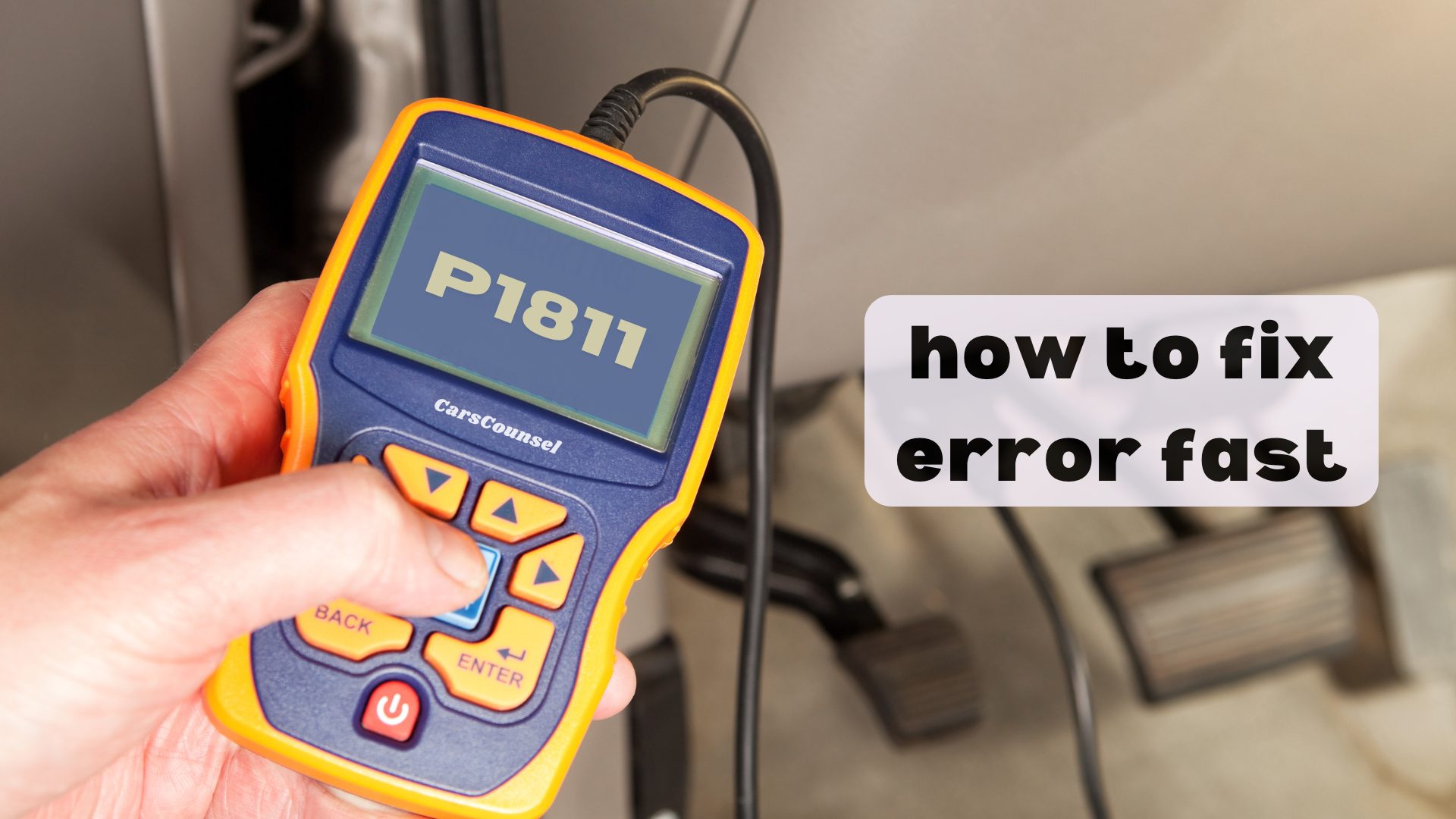
P1811 is a manufacturer-specific powertrain code. Its exact definition depends entirely on the vehicle make, though it is heavily associated with General Motors applications.
The exact application must be verified before diagnosis. This code identifies a detected condition but does not automatically prove a specific internal component has failed.
Quick Navigation
Key Takeaways
- P1811 is a manufacturer-specific code, frequently indicating a “Maximum Adapt and Long Shift” condition on certain General Motors applications.
- Possible causes include a failing pressure control solenoid, worn valve body accumulator bores, or degraded transmission fluid.
- Diagnosis requires checking transmission line pressure, inspecting the valve body, and reviewing shift adapt data.
- Repairs range from replacing the pressure control solenoid to repairing the valve body or addressing internal mechanical wear.
P1811 Code Description and Implications
P1811 is a manufacturer-specific diagnostic trouble code. Because it is not a generic SAE code, its exact definition depends entirely on the manufacturer and application.
Certain GM applications: P1811 indicates a “Maximum Adapt and Long Shift” condition. The powertrain control module detects that a gear shift takes longer than the calibrated maximum time.
The transmission adaptive shift modifiers cannot compensate for the delayed shift time, indicating a potential internal hydraulic pressure drop or mechanical wear.
Common Causes of the P1811 Code
Because P1811 monitors transmission shift timing and hydraulic adaptation, the root cause involves internal transmission components or fluid pressure.
Worn accumulator piston bores in the valve body are a possible cause on specific GM transaxles, causing internal hydraulic pressure drops during shifts.
A failing or stuck Pressure Control Solenoid can prevent the transmission from achieving the commanded line pressure required for a timely shift.
Degraded or contaminated transmission fluid can affect hydraulic pressure and shift quality, though mechanical wear is a more direct cause of adaptation limits.
Symptoms Associated With P1811
Drivers may experience harsh, delayed, or erratic gear shifts, particularly during the 1-2 or 2-3 shift events.
The Check Engine Light will illuminate. The transmission may also enter a fail-safe or limp mode to protect internal components from further damage.
MIL behavior varies by application. Some vehicles may illuminate the Check Engine Light immediately upon detecting the long shift condition.
Diagnosing the P1811 Trouble Code
Diagnosis must begin by confirming the exact factory definition and service information for the specific make, model, and transmission.
Retrieve the code and record freeze-frame data or any related trouble codes using a scan tool capable of monitoring shift adapt data and commanded line pressure.
Check the transmission fluid level and condition. Degraded fluid or low levels can contribute to pressure drops.
Perform a transmission line pressure test using a mechanical gauge to verify if the actual pressure matches the commanded pressure during shifts.
Repairing the P1811 Issue
Repairs must follow the confirmed root cause identified during hydraulic and electrical testing.
If the Pressure Control Solenoid fails testing, replace the confirmed failed solenoid and clear the adaptive shift tables using a capable scan tool.
If the valve body accumulator bores are worn, repair the valve body using an approved oversized piston kit or replace the valve body assembly.
If internal clutches or bands are confirmed worn due to prolonged slipping, a transmission rebuild or replacement may be necessary.
Cost Considerations for P1811 Repairs
Repair costs for P1811 vary widely based on the underlying fault, vehicle accessibility, and local labor rates.
Replacing a pressure control solenoid or repairing a valve body involves moderate parts and labor costs.
A full transmission rebuild or replacement involves significantly higher parts and labor expenses.
Cost depends on diagnostic time, component accessibility, required parts, programming requirements, and labor.
Prevention Strategies for Future Occurrences
Performing regular transmission fluid and filter changes according to the manufacturer schedule can help maintain proper hydraulic pressure and reduce clutch wear.
Avoiding heavy towing beyond the vehicle’s rated capacity helps prevent excessive heat and accelerated degradation of the transmission fluid and internal components.
Troubleshooting Tips and Best Practices
Do not assume a P1811 code requires a full transmission replacement; valve body wear or a failing solenoid are frequent culprits on specific GM transaxles.
Always verify the commanded line pressure against the actual mechanical line pressure before condemning internal hard parts or clutches.
Check for applicable technical service bulletins, as manufacturers occasionally release updated valve body repair kits or PCM software recalibrations to address chronic shift adapt faults.
More OBD-II Codes
| P1790 | P1800 | P1807 | P1808 |
| P1809 | P1810 | P1815 | P1843 |
| P1859 | P1860 | P1861 | P1862 |
| P0700 | P1762 | P1745 | P1727 |
| P0736 | P0793 | P1715 | P0761 |
| P0707 | P1700 | P1863 | P1864 |
Frequently Asked Questions
Is P1811 a generic or manufacturer-specific code?
No. P1811 is a manufacturer-specific code. Its exact definition depends on the vehicle make, though it frequently indicates a long shift adaptation fault on GM applications.
Can I drive with the P1811 code active?
Driving is conditional. While the vehicle may still move, prolonged harsh or delayed shifts can cause further internal transmission damage. Prompt diagnosis is recommended.
Does P1811 mean my transmission is completely destroyed?
No. P1811 identifies a shift timing or pressure adaptation fault. While internal wear is possible, a failing solenoid or worn valve body bore may be the only issue.
Will changing the transmission fluid fix P1811?
Rarely. If the adaptive shift limits have been reached due to mechanical wear or a worn valve body, a fluid change alone will not reset the mechanical wear.
Can a bad sensor cause the P1811 code?
Unlikely. P1811 typically points to hydraulic pressure drops or mechanical slipping inside the transmission, rather than a simple external sensor failure.
What Should You Do About the P1811 Code?
Confirm the exact factory definition and technical service bulletins for your specific vehicle application.
Follow the applicable manufacturer diagnostic procedure to test the transmission line pressure, shift adapt data, and relevant hydraulic control components.
Repair or replace the confirmed failed component, then retest the system to ensure the transmission shifts correctly within the calibrated adapt parameters.

