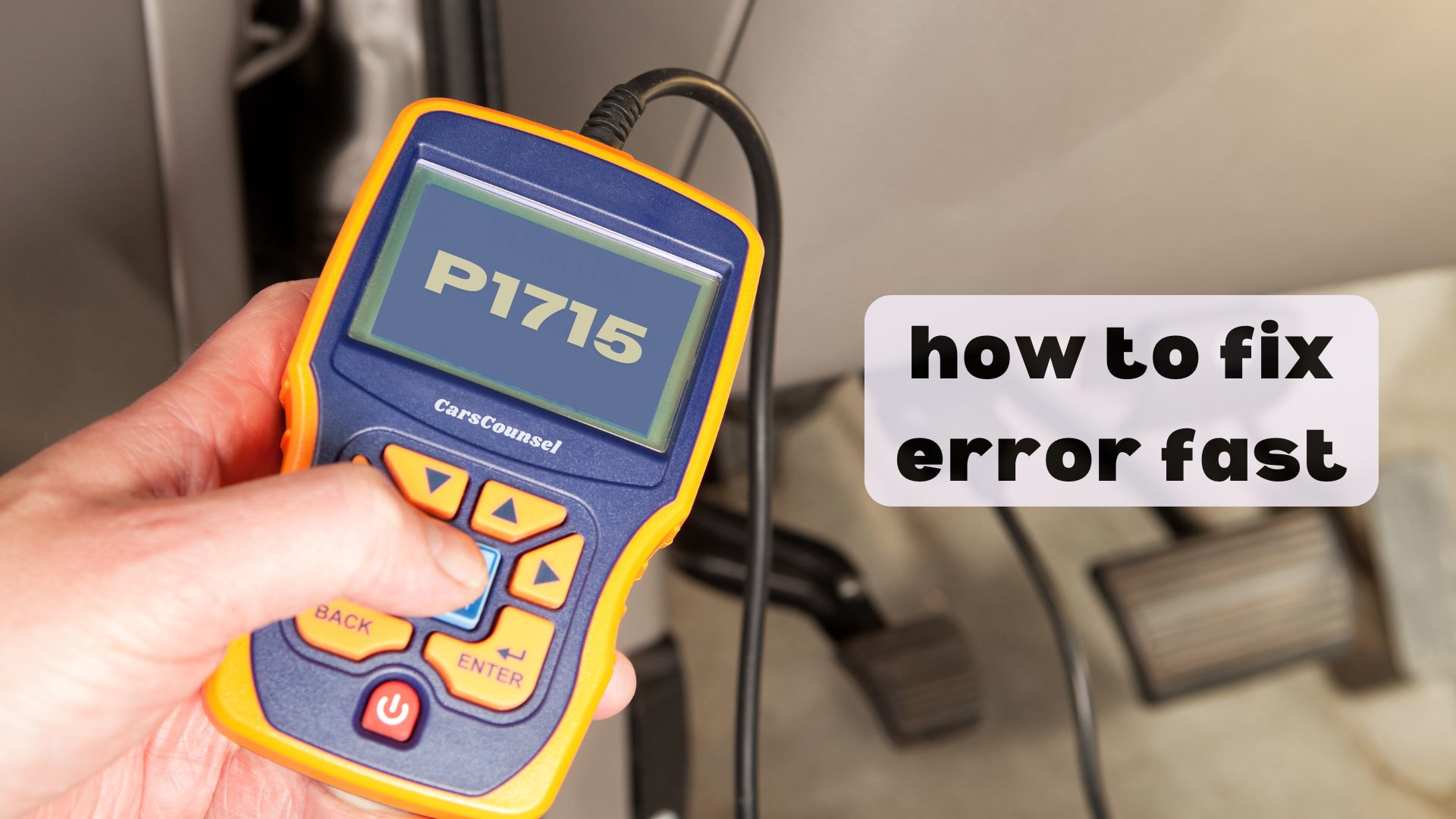
P1715 is a manufacturer-specific powertrain code. Its exact definition and the monitored system depend entirely on the vehicle make, model, and transmission configuration.
Because it applies to different transmission systems, the exact factory definition must be verified before diagnosis. This code identifies a detected fault condition but does not automatically prove a specific component has failed.
Quick Navigation
Key Takeaways
- P1715 is a manufacturer-specific code with different meanings depending on the vehicle make and transmission application.
- On many Nissan and Infiniti CVT applications, it indicates an input speed sensor fault that often points to severe internal transmission damage.
- On certain Ford applications, it points to a Shift Solenoid B inductive signature malfunction.
- Accurate diagnosis requires verifying the exact factory definition for your specific vehicle before testing or replacing any components.
P1715 Code Description and Implications
P1715 is a manufacturer-specific diagnostic trouble code. Because it is not standardized across all vehicles, its exact definition and the monitored system depend entirely on the manufacturer and application.
Some Nissan and Infiniti CVT applications: P1715 indicates an Input Speed Sensor (Primary Speed) fault. This often signals a serious internal CVT issue, such as a failing drive belt or pulley, rather than just an electrical sensor failure.
Certain Ford applications: P1715 represents a Shift Solenoid B (SSB) Inductive Signature Malfunction, indicating the transmission control module detected an abnormal electrical or hydraulic response from Shift Solenoid B.
Specific Honda applications: On models like the Odyssey, P1715 can indicate a failed 4th clutch transmission fluid pressure switch.
Common Causes of the P1715 Code
Because P1715 applies to entirely different transmission systems depending on the vehicle, the possible causes vary significantly by application.
For Nissan and Infiniti CVT applications: Internal mechanical failure, such as a worn or broken CVT drive belt or damaged pulleys, is a primary cause. Debris from internal wear can also contaminate the input speed sensor.
For Ford applications: A sticking or failed Shift Solenoid B, valve body wear, or internal hydraulic pressure issues can cause the inductive signature malfunction. Damaged solenoid wiring is also a possible cause.
For Honda applications: A failed 4th clutch pressure switch or damaged wiring to the switch can trigger this code.
Symptoms Associated With P1715
Symptoms depend heavily on the specific transmission system and the underlying fault.
On Nissan CVT applications, the vehicle may enter a severe limp mode, limit speed, or refuse to move forward due to internal mechanical failure.
On Ford applications, drivers may experience harsh shifts, slipping, or a failure to engage specific gears due to the malfunctioning shift solenoid.
MIL behavior varies by application. Some vehicles may illuminate the Check Engine Light immediately, while others may store the DTC and alter shift scheduling without a primary warning light.
Diagnosing the P1715 Trouble Code
Diagnosis must begin by confirming the exact factory definition and service information for the specific make, model, and transmission.
Retrieve the code and record any freeze-frame data or related error codes using a scan tool capable of accessing transmission data and commanding solenoids.
For Nissan applications, inspect the transmission fluid for excessive metallic debris, which indicates internal CVT failure rather than a simple sensor fault.
For Ford applications, test the Shift Solenoid B circuit for proper resistance and use a bidirectional scan tool to command the solenoid while monitoring hydraulic pressure and inductive signatures.
For Honda applications, test the 4th clutch pressure switch circuit and verify switch operation during a road test.
Repairing the P1715 Issue
Repairs must follow the confirmed root cause identified during system-specific testing.
If internal CVT damage or excessive debris is confirmed on a Nissan application, the transmission typically requires a complete replacement or professional rebuild, as internal belt failure is catastrophic.
If Shift Solenoid B is confirmed faulty on a Ford application, replace the solenoid or the valve body assembly as directed by the manufacturer procedure.
If the 4th clutch pressure switch fails testing on a Honda application, replace the switch and clear the codes.
Cost Considerations for P1715 Repairs
Repair costs for P1715 vary widely based on the underlying fault, the specific vehicle application, and local labor rates.
Replacing an external pressure switch or a single shift solenoid involves moderate parts costs and labor time.
If a Nissan CVT has suffered internal drive belt failure, the cost of a replacement or rebuilt transmission will be substantially higher due to the complexity of the unit.
Cost depends on diagnostic time, component accessibility, required parts, programming requirements, and labor.
Prevention Strategies for Future Occurrences
For applications using traditional automatic transmissions, maintaining clean transmission fluid and replacing the filter at recommended intervals helps prevent valve body and solenoid contamination.
For CVT applications, strictly adhering to the manufacturer’s specific CVT fluid replacement schedule and avoiding heavy towing or excessive loads can help reduce the risk of premature drive belt wear.
Troubleshooting Tips and Best Practices
Do not assume a P1715 code on a Nissan or Infiniti CVT is just a bad sensor; it frequently indicates severe internal mechanical failure requiring fluid inspection for metal debris.
On Ford applications, do not replace the transmission control module before confirming the Shift Solenoid B circuit and hydraulic valve body condition, as the solenoid itself is the usual culprit.
Check for applicable technical service bulletins, as manufacturers occasionally release updated valve body assemblies, revised solenoid packs, or TCM software recalibrations to address chronic shift solenoid signature faults.
More OBD-II Codes
| P1714 | P1713 | P1712 | P1711 |
| P1709 | P1708 | P1716 | P1717 |
| P1718 | P1720 | P1727 | P1738 |
| P0715 | P0716 | P0717 | P0720 |
| P0700 | P0731 | P0732 | P0733 |
| P0740 | P0741 | P0743 | P0744 |
Frequently Asked Questions
Is P1715 a generic or manufacturer-specific code?
No. P1715 is a manufacturer-specific code. Its exact definition and the monitored system depend entirely on the vehicle make, model, and transmission application.
Can a P1715 code mean my transmission is destroyed?
On Nissan and Infiniti CVT applications, P1715 often indicates a failing drive belt or catastrophic internal failure rather than a simple sensor fault. A fluid inspection for metal debris is required to confirm.
Will P1715 clear itself if I change the transmission fluid?
Not automatically. While fresh fluid may resolve a sticking solenoid on some applications, internal mechanical damage or a failed switch requires physical repair and a scan tool to clear the code.
Is it safe to drive with the P1715 code active?
It depends on the symptoms. If the vehicle is in limp mode, refusing to move, or experiencing severe slipping, driving is unsafe and can cause further catastrophic transmission damage.
Does P1715 always mean the shift solenoid is bad?
No. While Shift Solenoid B is the primary cause on certain Ford applications, other vehicles use this code for input speed sensors or pressure switches. Never replace parts without confirmed diagnosis.
What Should You Do About the P1715 Code?
Confirm the exact factory definition and technical service bulletins for your specific vehicle application.
Follow the applicable manufacturer diagnostic procedure to test the relevant speed sensors, shift solenoids, or pressure switches based on your vehicle’s specific transmission architecture.
Repair or replace the confirmed failed component, then retest the system to ensure the code does not return.

