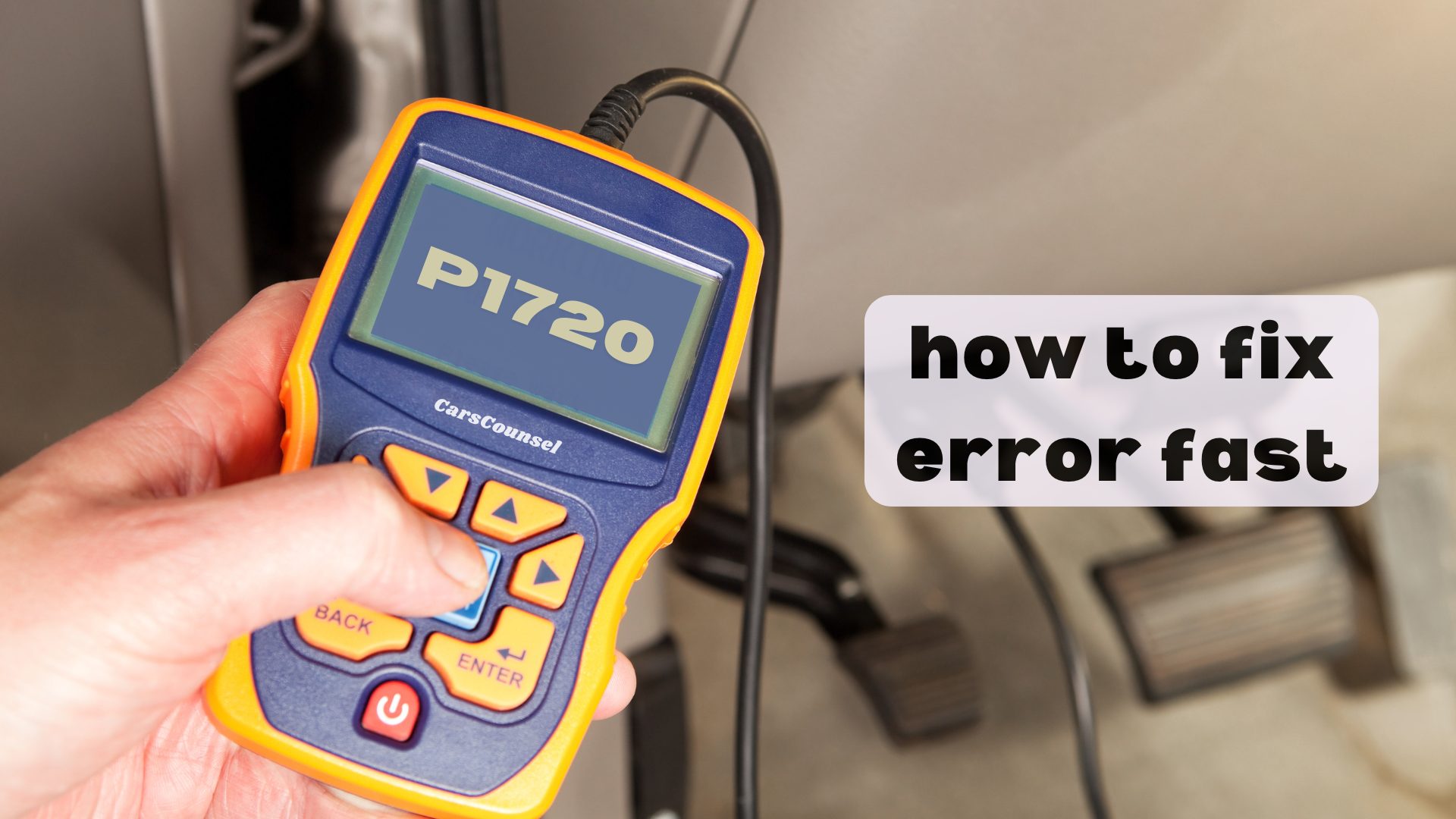
P1720 is a manufacturer-specific OBD-II diagnostic trouble code. Its exact definition depends on the vehicle application, but it generally relates to a vehicle speed sensor signal or circuit malfunction.
Because definitions vary by manufacturer, the exact diagnostic path requires verifying your specific vehicle’s factory service information. The code identifies a detected condition, not necessarily a failed part.
Quick Navigation
Key Takeaways
- P1720 is a manufacturer-specific code that typically indicates a fault in a vehicle speed sensor circuit or signal.
- Possible causes include damaged wiring, corroded connectors, a faulty speed sensor, or internal module issues.
- Symptoms may include an erratic speedometer, transmission shifting concerns, and illuminated warning lights.
- Diagnosis requires verifying the exact factory definition and testing the relevant speed signal circuits.
P1720 Code Description and Implications
P1720 is a manufacturer-specific code, meaning its exact definition varies by automaker. The powertrain control module or transmission control module uses this code to flag a speed signal anomaly.
Some Nissan and Infiniti applications: P1720 typically indicates a fault in the vehicle speed sensor signal sent to the transmission or instrument cluster.
Certain Ford applications: This code may indicate a vehicle speed sensor circuit malfunction or a loss of the speedometer signal.
Because the code is manufacturer-specific, you must verify the exact factory definition for your vehicle before beginning diagnosis. The specific error code meaning dictates the test.
Common Causes of the P1720 Code
Wiring and connector damage: The speed sensor harness often routes near the transmission or axle. This exposes it to heat, debris, and moisture, which can interrupt the signal.
Sensor failure: The internal components of the vehicle speed sensor may degrade over time. This prevents it from generating a valid pulse or voltage signal for the control modules.
Mechanical issues: A damaged drive gear or tone ring that the sensor reads can cause a missing or erratic speed signal, triggering the circuit malfunction code.
Module or network faults: In some applications, a communication failure between the transmission control module and other vehicle networks can prevent the speed data from being processed correctly.
Symptoms Associated With P1720
Depending on the specific vehicle architecture, a loss of speed data can cause several noticeable issues. The speedometer may read zero, fluctuate erratically, or stop working entirely.
The transmission may experience harsh shifting, fail to shift, or enter a limp mode to protect itself from shifting at incorrect speeds.
You may also see illuminated warning lights, such as the check engine light or ABS indicators, as these systems rely on accurate vehicle speed data.
Diagnosing the P1720 Trouble Code
Diagnosis must begin by confirming the exact factory definition and wiring diagram for your specific make, model, and year. Retrieve freeze frame data to understand the conditions when the code set.
Inspect the speed sensor, wiring harness, and connectors for physical damage, corrosion, or debris. Repair any visible wiring damage before proceeding to electrical tests.
Use a scan tool to monitor live vehicle speed data while driving or with the drive wheels safely raised. Compare the reading against a known accurate reference.
If the signal is missing or erratic, use a multimeter or oscilloscope to test the sensor output and circuit integrity according to the manufacturer’s specifications.
Repairing the P1720 Issue
Repairs must follow confirmed diagnostic testing. Do not replace the speed sensor without verifying the circuit and mechanical components first.
If wiring damage or connector corrosion is found, repair or replace the affected harness sections. Ensure all repairs are properly sealed against moisture.
If the sensor fails electrical testing or produces no signal despite a good circuit, replace it with a component meeting the exact vehicle specification.
If a mechanical issue like a damaged tone ring is confirmed, replace the mechanical component and retest the system to verify the repair.
Cost Considerations for P1720 Repairs
Repair costs depend on the confirmed root cause, component accessibility, and local labor rates. Replacing an externally mounted speed sensor is generally a straightforward procedure.
If the sensor is located inside the transmission or requires differential disassembly, labor time will increase significantly. Always factor in the cost of proper diagnostic time.
Prevention Strategies for Future Occurrences
Inspecting exposed speed sensor wiring during routine maintenance can help identify developing insulation damage before it causes a circuit fault.
Keeping sensor connectors clean and ensuring protective seals are intact may reduce moisture intrusion and corrosion on the electrical terminals.
Troubleshooting Tips and Best Practices
Always verify which speed sensor the manufacturer procedure targets. Some vehicles use multiple speed sensors, such as input and output shaft sensors, or wheel speed sensors.
Do not assume the speedometer is broken if it stops working. The issue is often at the sensor or circuit level before the signal reaches the instrument cluster.
Check for related transmission or ABS codes that might point to a shared ground or network communication issue affecting the speed signal.
More OBD-II Codes
| P1713 | P1714 | P1715 | P1716 |
| P1717 | P1718 | P1727 | P1738 |
| P1739 | P1740 | P1745 | P1747 |
| P0500 | P0501 | P0720 | P0721 |
| P0722 | P0723 | P0725 | P0726 |
| P0727 | P0730 | P0731 | P0732 |
Frequently Asked Questions
Is P1720 a generic or manufacturer-specific code?
P1720 is a manufacturer-specific code. Its exact definition and diagnostic procedure vary depending on the vehicle make, model, and year. Always consult the factory service information for your specific application.
Can a bad speed sensor cause transmission shifting issues?
Yes. The transmission control module relies on accurate vehicle speed data to command shifts. A missing or erratic speed signal can cause harsh shifting, delayed shifts, or trigger a limp mode.
Is it safe to drive with a P1720 code?
Driving is not recommended if the transmission is shifting erratically or if the speedometer is completely inoperative. The vehicle may enter a limp mode, and unpredictable shifting can create a safety hazard.
Will replacing the speed sensor always fix P1720?
Not always. P1720 indicates a circuit or signal malfunction. The root cause could be damaged wiring, a corroded connector, a mechanical tone ring issue, or a module fault. Proper testing is required.
Can an ABS fault trigger a P1720 code?
It depends on the vehicle architecture. Some systems share speed data networks between the ABS and transmission modules. A network communication fault or shared sensor failure could potentially set multiple related codes.
What Should You Do About the P1720 Code?
Confirm the exact factory definition and wiring diagram for your specific vehicle application. Inspect the relevant speed sensor, harness, and connectors for physical damage or corrosion.
Perform targeted electrical testing on the relevant system and components to isolate the fault. Repair the confirmed root cause, then verify the repair by clearing the codes and monitoring live data.

