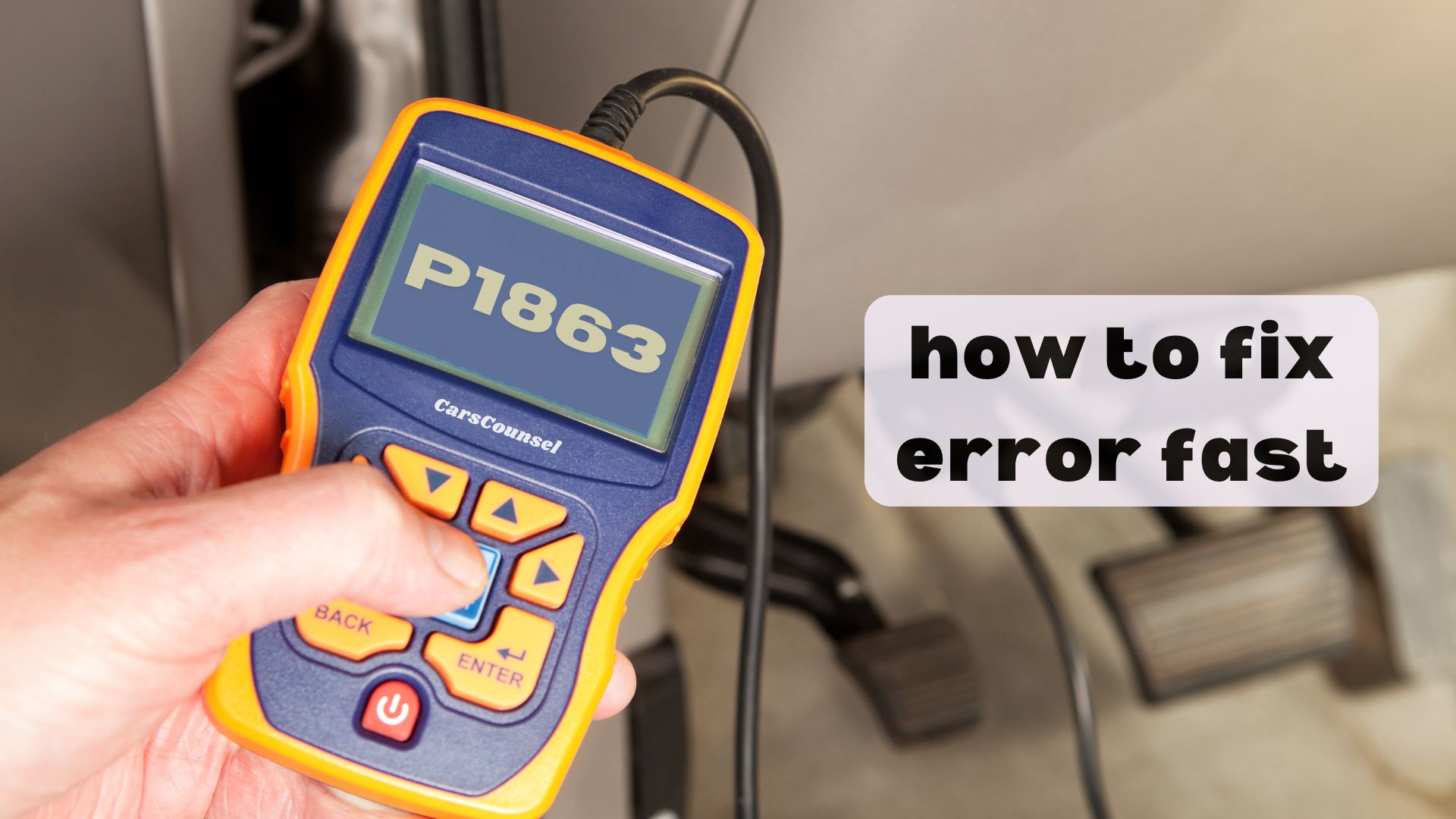
P1863 is a manufacturer-specific OBD-II diagnostic trouble code. Because it is manufacturer-specific, its exact definition depends entirely on the vehicle application, ranging from transfer case circuit faults to data bus communication errors.
The exact application must be verified before diagnosis. The code indicates the control module detected a fault, but testing is required to identify the root cause and the specific affected component.
Quick Navigation
Key Takeaways
- P1863 is a manufacturer-specific code, meaning its exact definition varies by automaker and vehicle application.
- On many Ford and GM applications, it indicates an open circuit in the transmission transfer case contact plate power circuit.
- On some Volkswagen and Audi applications, it points to a missing message from the steering angle sensor on the powertrain data bus.
- Diagnosis requires verifying the exact factory definition and testing the relevant transfer case circuits or data bus communication networks.
P1863 Code Description and Implications
P1863 is a manufacturer-specific powertrain code. Because the second digit is “1”, the definition is controlled by the automaker rather than the SAE standardized list.
Some Ford, GM, and Chevrolet applications: P1863 indicates a Transmission Transfer Case Contact Plate Power Open Circuit. The control module detects an open circuit in the power supply to the transfer case contact plate, which determines shift motor position.
Some Volkswagen and Audi applications: P1863 indicates a Data Bus Powertrain Missing Message From Steering Angle Sensor. The transmission or engine control module detects that it is no longer receiving the expected steering angle data over the CAN bus network.
Some Saab applications: P1863 indicates a lock-up solenoid short circuit to battery positive or an open circuit. When the control module detects an unexpected signal, it sets these trouble codes.
Common Causes of the P1863 Code
Possible causes depend entirely on the specific vehicle application.
For Ford and GM transfer case applications, a damaged or corroded wiring harness, poor electrical connections at the transfer case shift motor, a failing contact plate, or water intrusion into the connectors can trigger the open circuit fault.
For Volkswagen and Audi data bus applications, a failing steering angle sensor, damaged CAN bus wiring, poor network ground connections, or a failing gateway module can cause the missing message fault.
For Saab transmission applications, damaged lock-up solenoid wiring, a failing solenoid, or internal transmission harness issues can cause the circuit fault.
Symptoms Associated With P1863
The primary symptom is an illuminated Check Engine Light or a specific four-wheel drive warning indicator.
On Ford and GM applications, drivers may experience a failure to engage or disengage four-wheel drive, the transfer case being stuck in one mode, or a flashing 4WD indicator light.
On Volkswagen and Audi applications, symptoms may include traction control or stability control warning lights, and the transmission may default to a fail-safe shifting mode due to the missing steering angle data.
On Saab applications, symptoms can include torque converter clutch engagement issues or harsh transmission shifting.
Diagnosing the P1863 Trouble Code
Diagnosis must begin by confirming the exact factory definition for the specific make, model, and year.
For Ford and GM applications, technicians inspect the transfer case shift motor wiring and connectors for opens, corrosion, or water intrusion, and test the contact plate circuit for continuity using a multimeter.
For Volkswagen and Audi applications, technicians use a scan tool to check for communication with the steering angle sensor module, inspect the CAN bus wiring for shorts or opens, and verify network communication.
For Saab applications, technicians test the lock-up solenoid circuit resistance and inspect the internal transmission wiring harness.
Repairing the P1863 Issue
Repairs follow the confirmed diagnosis for the specific application.
If the transfer case wiring is damaged or the contact plate fails testing on a Ford or GM application, repairing the harness or replacing the shift motor assembly resolves the open circuit.
If the steering angle sensor or CAN bus wiring fails testing on a Volkswagen or Audi application, replacing the sensor or repairing the network wiring restores data communication.
If the lock-up solenoid or internal wiring fails testing on a Saab application, replacing the confirmed failed component resolves the circuit fault.
Cost Considerations for P1863 Repairs
Repair costs vary depending on the underlying fault and the vehicle application.
Repairing external wiring or replacing a steering angle sensor involves standard parts and labor. Diagnosing and replacing internal transfer case components or internal transmission solenoids requires more labor and fluid replacement.
Cost depends on diagnostic time, component accessibility, required parts, programming requirements, and labor.
Prevention Strategies for Future Occurrences
Some electrical and mechanical failures cannot be reliably prevented.
Inspecting exposed undercarriage wiring and keeping transfer case or sensor connectors clean and sealed can help prevent moisture intrusion and corrosion that lead to open circuit faults.
Addressing minor wiring chafing or damaged connector locks early helps prevent more severe network communication or power circuit failures.
Troubleshooting Tips and Best Practices
Never assume a manufacturer-specific code has a universal meaning. Always verify the exact factory service information for your specific vehicle.
Do not replace a transfer case shift motor or steering angle sensor without first verifying the wiring, connectors, and data bus communication signals.
If P1863 is accompanied by other data bus codes on a VW or Audi, suspect a shared CAN bus wiring issue or a failing gateway module rather than multiple simultaneous sensor failures.
More OBD-II Codes
| P1862 | P1861 | P1860 | P1859 |
| P1843 | P1815 | P1864 | P1865 |
| P1866 | P1870 | P1800 | P1807 |
| P0700 | P0756 | U0100 | U0073 |
| P0300 | P0420 | P0171 | P0174 |
| P0430 | P0011 | P0014 | P0705 |
Frequently Asked Questions
Is P1863 a generic OBD-II code?
No. P1863 is a manufacturer-specific code, meaning its exact definition and diagnostic procedure depend entirely on the vehicle’s make, model, and application.
Can I drive my vehicle with a P1863 code?
It depends on the application. If four-wheel drive is stuck or the transmission enters a fail-safe mode, driving the vehicle can be unsafe and should be avoided until repaired.
Will a P1863 code affect my transmission shifting?
Yes. On Volkswagen and Audi applications, the missing steering angle data can cause the transmission to default to a fail-safe shifting mode, while Saab applications may experience torque converter issues.
Does P1863 always mean the transfer case motor is broken?
No. The code often points to damaged wiring, corroded connectors, water intrusion, or a network communication issue rather than a mechanically failed transfer case motor or sensor.
How do I clear a manufacturer-specific P1863 code?
Clearing the code requires fixing the underlying transfer case circuit, network wiring, or solenoid fault. Simply using a scan tool to erase the code will not repair the root cause.
What Should You Do About the P1863 Code?
Confirm the exact factory definition for your specific vehicle, then follow the applicable manufacturer diagnostic procedure for the relevant system and components.
Because P1863 is manufacturer-specific, testing the exact transfer case circuits, steering angle sensor data bus, or lock-up solenoid wiring identified by the factory service information is required to find the root cause.
Once the fault is confirmed, perform the necessary repairs and verify the fix by clearing the codes and completing a test drive.

