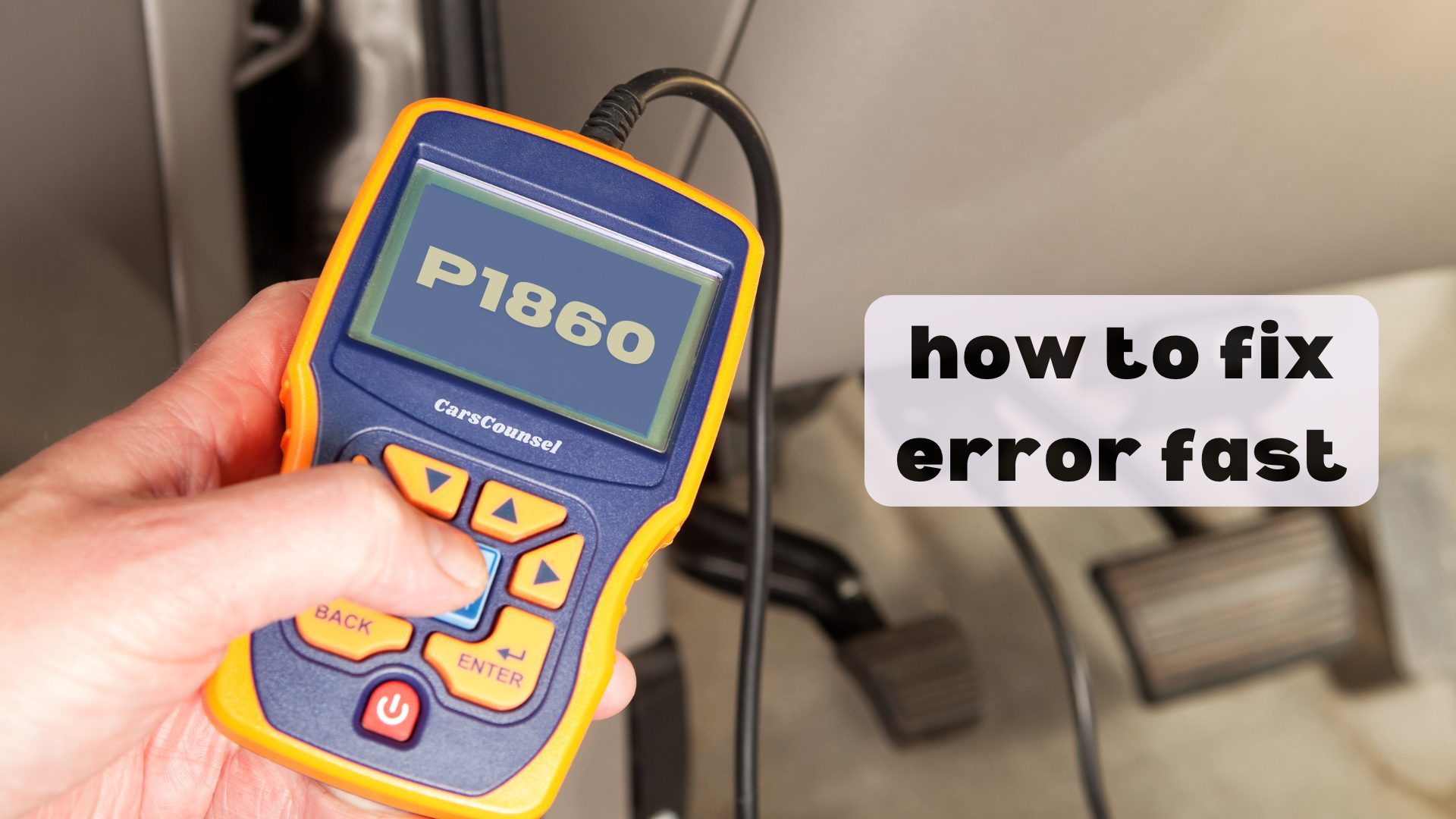
P1860 is a manufacturer-specific OBD-II diagnostic trouble code. Its exact definition depends on the vehicle application, but it typically indicates an electrical fault in the torque converter clutch (TCC) solenoid control circuit.
This code identifies an electrical circuit condition rather than confirming a single failed component. The underlying cause requires targeted electrical diagnosis based on the exact factory definition.
Quick Navigation
Key Takeaways
- P1860 is a manufacturer-specific code, often indicating a fault in the Torque Converter Clutch (TCC) solenoid circuit on General Motors applications.
- Possible causes include a failed TCC solenoid, damaged internal transmission wiring, corroded connectors, or a faulty control module.
- Diagnosis requires verifying the exact factory definition, inspecting the external wiring, and testing the solenoid circuit resistance.
- Repairs depend on the confirmed root cause and may involve wiring repair, solenoid replacement, or module replacement.
P1860 Code Description and Implications
P1860 is a manufacturer-specific code, meaning its exact definition and diagnostic procedures depend on the vehicle application.
Some General Motors applications: P1860 indicates an electrical fault in the Torque Converter Clutch (TCC) Pulse Width Modulation (PWM) solenoid circuit. The powertrain control module monitors the circuit for opens, shorts to ground, or shorts to voltage.
Certain Ford applications: P1860 may relate to the torque converter clutch solenoid circuit or transmission component slipping, depending on the exact model and year.
Because it is manufacturer-specific, generic diagnostic paths cannot account for the unique transmission architectures used by different automakers. When diagnosing diagnostic codes related to transmissions, verifying the exact factory definition is the most critical first step.
Common Causes of the P1860 Code
The underlying causes for a P1860 code vary by application but generally involve the TCC solenoid, the control wiring, or the module.
Failed TCC PWM Solenoid: The internal coil of the solenoid may fail open or shorted, preventing the module from controlling the torque converter clutch.
Wiring and Connector Issues: The internal transmission wiring harness or external case connectors may suffer from damage, chafing, or fluid intrusion, interrupting the circuit.
Faulty PCM or TCM: An internal driver failure within the control module may prevent proper circuit operation or monitoring.
Symptoms Associated With P1860
The prominent symptom is the illumination of the Check Engine Light.
Depending on the manufacturer’s fail-safe strategies, the transmission may fail to lock the torque converter, leading to increased RPMs at highway speeds and reduced fuel efficiency.
The vehicle may experience harsh shifting, or the TCC may slip or fail to engage entirely.
In some applications, the control module may command a limp mode to protect the transmission from overheating.
Diagnosing the P1860 Trouble Code
Diagnosis must begin by confirming the exact factory service information and wiring diagrams for the vehicle’s specific transmission model.
Start by visually inspecting the external wiring harness and case connectors for physical damage, heat exposure, or fluid intrusion.
Use a digital multimeter to test the resistance of the TCC solenoid circuit and compare it to the manufacturer’s specifications.
Verify the continuity of the control circuit between the transmission connector and the control module.
If the external wiring and connector test correctly, the fault may lie within the internal transmission harness or the solenoid itself.
Repairing the P1860 Issue
Repairs must follow confirmed diagnosis. Never replace internal transmission components solely based on the presence of the code.
If external wiring damage or connector corrosion is found, repair the harness and secure the connections before re-evaluating the system.
If electrical testing confirms the internal TCC solenoid or internal harness has failed, replace the faulty component, which typically requires dropping the transmission pan.
If the control module fails diagnostic testing, follow the manufacturer’s replacement and programming procedures.
Cost Considerations for P1860 Repairs
Repair costs vary considerably depending on the confirmed root cause and the specific vehicle application.
Repairing an external connector or wiring harness involves minimal parts and standard labor.
Replacing an internal TCC solenoid requires dropping the transmission pan, replacing the filter, and refilling the fluid, increasing labor and parts costs.
Cost depends on diagnostic time, component accessibility, required parts, programming requirements, and labor.
Prevention Strategies for Future Occurrences
Preventing transmission control circuit codes requires attention to the vehicle’s electrical system and transmission environment.
Keeping the transmission fluid clean and at the proper level helps prevent internal debris from interfering with solenoid operation.
Inspecting external transmission connectors for moisture intrusion or damage can help identify developing electrical issues before they cause an open circuit.
Troubleshooting Tips and Best Practices
Always check for Technical Service Bulletins related to P1860 for your specific vehicle application.
Manufacturers may release updated internal wiring harness kits, revised case connectors, or software updates to address known circuit faults.
Do not assume the torque converter itself is mechanically failed simply because a TCC circuit code is present.
P1860 specifically points to the electrical control circuit, not necessarily a mechanical failure of the clutch or converter.
If the vehicle recently underwent transmission service, verify that all internal and external connectors were fully seated and no pins were pushed out.
More OBD-II Codes
| P1811 | P1810 | P1809 | P1808 |
| P1807 | P1800 | P1861 | P1862 |
| P1863 | P1864 | P1865 | P1866 |
| P0740 | P0741 | P0742 | P0743 |
| P1740 | P1745 | P1762 | P1778 |
| P0700 | P0751 | P0753 | P0755 |
Frequently Asked Questions
Is the P1860 code generic or manufacturer-specific?
No. P1860 is a manufacturer-specific code. Its exact definition depends on the vehicle application, though it commonly indicates a Torque Converter Clutch (TCC) solenoid circuit fault on General Motors vehicles.
Can low transmission fluid cause a P1860 code?
P1860 specifically indicates an electrical fault in the solenoid control circuit, such as an open or short. While low fluid causes mechanical slipping codes, it does not directly trigger an electrical circuit code.
Will disconnecting the battery clear the P1860 code?
Disconnecting the battery may temporarily clear the code, but it does not repair the underlying electrical fault. It also erases valuable freeze frame data and resets transmission adaptive memory, complicating professional diagnosis.
Can I drive my vehicle with a P1860 code?
Driving short distances may be possible, but extended driving is not recommended. A disabled torque converter clutch increases transmission heat and reduces fuel efficiency, which can lead to severe internal transmission damage over time.
Does P1860 mean the transmission must be rebuilt?
Not necessarily. This code points to an electrical fault in the TCC solenoid circuit. The issue is often a failed solenoid, a damaged internal wiring harness, or a bad connector, which can sometimes be repaired without a full rebuild.
What Should You Do About the P1860 Code?
Confirm the exact factory definition and diagnostic procedure for your specific vehicle application before attempting repairs.
Do not assume the transmission requires a complete rebuild based solely on the presence of the diagnostic trouble code.
Inspect the external wiring and connectors, verify the solenoid circuit resistance, and review live data to rule out external electrical faults.
Follow the applicable manufacturer diagnostic workflow to isolate the relevant system and components before authorizing internal transmission repairs.

